

EU-UK Summit: Legal comments
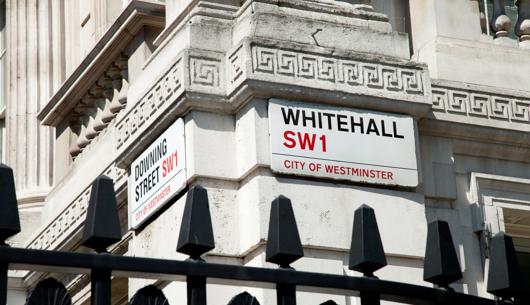
UK Prime Minister Andy Burnham has met EU leaders in Brussels for today’s UK-EU Summit, setting out the next steps in a closer partnership with the bloc focused on security, economic cooperation and opportunities for young people on both sides of the channel.
Key announcements include the conclusion of negotiations on a food and farming agreement, linking the UK and EU emissions trading systems, and a new Youth Experience Scheme. Leaders also committed to negotiations on student tuition fees, further progress on electricity market cooperation, and plans for a UK-EU Digital Partnership. It's worth noting these measures have different implementation timetables, with further steps needed before the benefits take shape.
Below, our legal experts share their reaction to the summit’s headline announcements and set out the practical implications for our clients across a range of sectors and issues, including:
- UK-EU Digital Partnership.
- UK investment, M&A and expansion.
- UK-EU Sanitary and Phytosanitary (SPS) Agreement impact on food and drink sector.
- Tuition fees uncertainty impact on higher education.
- Northern Ireland: Cross-border investment, opportunities and supply.
- Wales: Cross-border investment, opportunities and supply.
- Linking the EU and the UK emissions trading schemes (ETS agreement).
UK-EU Digital Partnership
Jeanne Kelly, Head of EU Data, Privacy and Cybersecurity and Co-head of the Dublin Office, said: "One of the most significant proposals is the intention to launch a ‘digital partnership’ in early 2027, covering digital and technology. This will be in areas that include secure and resilient connectivity, AI including security and safety, digital wallets and credentials, and online safety.
"It appears that the current data adequacy determination, which was recently renewed until 2031, is unaffected by either this joint statement, or the measures it contemplates. Indeed, it openly refers to the UKs “regulatory autonomy” being safeguarded.
"Increased cooperation between the EU and the UK can only be welcomed. A rapprochement, perhaps, with language that manages expectations on the likely out turns, certainly on digital matters.”
Chris Holder, Partner in IT and technology, said: “Reaching an understanding on international standards and ways of working in the digital sphere, including the development of AI systems, will undoubtedly help companies with growth ambitions in the UK and EU.
“Since Brexit, businesses across many industries have been trying to navigate dual sets of regulations, although there are also examples like with the EU and UK’s GDPR regimes where there is very close alignment as it makes clear economic sense, so enhancing this partnership feels like a no-brainer.
“It would, however, be beneficial for the European Commission to review how the EU AI Act is structured, moving away from a horizontal legislation that applies a broad brush stroke across sectors to one that becomes more application-based.
“The way in which AI technology is used varies significantly from sector to sector, so it’s important these differences are reflected in the regulation underpinning technology use in the financial services sector over, for example, the life sciences sector. Otherwise, generalisation in regulation may hold back innovation across both the EU and UK.
“In life sciences, for example, developers may be able to seek approval for AI as a medical device in the first instance but as machine learning algorithms develop, this can change functionality – meaning the product is constantly evolving while the regulatory approval provided at the outset may no longer be appropriate. This may require co-operation between the UK’s Medicines and Healthcare products Regulatory Agency and European Medicines Agency.
“It is to be hoped that the Commission is open to bringing UK sector expertise into the fold as part of this new digital partnership. As a global leader in sectors like financial services, this expertise may prove invaluable to the EU in supporting any review of its AI Act."
UK investment, M&A and expansion
Richard Cox, Partner and Head of the international group, said: “These agreements could change the investment sums for UK businesses where European trade friction and carbon-border costs have held back growth. The food agreement and carbon-market link could make it more attractive for overseas buyers to acquire a UK business, expand its production and use it to serve European customers.
“For corporate and private equity buyers, the question is whether those benefits justify committing capital. Lower costs and easier integration could strengthen the acquisition case, but they must be credible and achievable. Sellers cannot simply add future savings to the asking price before the measures are operating.”
William Darmody, Partner and Head of Irish corporate law, said: “A closer UK–EU relationship need not weaken Ireland’s appeal as an investment base. For overseas investors, an Irish acquisition can offer an established business, talent and a platform within the EU. Easier trade with Britain could make that platform even more valuable.
“The opportunity is to back Irish businesses that can expand into the UK, or combine UK and Irish acquisitions into a stronger international group. The proposed digital partnership could also support technology-led growth. Investors will still need to plan how their businesses operate across two regulatory systems."
UK-EU Sanitary and Phytosanitary (SPS) Agreement impact on food and drink sector
Sam Sharp, Head of Food and Drink, said: "Simpler trade and supply chains, with more consistent rules, will give food and drink businesses the space to focus on growth, instead of navigating additional complexity between the UK and EU.
“Alignment will bring costs, and the benefits will not be evenly shared. But easier access to European customers could make UK producers more attractive to overseas investors, whether they are buying a business or backing new production capacity. Better margins could support higher valuations for businesses exporting heavily to the EU, while more consistent rules could make cross-border acquisitions easier to integrate and reduce uncertainty for buyers.
“With implementation targeted for 1 March 2028, businesses have time to prepare to turn easier trade into investment and growth.”
Katharine Mason, Principal Associate, added: "Regulatory duplication causes additional costs and headaches for businesses, especially given the pace of change in the industry and in the context of the cost-of-living crisis. Any changes which make it easier for food and drink businesses to operate and cut back on extra paperwork should be positive.
"Consumers ought to see more streamlined packaging with Brexit requirements like “not for EU” no longer being necessary. In some areas, such as nutrition and health claims, we’ve stayed pretty aligned since Brexit, so there may not be a noticeable impact. There’ll of course be a period of adjustment, but hopefully the outcome of the SPS Agreement will mean food and drink companies operating in the EU and UK will no longer have to keep track of two different regulatory regimes."
Amba Griffin-Booth, Deputy Head of Food and Drink, commented on the implications on supply chains: “Reducing the paperwork businesses need to compete before even getting to the border could take a lot of cost and uncertainty out of food and drink supply chains. The removal of specified certification requirements is an opportunity many will be relieved to hear, but we will be advising our clients that they cannot assume all trading friction will disappear. Suppliers, manufacturers and logistics providers should prepare together to turn simpler processes into more consistent and predictable trade.”
Tuition fees uncertainty impact on higher education
Nathalie Jacoby-Danesh, Partner in the higher education team, said: “The EU-UK Summit's uncertainty over EU student tuition fees and the youth mobility cap does not arise in isolation. It risks affecting a higher education sector where institutions are struggling to meet their operating costs from national student tuition fees, with international student income often proving insufficiently certain.
“These are some of the reasons why institutions have been encouraged to turn towards transnational education (TNE) – educating students of English universities abroad, either on an overseas campus or through partnership arrangements with overseas education providers.
“Any fee concession to EU students re-entering the UK market could accelerate TNE retrenchment or, conversely, make on-campus EU recruitment financially unviable relative to offshore delivery. Universities that modelled EU student fee income recovering post-Brexit and built TNE strategies partly on that basis face a double exposure: if home fee parity for EU students is conceded, the on-campus revenue model is hit; if it is not, EU TNE growth as a compensating route may be complicated.
“Any institutions considering or negotiating collaborations with EU partner institutions should assess whether they contain change-of-law or mobility scheme clauses calibrated for a post-summit arrangement. Where such provisions are absent or inadequate, institutions should ensure agreements are updated to include clear suspension and termination rights, change-of-law or force majeure clauses, audit and information rights, transition arrangements and enforceable dispute-resolution provisions.
“From a compliance perspective, careful thought would need to be given on how a youth mobility scheme shall operate alongside the established student visa route. Universities will need certainty on which right-to-study checks apply, what the basic compliance assessment (BCA) reporting obligations entail and how attendance shall be monitored.
“The Office of the Independent Adjudicator for Higher Education’s Good Practice Framework and the Office for Students’ (OFS) TNE guidance remain operative regardless of what the summit produces. Any new EU student cohort arriving under an unclear mobility arrangement must be mapped against existing student protection plans and OfS registration conditions.”
Northern Ireland: Cross-border investment, opportunities and supply
Vicky Dummigan, Corporate Partner and co-head of the Northern Irish corporate team, on investment, expansion and cross-border opportunities: “For overseas buyers, acquiring an established Northern Ireland business can provide a platform for growth in both the UK and EU goods markets. Easier cross-border supply chains could strengthen that proposition further, making it even more attractive to invest in Northern Ireland.
“For private equity the opportunity is to back management teams, add complementary businesses, and expand into new markets. Northern Ireland’s dual market access remains a significant selling point to underpin ambitious UK and EU growth plans.”
Ross Davidson, Partner in our Belfast office, comments on the practical SPS simplification for GB–NI movements: “Fewer food and plant checks on GB – NI movements will improve the economics of supplying these goods to Northern Ireland’s shops and distribution centres. For retailers and logistics businesses, more dependable supply routes will be welcome news and allow those businesses to plan with greater confidence around availability of stock.
"Today’s commitment to find a lasting solution for movements of UK-origin steel will also be welcomed by the construction industry in Northern Ireland, particularly with significant fluctuation in global steel prices.”
Wales: Cross-border investment, opportunities and supply
Tim Edds, Partner and Head of Cardiff at Browne Jacobson, said: “Easier trade flows between the UK and EU don't just open doors along the Channel – they breathe fresh life into the Irish Sea corridor, which connects two nations in Wales and Ireland with shared language roots, close cultural ties and the Common Travel Area as a strategic bedrock.
“Welsh goods exports to Ireland rose by roughly 39% between 2024 and mid-2026, climbing from £1.8bn to £2.5bn and cementing Ireland as Wales’s third-largest export market. Ireland is also Wales's sixth largest inward investor, with 13.3% of global inward investment into Wales last year coming from the Republic.
“All this is before easier UK-EU trade conditions are factored in. Projects like the MaresConnect and Greenlink subsea cables connecting Ireland to Wales – where Wales holds, outside London, the greatest concentration of data centres in Great Britain – show exactly what cross-border ambition looks like in practice. For businesses on both sides of the Irish Sea, today is the moment to accelerate conversations they may have been deferring.”
Linking the EU and the UK emissions trading schemes (ETS agreement)
Paul Kirkpatrick, Partner and Head of Manufacturing and Industrials, said: “Linking the EU and UK emissions trading systems is the most significant regulatory development for UK manufacturers supplying European markets since Brexit. For businesses in steel, aluminium, cement and other carbon-intensive sectors, the prospect of mutual exemption from each other's Carbon Border Adjustment Mechanisms removes what was becoming a serious structural disincentive to investing in UK production capacity.
“The EU levy currently applies to about £7bn worth of UK exports to the bloc, and industry estimates suggest the saving could reach £800m a year. For manufacturers modelling investment decisions in plant, equipment and supply chains, those are material figures.
“However, no exemptions take effect tonight. Full carbon border adjustment mechanism (CBAM) relief requires ratification on both sides and, on the EU side, a separate delegated act formally adding the UK to its list of exempt origins. There is also no confirmed operational date for when the two carbon markets will begin operating as one.
“Manufacturers should treat this as a significant and positive shift in direction, but should not restructure supply chains or front-run compliance decisions on the basis of a timetable that is still to be published.
“The direction of travel is clear. For businesses that have been hesitant about investing in UK production facilities with an eye on European export markets, this summit materially improves the long-term investment case. The task now is to convert the political agreement into legal certainty, as swiftly as possible.”
Bill Cordingley, Senior Associate Barrister, added: “Businesses will welcome the prospect of relief from UK–EU carbon border charges, but should not assume that today’s announcement changes their current compliance obligations.
“The UK and EU have concluded negotiations on linking their emissions trading systems, with mutual exemptions from their carbon border adjustment mechanisms part of the announced outcome. The target is to bring the link into operation from 1 January 2028, subject to further legal and technical work. Businesses should not treat that target as a guaranteed exemption date.
“For compliance teams, the immediate task is to understand their exposure and maintain the data and processes needed under the applicable regimes. Businesses should also review how pricing and supply contracts account for carbon costs, distinguishing costs they face now from savings that depend on the exemptions taking effect.
“The agreement also includes UK dynamic alignment with relevant EU rules. Businesses will need to monitor future rule changes, not simply prepare for the date when the markets are linked. The systems will remain separate but linked, and the detail of the UK’s flexibility will matter alongside the promised border-charge relief.
“Businesses should also distinguish between different forms of regulatory alignment. Great Britain’s deforestation proposals illustrate how UK and EU requirements can become more similar without businesses being able to assume that compliance with one satisfies the other. The carbon deal takes a different approach: it expressly links regulatory commitments to reciprocal commercial benefits. Similar rules and agreed relief are not the same thing.
“The priority now is clarity about when the exemptions become available, which trade they cover and what conditions businesses must meet. The final legal text and implementing measures need to provide a workable route from existing obligations to future relief, so businesses can adjust their compliance systems with confidence.”
Contact

Felicity Spencer-Smith
PR & Communications Manager
felicity.spencer-smith@brownejacobson.com
+44 (0)3300451376

Dan Robinson
PR & Communications Manager
Dan.Robinson@brownejacobson.com
+44 0330 045 1072
You may be interested in
EU-UK Summit: Legal comments

Browne Jacobson advises Quartz Project Services on sale to US headquartered Vertex

Entering the UK health market: What international investors need to know

Browne Jacobson adds international construction arbitration partner in London push

UK Government confirms indefinite recognition of CE marked medical devices: Legal comment

Rebalancing the wheels: The automotive sector faces a defining gear shift as insolvencies rise

Browne Jacobson advises PureGym on £235m Swiss fitness business acquisition

Irish High Court declines jurisdiction for easyGroup’s trade mark infringement claim

EU extended producer responsibility: Is it an 'own goal' for pre-loved and responsible fashion sectors?

Browne Jacobson appoints David Hill as new health and life sciences partner with UK and international experience

EU KIDS Act: What digital platforms and AI providers need to know

New transparency obligations under the EU AI Act

Standardising breach notification across the EU: The EDPB's new draft template

Browne Jacobson advises French buyer Europa Group on its acquisition of Life Science Access Academy

Court of Appeal upholds mortgagee's insurance claim in Ukrainian mine strike case

Browne Jacobson helps to launch Welsh Chapter of British Irish Chamber of Commerce

Aligning UK-UAE cross-border regulation for collaboration in health and life sciences

Centres of Excellence for Regulatory Science and Innovation programme launch: Legal comment

Beyond borders, Autumn 2026

AI in advertising: Do I need to label my AI-generated ad?

Browne Jacobson advises Mortgage protection and technology business on sale to South Africa’s largest mortgage group

Browne Jacobson strengthens All-Island life sciences platform with appointment of leading Galway MedTech lawyer

Tackling modern slavery: What the UK's new proposals mean for businesses and public bodies

Life Sciences Sector Plan ‘one year on’ update: Legal comment

Mergermarket announces Browne Jacobson as top three firm for deal count

Comment: Commercial thinking in the NHS

Browne Jacobson doubles down on international capability with hire of specialist insurance arbitration partner

Browne Jacobson celebrates double win at West Midlands Rainmaker Awards

Browne Jacobson advises Apiary Capital on investment by US-based FTV Capital in Carbon Underwriting

Tracking pixels: Emerging privacy risks for health and life science providers

Browne Jacobson strengthens international employment practice with head of immigration, Yawar Abbas

CCPC enforcement signals zero-tolerance approach ahead of major legislative reform

Browne Jacobson advises Apiary Capital on investment in Spanish Point Technologies
Browne Jacobson advises on sale of subsea testing technology specialist C-Kore to Motive Offshore

Major UK-GCC free trade agreement and what it means for business

Femtech founder roundtable: Funding the future of women’s health

ONS data on UK M&A activity: Comment from corporate lawyer

Getting the right sustainability advice: Spending on the right expertise

Beyond borders, Spring 2026