

Femtech founder roundtable: Funding the future of women’s health
The global market in Femtech is growing rapidly, with the clinical case for investment in women's health well established.
The consumer engagement profile of female patients is, by any commercial measure, exceptional. So why does femtech continue to be treated by investors as a niche bet rather than a mainstream opportunity?
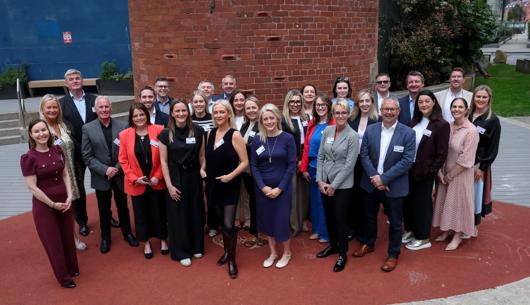
That question – and the practical steps needed to answer it – drove a wide-ranging discussion at the ‘Femtech founder roundtable: Funding the future of women’s health’, hosted by Browne Jacobson in partnership with the Health Innovation Hub Ireland in Dublin on 27 April 2026.
Attended by 36 delegates drawn from the founder community, the investment ecosystem, clinical practice, and regulatory advisory, the roundtable examined the structural, commercial and cultural barriers that are holding the sector back in Ireland and beyond.
The diagnosis that emerged was not a comfortable one but provides important lessons.
Femtech is not constrained by demand, clinical relevance or commercial potential. It is constrained by a co-ordination failure: investors who lack sector familiarity, founders who lead with impact rather than economics, an ecosystem that is fragmented and episodic, and a capital landscape that is both shallow and concentrated.
These are solvable problems. But solving them will require deliberate, co-ordinated action from every part of the ecosystem at once.
A shallow and concentrated funding landscape
Ireland's investor pool is limited in number. A small cohort of investors is absorbing more of the funding journey than was historically the case, creating structural bottlenecks at growth and Series A stages.
A clear gap was identified between early-stage funding and later-stage investment, resulting in companies being held longer at sub-scale and an increased reliance on bridge funding. Delegates described this as the "messy middle" – a funding valley where momentum is lost and investor confidence is tested most severely.
Public funding supports startups in early stages, particularly for feasibility, research, innovation and technology development. However, accessing funding at this critical later-stage remains limited. Startups also face barriers including complex application processes, restrictive eligibility criteria, co-investment requirements, and limited capacity to navigate funding systems.
A deeper problem was also identified: the process of accessing funding can itself destroy momentum. Failed applications result in lost time, opportunity cost, and unrecoverable effort.
Well-intentioned public funding mechanisms can create structural barriers that exclude the very founders they are designed to help. This was flagged as a matter that should be raised directly with the relevant bodies.
Femtech is undersold, not uninvestable
One of the strongest and most consistent messages from the roundtable was the disconnect between femtech's genuine commercial potential and how it is currently perceived by many investors.
The sector is less saturated than adjacent medtech areas and offers genuine commercial upside. However, it continues to be perceived by many investors as niche, risky, or insufficiently validated.
There was strong sentiment that femtech must be reframed as a high-growth, high-return investment category, comparable to oncology or cardiovascular sectors.
A particularly compelling commercial argument was surfaced during the discussions. Women are "super strong consumers", and are among the most engaged and adherent patients in extended clinical trials – not as an equality argument, but as a distinct commercial and clinical proposition for investors. Women are also highly discerning, meaning products that succeed with female users carry a strong market validation signal.
The consumer and patient engagement profile of women represents an underutilised commercial asset in investment pitches. It should be articulated as a commercial advantage, not merely a social one.
What investors actually want: Leading with economics
Across all table discussions, a consistent message emerged: founders must lead with commercial clarity. The emotional and human narrative of a product is insufficient on its own. Investors, regardless of gender, are primarily focused on return.
As a result, if slide one does not convince, the pitch is effectively over.
The pitch must demonstrate a clear payer, a defined reimbursement pathway and commercial viability. Investors also expect detailed business plans, scenario modelling and sensitivity analysis.
The shift required of founders is from vision to execution, and impact to economics.
Navigating male-dominated investment panels
Near-universal experience was reported of pitching to predominantly male investment panels with limited familiarity with women's health condition. This is a challenge that applies equally to male founders pitching women's health products.
Delegates shared a range of practical strategies for navigating this reality:
- Research investors in advance to understand their personal interests, portfolio focus and motivations.
- Align the pitch team composition with the audience – who goes into the room matters as much as what is said.
- Use clinical experts, advisory board members and experienced team members to raise the credibility of a pitch.
- Consider reframing the value proposition around the impact on partners and families, not just on women alone. A significant proportion of women suffering from certain gynaecological conditions avoid intimacy due to pain. Presenting the product's benefit in terms of its impact on the family unit can create resonance with an audience that lacks direct connection to the condition.
Effective femtech pitching to mixed or male-only panels may require multiple value proposition framings – spanning clinical, economic and relational – rather than a single narrative.
The VC landscape is shifting but slowly
The composition of venture capital is beginning to shift: new entrants to the sector are increasingly drawn from a broader range of backgrounds, and institutional limited partners are applying pressure on funds to improve gender diversity.
Pan-European networks of female VC investors now exist and were specifically recommended as a practical resource for femtech founders raising capital.
However, delegates were realistic about the pace of change. Meaningful change at the investment committee level is likely to take a further ten to fifteen years to materialise at scale.
A broader structural question was also posed: research demonstrates that boards with more women tend to deliver stronger financial performance. Should a similar framework be applied to investment fund composition – should funds backed by Enterprise Ireland be expected to better reflect the broader population?
Data strategy and regulatory positioning
Femtech companies operating with artificial intelligence (AI) or data-driven products must be able to answer a core investor question: "Where does your data come from?"
A lack of historical data in women's health, combined with ongoing data bias and underrepresentation, continues to affect the sector. The result is higher perceived risk, greater validation requirements and slower funding decisions.
There is, however, a significant emerging opportunity on this front. The NHS, in England and Wales, has recognised that it holds a substantial data asset and is now actively seeking to commercialise it, both domestically and through international partnerships, with secure data environments containing large volumes of usable data. This is a directly relevant development for femtech companies considering data strategy, AI product development and market entry.
On regulatory strategy, companies are increasingly using regulatory arbitrage – selecting faster, more supportive markets for initial market authorisation before returning to primary markets. The UAE and Masdar City were specifically cited as jurisdictions actively building their medtech and health innovation infrastructure.
Fast-track mutual recognition agreements mean that authorisation obtained in a supportive jurisdiction can significantly accelerate entry into target markets such as Ireland and the UK.
An ecosystem that must move from events to infrastructure
Founders described the current support landscape as disconnected, repetitive and insufficiently specific to the needs of medtech and femtech companies.
Founders want ongoing peer engagement, not one-off events. A specific request emerged for a regular, structured monthly forum where femtech founders can bring live problems and access consistent, sector-relevant expertise from a trusted peer group.
Organisations such as Fierce and NDRC were cited as doing this well – the former for bringing experienced female entrepreneurs to share their fundraising journeys, the latter for its founder peer-learning programmes.
Building sector-level visibility was also highlighted as essential. The concept of "femtech FOMO" was proposed as a deliberate positioning strategy, with Sisterly cited as a brand that consistently generates excitement through strong branding and events. This presents a model for how femtech should position itself at sector level.
What needs to happen next
The roundtable produced a clear set of priorities across three stakeholder groups:
- For founders: Prioritise commercial clarity, payer strategy, and evidence generation. Shift from vision to execution, and from impact to economics.
- For investors: Develop sector understanding and femtech-specific benchmarks, and adjust time horizons and risk frameworks appropriate to an emerging data environment.
- For the ecosystem: Build sector-specific playbooks and shared data infrastructure, address the seed-to-Series A funding gap, enable continuous founder networks and advocate for matched funding mechanisms that are genuinely accessible.
Final thoughts
The roundtable concluded that the femtech sector in Ireland is not underperforming – it is under-explained, under-benchmarked and structurally under-supported. The Health Innovation Hub Ireland’s Femtech in Ireland Report identified the key areas of government support needed to enable this sector, and the roundtable built on this by defining priority areas for femtech companies, particularly around articulating economic value, accessing investment, and aligning with international markets.
The opportunity is real and significant. Realising it will require founders who can tell the commercial story compellingly, investors who are willing to develop genuine sector understanding, and an ecosystem that moves from one-off events to sustained, coordinated, and visible action.
Browne Jacobson is proud to support the femtech community as it works to build that infrastructure – bringing our expertise across health, innovation, data, and investment to help founders, investors, and ecosystem organisations navigate the legal and regulatory landscape ahead. You can reach out to our specialist venture capital team to discuss your circumstances further.

You may be interested in...

UK Government confirms indefinite recognition of CE marked medical devices: Legal comment

A research-able development: EU and UK updates to scientific research data

MHRA 2030 Strategy: Health and life sciences lawyer comments
Browne Jacobson appoints David Hill as new health and life sciences partner with UK and international experience

National Commission into the Regulation of AI in Healthcare recommendations to be implemented: Legal comment

Aligning UK-UAE cross-border regulation for collaboration in health and life sciences

AI-assisted neurosurgery: Balancing innovation and risk

AI in healthcare: What the National Commission has found and why the picture is getting clearer
Browne Jacobson strengthens All-Island life sciences platform with appointment of leading Galway MedTech lawyer

Life Sciences Sector Plan ‘one year on’ update: Legal comment

Tracking pixels: Emerging privacy risks for health and life science providers

From pilotitis to progress: Scaling innovation at NHS ConfedExpo

Data governance and innovation in life sciences: Key issues arising in regulatory compliance, cybersecurity and AI agents

MHRA AI sandbox launch: Comments from a life sciences lawyer
Femtech founder roundtable: Funding the future of women’s health
Browne Jacobson supports Cambridge Heartwear in launching wearable tech for rapid heart disease diagnosis

Clinical trials reform: Comment from life sciences lawyer

AI liability in healthcare: Important updates from the UK jurisdiction taskforce

EU AI Act application for high-risk AI medical devices delayed: Legal comment
EMA and FDA guiding principles for AI in drug development: A review

Life sciences in Wales: Why 2026 could be a breakthrough year

Shared Insights: Avoiding pitfalls when implementing AI in the health and care sector

MHRA consultation on indefinite recognition of CE-marked medical devices: Legal comment

Maximising commercial revenue for the NHS: Post-event summary

Damned if they do, damned if they don’t: Understanding and mitigating the risk of AI tools in healthcare practice

The UK as a global life sciences hub: Legal infrastructure and innovation policy

Browne Jacobson corporate health partner recognised as ‘one to watch’ at national industry awards

Cross-border collaboration in Life Sciences: How to make it work

Browne Jacobson contributes to white paper exploring UK-UAE collaboration in healthcare AI adoption

How MHRA’s international reliance is shaping UK medicine regulation

Technology-enabled care in the UK: Legal and technical developments to watch

The importance of AI in the development life sciences

Arbitrating innovation: Resolving IP disputes in the life sciences sector

Who owns the algorithm? IP litigation heats up over AI-discovered molecules

Strategic forecast: M&A activity set to surge amid looming patent cliffs

AI in the healthcare sphere: Public and private considerations

Early access service to launch for innovative medical devices

Embracing AI: Revolutionising maternity care and patient safety in the NHS

Browne Jacobson advises US life sciences firm on international expansion deal