
ESG

Modern slavery
Modern slavery is the world's second largest form of organised crime. Our specialist employment and ESG lawyers support public and private sector organisations to assess their obligations, draft compliant statements, review supply chain processes, and establish robust governance frameworks to ensure compliance with modern slavery law while protecting their reputation.
The Modern Slavery Act requires in scope organisations to produce, sign, and make public a slavery and human trafficking statement every year that sets out the steps that were taken the previous year to combat modern slavery in the organisation and also its supply chains.
The legal requirements can apply to organisations based in the UK as well as overseas. We can help. We are experienced in:
- Determining compliance obligations: We assess whether your organisation falls within scope of the Modern Slavery Act, including complex multinational structures and threshold calculations across group entities.
- Drafting and reviewing the annual statement: Our team prepares compliant, comprehensive statements that meet statutory requirements whilst authentically reflecting your organisation's commitment to combating modern slavery. For organisations required to publish an annual modern slavery statement, or want to do so on a voluntary basis, our toolkit offers a cost-effective, expert-led resource to support this process.
- Policy and contract review: We audit existing employment policies, procurement procedures and supplier contracts to identify gaps and draft modern slavery-specific provisions that cascade obligations through your supply chain.
- Supply chain due diligence and risk assessment: We help identify high-risk sectors, geographies and suppliers, and develop proportionate due diligence frameworks tailored to your business model and resources.
- Governance frameworks: We establish board-level oversight structures, reporting mechanisms and internal accountability systems to embed modern slavery compliance within your organisation's governance architecture.

Why choose us?
The global nature of modern supply chains and complex organisational structures can make complying with the Modern Slavery Act challenging. We advise a diverse range of organisations in the public and private sectors including some of the world's leading brands.
- Cross-sector experience: We advise organisations across healthcare, education, local government, retail, and manufacturing, giving us unique insight into sector-specific modern slavery risks
- National coverage: With offices in Birmingham, London, Manchester, Nottingham and Exeter, we provide local support with national consistency
- Fixed-fee solutions: We offer a Modern Slavery Act toolkit, giving your organisation the framework and starting point it needs to publish a compliant statement that is specific to your own structure, supply chains and risk profile.
Addressing modern slavery in practice
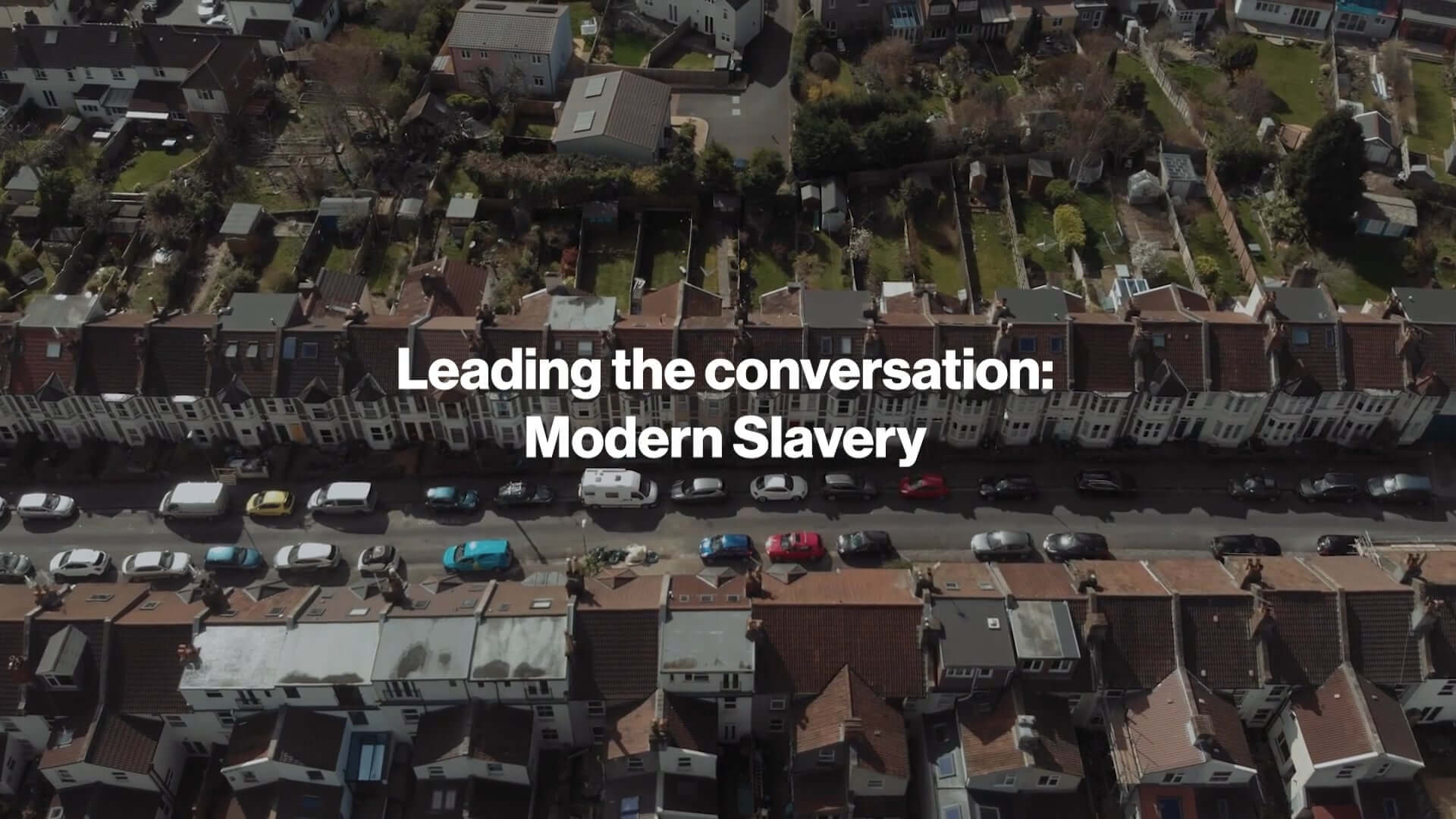
Sadly, severe human exploitation is a very real and longstanding issue in many parts of modern society. All organisations must be vigilant to the risks in order to spot warning signs early and manage cases compassionately and within the limitations of the law. In this short video we highlight some of the things to look out for and signpost to helpful resources. If you’d like to discuss your obligations under the Modern Slavery Act, please get in touch.
Modern Slavery Act toolkit
Our experience since the Modern Slavery Act first became law in 2015 has enabled us to develop a Modern Slavery Act toolkit, available at a fixed fee, to help clients comply with their legal duties while controlling costs.
Designed by our specialist lawyers, the toolkit provides the essential documents you need to comply with your legal duties under Section 54 of the Modern Slavery Act 2015. Whether you are publishing your first statement or refreshing an existing one, our practical templates offer professionally drafted documents that can be easily adapted to your organisation, saving you time and money. All documents are aligned with statutory requirements and the government’s updated Transparency in Supply Chains guidance, supporting both legal compliance and best practice.
The toolkit comprises three ready-to-use, fully editable templates:
- Framework for your modern slavery statement: A carefully structured framework developed from our extensive experience advising organisations across a wide range of sectors. Designed to encourage genuine engagement with the Act's requirements rather than a formulaic response, it supports your organisation in producing a statement that is authentically its own and that improves meaningfully each year.
- Template Anti-Modern Slavery policy: A professionally drafted, fully editable policy document that reflects the practical realities of operating responsibly in today's complex commercial environment. Guidance notes accompany the template to help your organisation adapt it appropriately to its own circumstances.
- Template board minutes to approve a modern slavery statement: A governance document designed to support the internal sign-off process for your modern slavery statement, giving your organisation confidence that the necessary steps are correctly recorded at the right level.
How much does the toolkit cost?
The Modern Slavery Act toolkit is available at a fixed fee. Please get in touch with our team to discuss pricing options tailored to your organisation's needs.
Frequently asked questions
Modern Slavery is the term used to encapsulate the crimes of slavery, servitude and forced or compulsory labour; and human trafficking (whether the person knew they were trafficked or not).
Any organisation wherever located that supplies goods or services in the UK and has a turnover of at least £36 million a year. Turnover includes that of subsidiaries. Wherever they are located.
- The organisation's structure, its business and its supply chains
- The organisation's policies and processes to prevent slavery and human trafficking
- Areas where there's a risk of slavery and human trafficking in the organisation and its supply chains
- What the organisation has done to assess and manage that risk
- How effective the organisation's slavery measures have been
- Details of staff training
Keep it on your homepage accessible via a prominent link. Interested stakeholders should be able to monitor the progress of the organisation over time.
Keep it on your homepage accessible via a prominent link.
You need to keep a record of all your statements. Interested stakeholders should be able to monitor the progress of the organisation over time.
If your organisation fails to comply, the Secretary of State may take proceedings to the High Court for an injunction requiring it to comply.
Featured insights
Supply chain liability
Overseas forced labour and exploitation claims back in the news
"The Dyson forced labour case heads to trial in London, signalling a significant shift in UK supply chain liability that businesses with global operations can no longer afford to ignore."Read the full analysis

Guide to the Modern Slavery Act
Statement requirements
"We outline the essential information you need to know to establish if your organisation is required to produce a Modern Slavery Statement and how to approach doing so."Read more

Section 54 of the Modern Slavery Act 2015 guide
"Our detailed guidance note explains who Section 54 applies to, what you need to do and when you need to do it by."Read our guide

Key contacts

Raymond Silverstein
Partner

Emma Grant
Knowledge Director
You may be interested in...

31 July 2026
Legal Update
Tackling modern slavery: What the UK's new proposals mean for businesses and public bodies

05 March 2026
Legal Update
Supply chain liability: Overseas forced labour and exploitation claims back in the news

04 February 2026
Legal Update
The Modern Slavery Act 2015

22 December 2025
Legal Update
UK and EU sustainability regulations: 2026 milestones, EPR and DRS updates

09 October 2025
Opinion
Addressing worker exploitation: Essential guidance for HR

16 April 2025
Legal Update
Updated Modern Slavery Act Transparency Guidance: Key obligations and steps for businesses

06 September 2024
Opinion
Forced labour goods: a landmark decision

17 January 2024
Legal Update
ESG and the path to net zero: Construction industry considerations

22 August 2023
Opinion
Modern slavery in the care sector – how employers can manage risks
13 June 2022
Legal Update
Modern Slavery and the NHS – new challenges on the horizon for NHS bodies and their suppliers
According to a report published by the Financial Reporting Council in April, modern slavery generates an estimated US$150 billion annually and encompasses 40 million people in slavery globally.

26 May 2022
Legal Update
A new Modern Slavery Bill
18 January 2022
Legal Update
Employment and Workforce Survey 2021: Gender and Race Equality – Future Changes Ahead?
The issue of equality has remained high on the agenda during the pandemic. The #MeToo and Black Lives Matter movements have increased awareness of gender and race equality issues across all of society. Our survey indicated there was still a significant number who were making changes either for gender or race or both.