

Life sciences in Wales: Why 2026 could be a breakthrough year
After a difficult 2024 and a tentative recovery through much of 2025, the sector now appears to be entering a more confident phase. Financing conditions have improved, strategic buyers are back in the market and there's a growing appetite for innovation-driven life science businesses.
If you work in Welsh life sciences, 2026 feels different.
We saw global life sciences dealmaking reflect that shift last year. Transaction values rebounded strongly in 2025, with several large strategic acquisitions pushing global M&A activity to around $200 billion. While deal volumes haven't dramatically increased, the size of transactions has – broadly speaking – which tells us that buyers are once again willing to pay for high-quality innovation.
This shift is being driven by structural pressures within the pharmaceutical industry. Over the next decade, many of the sector’s biggest products will lose exclusivity, which means large pharmaceutical companies need to replenish their pipelines – fast. Acquiring innovation remains one of the quickest ways to do that.
Capital availability is also playing a role. Large pharmaceutical groups remain highly cash-generative and private equity funds continue to hold undeployed capital. Both spent much of the recent downturn in defensive mode, but that's starting to change.
For innovative companies, that creates a more competitive environment for investment and acquisitions than we've seen in quite some time.
What about Wales?
Wales enters this renewed deal cycle with real strengths of its own.
Clusters such as Cardiff Medicentre, Swansea University’s Health Innovation Campus, Life Sciences Hub Wales and the MediWales network are increasingly visible internationally. Together, they provide the kind of connected ecosystem that investors and global life sciences companies really want to see when evaluating innovation hubs.
At a company level, Welsh businesses are gaining traction in areas that are attracting serious global attention – including AI-driven drug discovery, diagnostics and advanced biomaterials.
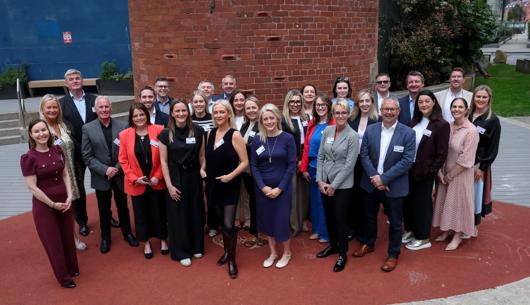
That sense of momentum is shared by many across the sector. At a recent Cardiff Business Club dinner on life sciences and artificial intelligence – sponsored by Browne Jacobson and which I had the pleasure of chairing – panel members from industry, academia and government were genuinely positive about Wales’ prospects.
The discussion highlighted how strengths in medical technology, diagnostics and digital health are beginning to intersect with advances in artificial intelligence and data science. The consensus? Wales increasingly has the ingredients for growth: strong universities, emerging clusters and a growing community of innovative companies.
The challenge now is converting that innovation into globally scalable businesses.
What to watch on the deal side
On the transactions side, one feature that hasn't changed is the continued use of earnouts. Earnouts are often used to bridge valuation gaps where the commercial success of a technology remains uncertain and in many life sciences deals – particularly those involving clinical or regulatory milestones – they also serve an important risk-allocation function that goes beyond valuation alone. That makes them particularly common in early-stage biotech, healthTech and university spin-outs.
That said, they also remain one of the most common sources of dispute in life sciences deals. If you're negotiating a deal, earnouts should be treated as a precision instrument – not a default mechanism. Milestones need to be clearly defined, performance metrics objectively measurable and reporting obligations transparent. Vague drafting – particularly around subjective concepts like "commercially reasonable efforts” – frequently leads to disagreements down the line.
At the same time, regulatory scrutiny of life sciences transactions is becoming more intense. Competition authorities are taking a closer look at acquisitions involving data-rich platforms, vertical integration and technologies that could shape future markets – and rightly so. Deals involving digital health platforms, AI-driven diagnostics and large clinical datasets are likely to face deeper regulatory analysis than they would have even a few years ago. Beyond merger control, investment screening is also an increasingly important consideration.
Under the National Security and Investment Act 2021, acquisitions involving AI-driven diagnostics, advanced biomaterials and similar technologies may require mandatory notification to the UK Government – a layer of regulatory risk that's particularly relevant for the kind of smaller innovative businesses we're seeing grow in Wales. The upshot? Regulatory strategy needs to be baked into the transaction process early, not treated as an afterthought.
Top tips
If you're a founder or investor preparing a business for investment or exit, here are three things that matter most.
- Diligence readiness: Intellectual property ownership, data governance and regulatory exposure are central issues for potential buyers. In practice, that means making sure inventor assignment agreements are in place, policies are drafted (and actually implemented) and that freedom-to-operate has been properly assessed.
- Governance clarity: Earnout structures, decision-making frameworks and reporting obligations should be clearly defined from the outset. Ambiguity here is one of the most common, and most avoidable, sources of post-completion dispute.
- Timing: The current alignment of capital and buyer demand is encouraging – but these windows don't stay open forever.
The bottom line
The recovery in life sciences dealmaking during 2025 doesn't look like a temporary spike. It may mark the beginning of a broader consolidation cycle across the sector. Welsh innovators enter this period with strengthening clusters, growing international visibility and increasing investor interest. The opportunity is clearly there – the question now is whether businesses are ready to grab it.
Contact

Phillip Pugh
Partner
phillip.pugh@brownejacobson.com
+44 (0)330 045 2869
You may be interested in...

Tracking pixels: Emerging privacy risks for health and life science providers
Femtech founder roundtable: Funding the future of women’s health

EMA and FDA guiding principles for AI in drug development: A review

The UK as a global life sciences hub: Legal infrastructure and innovation policy

Confidentiality in clinical trials: Arbitration as the preferred route for dispute resolution

Cross-border collaboration in Life Sciences: How to make it work

How MHRA’s international reliance is shaping UK medicine regulation

The importance of AI in the development life sciences

Arbitrating innovation: Resolving IP disputes in the life sciences sector

Who owns the algorithm? IP litigation heats up over AI-discovered molecules