
Court of Appeal upholds mortgagee's insurance claim in Ukrainian mine strike case
Read our spring article on the Oceanus Capital v Lloyd’s Insurance Company decision.
In our Spring edition, we looked at the Commercial Court decision in Oceanus Capital SARL v Lloyd’s Insurance Company [2025] EWHC 3293 (Comm), which addressed: the proximate cause of loss in the context of an MII policy; what "privity" requires of an assured; and whether a loss procured by fraud on the mortgagee can be considered fortuitous.
The Court of Appeal has unanimously dismissed the insurer’s appeal, agreeing with the reasoning of the Commercial Court, confirming Oceanus Captial’s entitled to US 3.6m under its MII policy.
First instance decision
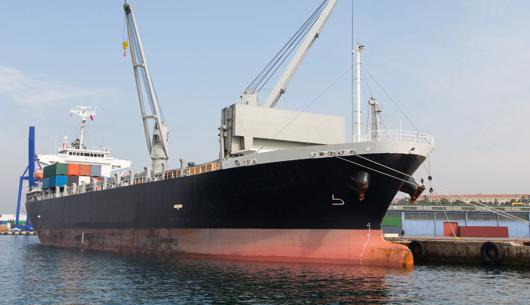
By way of recap, this case related to a vessel damaged by a mine strike in Ukrainian waters and the scope of cover under a Mortgagee’s (Oceanus Capital SARL) Interest Insurance policy. In December 2023, Oceanus was informed that the vessel was to trade into Ukrainian waters in breach of the trading warranties attached to the vessel’s separate War Risks Policy. Oceanus insisted on proof of valid additional war risks cover. A cover note was provided to Oceanus apparently evidencing such cover (December Additional Cover Note), however it was later found to be forged. The Commercial Court held that:
(1) The proximate cause of Oceanus’ the loss was the mine strike.
(2) Privity requires knowledge and consent or concurrence, not just knowledge alone.
(3) The loss was fortuitous.
The Appeal
The grounds of appeal advanced by Insurers largely reflected the arguments advanced to the Commercial Court Judge. (1) the proximate cause of the loss was the forgery of the December Additional Cover Note, which was not an insured peril; (2) alternatively, Oceanus was privy to the breach of the trading warranties in the War Risks Policy; and (3) further or alternatively, the loss was not fortuitous, because Oceanus knew that the Vessel trading to Ukrainian waters would amount to a breach of the trading warranties.
Court of Appeal’s rationale
Proximate cause
Insurers argued that the proximate cause of Oceanus' loss was the forgery of the December Additional Cover Note, not the breach of the trading warranties under the War Risks Policy. The Court dismissed this in two ways.
First, the MII Policy requires prima facie cover under something which falls within the definition of "Owners' Policies and Club Entries"; a description of contracts of insurance which actually exist, not a policy which appears to exist but does not. A forged document cannot fulfil that requirement.
Second, the Court rejected the suggestion that Oceanus' reliance on the forged document was causative of the loss. The first instance Judge found that, had there not been deception by the owners of the Vessel, it would still have gone to Ukrainian waters in breach of the trading warranties in the face of objection by Oceanus. Therefore, it was breach of the warranty that caused the loss.
The CA agreed that it would be uncommercial if Oceanus was worse off by having been positively deceived by the owners than it would have been if it had merely been kept in the dark about the Vessel undertaking a voyage to Ukrainian waters.
Privity
It was common ground on appeal that "privity" in the MII Policy bears the same meaning as in s. 39(5) of the Marine Insurance Act 1906, as requiring both knowledge and consent or concurrence.
The Court accepted Oceanus' submission that the fraud vitiated its consent. “Vitiated” meant that the fraud unravels the legal consequences of consent, however it does not destroy the fact of consent.
Oceanus gave its consent to the Vessel entering Ukrainian waters in breach of the trading warranties because it believed the Vessel had alternative equivalent cover (meaning Oceanus believed the War Risks Policy would respond and would be irrelevant for the purposes of any MII claim). Therefore, the fraud was sufficiently connected to the consent that was given, and sufficient to invalidate it.
Fortuity
The CA found that the fortuity principle had no application on the facts. The insured loss was Oceanus' interest in the Vessel, and that loss only arose because the damage to the Vessel occurred as the result of an unexpected mine strike.
There were a number of insured perils which must act in combination to bring about the insured loss. If one element is fortuitous, the combination will be fortuitous. The fortuitous mine strike therefore rendered the entire loss fortuitous.
Further, if Oceanus' consent was vitiated by the deception for the purposes of privity (as explained above), it couldn’t also be treated as a genuine "choice" for the purposes of fortuity, when both were based on the same consent.
Key takeaways
The Court of Appeal's judgment reinforces and extends the significance of the Commercial Court ruling in several respects.
The purpose of MII cover is confirmed. An MII policy protects the mortgagee's security interest in the vessel, not merely its interest as assignee of the owners' policies. This matters for how the quantum of insured loss is calculated and what events must be proved.
Privity requires genuine, unvitiated consent. The test is whether the deception has a sufficiently close connection to the subject matter of the consent. Here, that was whether the assured's knowledge or belief as to the relevance of the Owners' Policy to the MII claim was affected. Underwriters seeking to rely on the privity proviso will now face a higher hurdle where owner or charterer misconduct was involved.
Mortgagees who monitor diligently are protected. The Court's reasoning across all three grounds reinforces the principle that a mortgagee acting prudently and in good faith (insisting on evidence of cover, chasing owners, and seeking broker confirmation) should not be penalised for being deceived.
For now, this decision provides important certainty to lenders and their insurers operating in the London marine market on the scope and application of the standard MII wording. However, in mid-September, Lloyd’s Insurance has filed permission to appeal to the Supreme Court
Contact

Laura Brown
Principal Associate
laura.brown@brownejacobson.com
+44 (0)115 934 2051
You may be interested in...

Court of Appeal upholds mortgagee's insurance claim in Ukrainian mine strike case

Failure to disclose a pattern of fires entitles insurer to avoid charterers

AFL v Finch: Appeal court cuts damages in Lloyd's broker scandal

Liberty Managing Agency v Chedid: Allegations alone insufficient to avoid D&O cover

Insurance insights: London market quarterly, Autumn 2026

Britain's e-scooter crisis: What insurers need to know

War risk insurance: why ancient clauses are failing modern conflict

ChatGPT and the FCA: regulation comes knocking?

A 'tidal wave' of PFAS for AI

Claims definitions: Why the FCA's latest focus matters

AI-enabled attacks are scaling: what the UK warnings mean for insurers (and their lawyers)

Insurance insights: The Word, August 2026

Why continuous monitoring will define AI insurance (and what it changes for insurers)

LMA wording excludes Hormuz 'toll' payments: What this means for insurers

The insurance implications of the recent personal care products chemical contamination study

When futuristic design costs lives: Implications of Tesla’s hidden handle product recall

Nord Stream v Lloyd's: War risk exclusions, indirect causation and the limits of pipeline cover

Insurance insights: The Word, July 2026

Why professionals who ignore AI risk a negligence claim

How might AI impact fair presentation of risk in insurance?

Carspreading and the next motor insurance shock: Why ever-bigger cars matter for claims, pricing and regulation

TFA in UK rivers: Potential implications of trifluoroacetic acid contamination for insurers

Insurance insights: Casualty, Summer 2026

Fundamental dishonesty in personal injury claims: Implications for insurers' claims strategy

Browne Jacobson doubles down on international capability with hire of specialist insurance arbitration partner

Browne Jacobson advises Apiary Capital on investment by US-based FTV Capital in Carbon Underwriting

Insurance insights: London market quarterly, June 2026

Furlough issue: Supreme Court dismisses policyholders’ appeal on COVID-19 BI

High Court finds in favour of reinsured in COVID-19 event cancellation dispute

The Russian aircraft litigation: Court strikes out contribution claims against operator policy insurers

The Baltimore bridge collapse: Billion-dollar settlements, a looming trial, and the insurance implications for marine market participants
Insurance insights: The Word, June 2026

BYD takes on crash liability for God's Eye: What it means for motor underwriters

Paws and effect: Robot dogs take the lead at the 2026 World Cup

The £800m indemnity that isn't really insurance: What the Bayeux Tapestry loan tells underwriters

Middle East conflict could become costliest political violence loss on record

Deductibles, aggregation and D&O cover: A win for insurers

Insurance Insights: The Word, May 2026

Is "war" still war? Lloyds proposes to rewrite the rules on war risk