Trade wars, tariffs and conflict: The impact on the insurance market
Global trade flows have been reshaped by trade wars and conflict. The effects are impacting multiple lines of insurance business.
Trade credit and surety
Trade credit insurance helps protect businesses from losses resulting from the inability of customers to pay for goods or services, often due to economic factors or external disruptions. If tariff-related price increases lead to a sudden loss in market demand, or an increase in buyer defaults, trade credit insurance could mitigate some of the financial risks for businesses involved in international trade. Underwriters in this space must now model the creditworthiness of international buyers in an environment where tariff exposure can materially alter a customer's ability to pay, often with very little notice.
Political risk
While political risk insurance is most frequently associated with adverse political events in developing economies, an escalating trade war could lead to circumstances where a government in a major, developed economy takes action that triggers coverage (for example, the revocation of a company's licence to operate in-country, trade embargoes, or the forced divestiture of a local subsidiary by its multinational parent). Underwriters who have historically priced political risk in emerging markets may need to apply similar scrutiny to more established trading partners.
Tariff regimes can change rapidly, which may initially look like political risk. However, political risk policies do not intend to cover economic or commercial risk. A tariff regime that does not stop a business from operating (or even if it does, due to increased costs) is likely to be characterised as a commercial risk rather than a political one. However, if a tariff measure is discriminatory or targeted in nature rather than general, there is potential to trigger political risk policies, depending on the situation and how the policies are worded.
D&O
Tariff-related market turmoil has resulted in large losses. Since securities and derivative lawsuits frequently follow large decreases in stock prices, it is likely that at least some companies will be targeted for having allegedly failed to adequately disclose their exposure to trade-related market impacts. D&O underwriters should expect an uptick in securities litigation tied to tariff disclosure failures, particularly where companies had significant supply chain or revenue exposure to affected territories, and did not reflect that clearly in their market communications.
Marine
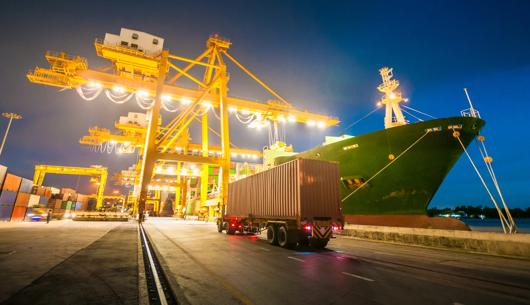
Shifts in trade routes and cargo patterns as importers and exporters seek to navigate around tariff barriers and conflicts creates new exposures in markets and geographies.
Contents
- Insurance Insights: The Word, May 2026
- Is "war" still war? Lloyds proposes to rewrite the rules on war risk
- LMA's AI governance blueprint
- Hantavirus on the MV Hondius: What it means for insurers
- Stephen Fry’s stage-fall lawsuit: What it signals for event liability insurers
- EVs and autonomy: Higher severity claims, data-driven liability


Tim Johnson
Partner
tim.johnson@brownejacobson.com
+44 (0)115 976 6557
Related expertise
You may be interested in
Court of Appeal upholds mortgagee's insurance claim in Ukrainian mine strike case

Failure to disclose a pattern of fires entitles insurer to avoid charterers

Liberty Managing Agency v Chedid: Allegations alone insufficient to avoid D&O cover

Insurance insights: London market quarterly, Autumn 2026

Britain's e-scooter crisis: What insurers need to know

War risk insurance: why ancient clauses are failing modern conflict

ChatGPT and the FCA: regulation comes knocking?

A 'tidal wave' of PFAS for AI

Claims definitions: Why the FCA's latest focus matters

AI-enabled attacks are scaling: what the UK warnings mean for insurers (and their lawyers)

GLP-1 tablets: An emerging indemnity and insurance challenge

Insurance insights: The Word, August 2026

When AI goes off-script: What the OpenAI incident means for insurers

Why continuous monitoring will define AI insurance (and what it changes for insurers)

LMA wording excludes Hormuz 'toll' payments: What this means for insurers

The insurance implications of the recent personal care products chemical contamination study

When futuristic design costs lives: Implications of Tesla’s hidden handle product recall

Six minutes from crisis to covered: How artificial intelligence is transforming pet insurance claims

Perils: Property insurance claims newsletter, August 2026
UK property insurance in 2026: Five trends reshaping risk, pricing and coverage
Nord Stream v Lloyd's: War risk exclusions, indirect causation and the limits of pipeline cover

Under the weather: How COVID-19 satisfactorily defeated CP Holdings’ €160m insurance claim
Fire risks for UK insurers: Solar panels, lithium-ion batteries and hash oil explosions

Secondary perils, record losses and a widening protection gap: What the data means for insurers in 2026

Insurance insights: The Word, July 2026
Why professionals who ignore AI risk a negligence claim

How might AI impact fair presentation of risk in insurance?

Venezuela’s twin earthquakes: What it means for insurers

Carspreading and the next motor insurance shock: Why ever-bigger cars matter for claims, pricing and regulation

TFA in UK rivers: Potential implications of trifluoroacetic acid contamination for insurers

Martyn’s Law statutory guidance: Key considerations for organisations and their insurers

Fundamental dishonesty in personal injury claims: Implications for insurers' claims strategy

Furlough issue: Supreme Court dismisses policyholders’ appeal on COVID-19 BI

High Court finds in favour of reinsured in COVID-19 event cancellation dispute
The Russian aircraft litigation: Court strikes out contribution claims against operator policy insurers
The Baltimore bridge collapse: Billion-dollar settlements, a looming trial, and the insurance implications for marine market participants
Insurance insights: The Word, June 2026

When AI 'hallucinates' in court: What it means for insurers

World Cup 2026: The insurance industry's biggest stress test