UK property insurance in 2026: Five trends reshaping risk, pricing and coverage
UK property insurers are navigating one of the most challenging operating environments in recent memory. Record claims payouts, structural losses, cascading climate events and a fragile pricing recovery are arriving simultaneously, creating compounding pressure on margins, capacity and coverage adequacy.
This article sets out the five trends that insurers, brokers, policyholders and their advisers need to understand in 2026: the record £6.1bn in property damage payouts, the sweeping reforms to the Flood Re scheme, a looming subsidence surge following a third consecutive heatwave, the emergence of wildfire as a live and underpriced risk, and the first signs of a pricing cycle turning after two years of softening premiums.
1. Record property damage claims payouts risking UK market losses
In 2025, UK property insurance payouts reached a record £6.1bn, of which £1.6bn were weather-related, according to the Association of British Insurers. This is double the annual average between 2017 and 2021.
The ABI breakdown shows both the scale and the direction of change. Storm damage to residential properties rose 32% to £244m in 2025 and domestic flood claims jumped 38% to £312m with the average flood payout rose 60% to £30,000 – a figure that captures cost inflation per event rather than simply frequency, reflecting the increasing severity and duration of water damage events.
The Environment Agency estimates around 4.6 million properties in England are at risk of surface water flooding, including roughly 1.1 million at high risk, and 2026 has already brought a wetter-than-average start to the year, with Cornwall recording its wettest January on record.
The picture is worse set against the pricing environment in which they arose: UK home insurance premiums fell 9% year-on-year in January 2026. Deloitte has forecast a combined ratio of 102.1% for UK home insurers in 2026. If this is accurate it means the sector will pay out more in claims and costs than it took in premium. Record claims volume and falling premium income arriving simultaneously is a structural margin squeeze, and it is reshaping how insurers price, resource and respond to weather events.
2. Flood Re’s tenth anniversary reforms mark major structural changes
On 1 July 2026, Flood Re and Defra announced a package of reforms.
The annual levy on insurers offering UK home insurance has increased to £160m, from £135m and has increased its statutory loss limit from £100m to £250m. The scheme has also been diversifying beyond conventional reinsurance. In March 2025, Flood Re completed Vision 2039, its first catastrophe bond, securing £140m in fully collateralised UK flood reinsurance, the first UK flood risk indemnity cat bond to reach market. The government has separately committed £6.85bn to flood defences through 2029, which research has estimated will lead to £1.15bn in annual damage savings to UK households.
Flood Re has spent more repairing Band G and H homes (fewer than 4% of UK properties) than Bands A and B (around 45%) in three of the last four years. From April 2027, contents-only premiums for Bands A and B will halve to £25, while Band H ceded premiums have risen to £1,613 – a deliberate rebalancing toward the households the scheme was designed to protect.
The scheme is expanding its Build Back Better programme. The programme provides up to £10,000 of property resilience measures as part of flood repairs, with the aim that resilient reconstruction should become the norm following a flood. This will be achieved through incentivising insurers to offer it to households affected by floods, with a lower cap on claims when the scheme is not offered. More than 70% of the residential insurance market now offers Build Back Better.
Flood Re is set to develop and pilot new Flood Performance Certificates (FPCs), similar to Energy Performance Certificates, to provide an assessment of a property’s flood resilience. Flood Re will also introduce premium discounts for households that obtain an FPC. If uptake becomes standard, it will give insurers a new data point for pricing at property level rather than relying on council tax bandings.
The reform package has direct implications for flood-risk properties, particularly in Council Tax Bands G and H where the cost of ceded policies has risen sharply. The introduction of Flood Performance Certificates as a future pricing tool raises questions about disclosure obligations and potential misrepresentation arguments where properties are assessed.
3. Subsidence: Third heatwave risks a fourth surge year
A third UK heatwave in 2026, combined with central England’s longest dry spell since June 1996, is reviving concerns about a repeat subsidence surge – just a year after payouts hit a record £307m. Bournemouth has recorded 14 consecutive days above its 26°C heatwave threshold per Met Office data, while Friday marked the 13th consecutive day above 30°C nationally, the longest such run since 2006. The Met Office has said UK heatwaves are becoming more frequent, longer-lasting and more intense, a trend now shaping how insurers price and underwrite property risk.
The concern is not the heatwave in isolation but its position in a sequence. Steven Coxon, head of subsidence at Claims Consortium Group, has identified three recent surge events in 2018, 2022 and 2025 – noting that ground conditions in early 2026 remained damaged from the previous year’s weather, pointing to a similar picture developing again. Three surge years in eight is not a pattern that allows insurers to treat subsidence as episodic rather than structural.
Clay-rich soils common across much of England shrink as they dry out, cracking foundations, walls and driveways. Alison Williams, managing director at Prestige Underwriting, said prolonged heat and drought were a growing concern within the non-standard property market, where older or specialist-material homes are more vulnerable to structural movement, with repair inflation and restoration complexity compounding claims costs. Ecclesiastical Insurance has flagged combined subsidence and wildfire exposure building across drought-affected regions, noting some areas have seen their driest start to a year since 1976.
Subsidence claims reached £153m in the first half of 2025, around one sixth of all property claims costs in that period. The British Geological Survey has projected that subsidence frequency and geographic spread may grow over coming decades, potentially expanding beyond London and the South East. The question is no longer whether repeated heat events will affect claims but how quickly capacity – particularly for loss adjusting and subsidence monitoring – can absorb another surge year without the delays seen in 2022 and 2025.
4. Wildfires: The UK’s insurance blind spot?
A major wildfire incident was declared for 24 hours on Conwy Mountain, North Wales after breaking out near Sychnant Pass on 12 July, forcing evacuations nearby. Earlier this month, emergency services were dealing with 19 wildfires simultaneously, spreading resources thin and bringing difficult triage decisions. Natural England warned that parts of southern England and the Midlands faced an 'exceptional' fire risk, which has now been marginally downgraded to 'very high', with the rest of England considered 'high' or 'moderate'.
Wildfire has emerged in recent weeks as a sudden, live and material property damage risk, with implications the UK insurance market is not yet fully equipped to assess or price. The UK is in the grip of a 'firewave', as the wet winter caused excessive vegetation growth and the summer’s extreme heat dried that vegetation, producing the ideal conditions for wildfires. Where flammable vegetation meets homes and infrastructure, the risks and associated costs are even more acute. The fires around York and Walthamstow may be smaller in comparison to large moorland fires, but the consequences can be disproportionately large.
Historically, the UK has not been a fire-prone country, so limited modelling data exists. Unlike California or Australia, where wildfire cover can be excluded from property policies in high-risk areas, UK insurers generally fold wildfire into standard fire cover.
Recent fires on the North York Moors indicate the business interruption risks wildfire can create in the UK, with business owners reporting persistent smoke affecting visitors and trade. Regrowth after a wildfire can take five to 10 years, leaving businesses that depend on the natural landscape facing a prolonged recovery.
The absence of a national wildfire risk map, the folding of wildfire into standard fire cover without specific pricing of these emerging risks, and the emerging business interruption dimension create a significant and underappreciated exposure for policyholders and insurers alike.
Coverage disputes arising from wildfire damage – particularly where smoke or progressive landscape damage is alleged – are likely to increase. Parametric products – which are being trialled in certain flood risk areas – are being mooted as a partial solution for tourism-related business interruption. Underwriters may be considering exclusions to discourage future urban development within high-risk areas such as floodplains and wildfire exposed areas. However, this does not help customers of existing housing stock.
5. A pricing turning point? June 2026 signals the end of the softening cycle
However, there are some green shoots as pricing data signals the end of two years of falling premiums in recent weeks. Home insurance premiums slowed during the second quarter of 2026, with prices rising in June, according to Defaqto’s latest Market Pricing data. Average prices fell by -0.7% across Q2, with -0.4% in April and -1.2% in May, then rose by 1% in June – the first notable monthly increase after a long run of falling prices.
Defaqto’s analysis points to a meaningful inflection. While the overall market recorded a further modest reduction in Q2, the 1% rise in June and the price increases introduced by most large providers indicate that the direction of travel is changing. The sustained falls of the past two years have now slowed substantially, and insurers are increasingly balancing competitive pressure against the need to maintain sustainable margins and reflect the underlying cost of cover.
Notably however, providers are no longer moving together. Most large insurers raised prices during Q2, but a smaller number of more substantial reductions kept the competitive market average in negative territory. That growing divergence means pricing is becoming increasingly dependent on the individual insurer, customer profile and risk – with carriers making targeted decisions about where to compete and where rates need to rise.
If the usual relationship with motor insurance pricing holds, Defaqto expects premiums to rise in the coming months, though any increases are more likely to be gradual and targeted rather than the sharp spikes seen during the last hard-market cycle. The end of the softening cycle, combined with increasing divergence in pricing decisions between carriers, is likely to intensify policyholder price sensitivity at renewal and generate Consumer Duty compliance scrutiny as some insurers move sharply whilst others hold.
Key takeaways for insurers
For insurers and brokers, the key question for the remainder of 2026 is whether the pricing inflection seen in June marks the beginning of a sustainable recovery or a modest correction that remains insufficient relative to underlying loss costs. For policyholders and their advisers, the more immediate concern is coverage adequacy - particularly where wildfire, subsidence and surface water flood risks intersect with properties that may be underinsured, subject to emerging exclusions, or reliant on schemes whose scope is still evolving. As the market diverges in pricing strategy and risk appetite, Consumer Duty obligations, coverage disputes and misrepresentation arguments are all likely to feature more prominently in the months ahead.
Contents
- Insurance insights: Perils, August 2026
- Nord Stream v Lloyd's: War risk exclusions, indirect causation and the limits of pipeline cover
- Under the weather: How COVID-19 satisfactorily defeated CP Holdings’ €160m insurance claim
- Fire risks for UK insurers: Solar panels, lithium-ion batteries and hash oil explosions
- Willis’ parametric trigger cracks the flood cover gap
- Secondary perils, record losses and a widening protection gap: What the data means for insurers
Contact

Rachael Murphy
Principal Associate
rachael.murphy@brownejacobson.com
+44 (0)115 976 6219
Discover more
You may be interested in

War risk insurance: why ancient clauses are failing modern conflict

Perils: Property insurance claims newsletter, August 2026
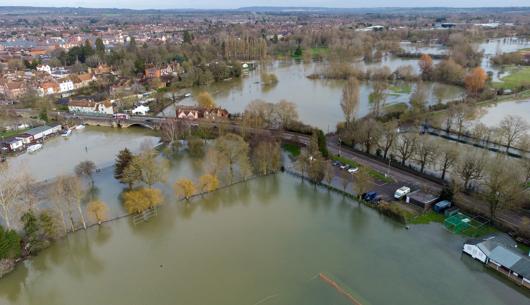
UK property insurance in 2026: Five trends reshaping risk, pricing and coverage

Nord Stream v Lloyd's: War risk exclusions, indirect causation and the limits of pipeline cover

Under the weather: How COVID-19 satisfactorily defeated CP Holdings’ €160m insurance claim

Fire risks for UK insurers: Solar panels, lithium-ion batteries and hash oil explosions
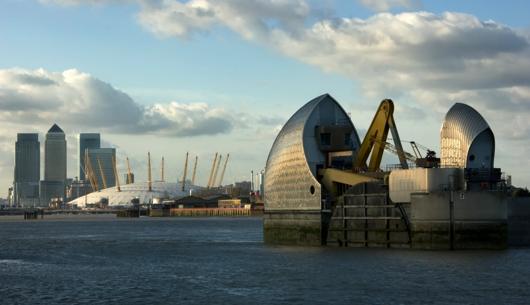
Willis’ parametric trigger cracks the flood cover gap
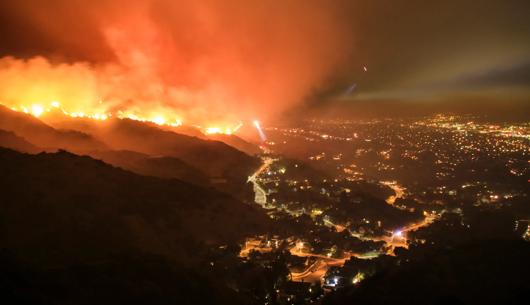
Secondary perils, record losses and a widening protection gap: What the data means for insurers in 2026
Venezuela’s twin earthquakes: What it means for insurers

TFA in UK rivers: Potential implications of trifluoroacetic acid contamination for insurers

Browne Jacobson doubles down on international capability with hire of specialist insurance arbitration partner

Furlough issue: Supreme Court dismisses policyholders’ appeal on COVID-19 BI

High Court finds in favour of reinsured in COVID-19 event cancellation dispute
The Baltimore bridge collapse: Billion-dollar settlements, a looming trial, and the insurance implications for marine market participants

The £800m indemnity that isn't really insurance: What the Bayeux Tapestry loan tells underwriters

Middle East conflict could become costliest political violence loss on record
Data centres and the insurance gap: What it means for insurers

Bath Racecourse & Others v Liberty Mutual: Supreme Court hearing on furlough

Middle East conflict 2026: Insurance impacts across marine, aviation, travel and beyond

Business interruption insurance: Aggregation
London market and speciality
Climate, technology and the protection gap: Top trends reshaping property damage insurance in 2025

When does dust, odour and noise become 'nuisance'? Insights from Andrews v Krononspan

Vivid Housing v Allianz: Interpreting imminent threat in warranty insurance claims

Bellhouse v Zurich: Testing the limits of insurer assumptions under CIDRA

Perils: Property insurance claims newsletter, February 2026

UK audit reform retreat: Weak response and implications for insurers
The rising tide of civil unrest: Critical implications for insurers

COVID-19 business interruption claims: Supreme Court appeal on furlough deductions

UK data centre expansion creates insurance challenges

Cyber attacks: Could brokers be in the firing line?

“New low” for ransomware cybercriminals an opportunity for cyber insurers?

When does time start running? The limitation quirk in insurance coverage claims
The meaning of "property damage": Lessons from Insurance Australia v Capral

Flooded with doubt: Court assesses fraud allegations in Malhotra Leisure

Representations, warranties and conditions precedent: Lonham Group v Scotbeef

Martyn’s Law: When remembrance meets the market

Covid-19 BI claims update: Are furlough payments a BI loss?

When frozen pipes crack legal certainty: Land Energy Girvan v Aspen Insurance