Secondary perils, record losses and a widening protection gap: What the data means for insurers in 2026
The latest natural catastrophe data from 2025 should prompt insurers to ask an uncomfortable question: are current underwriting frameworks, modelling tools and coverage structures fit for a risk environment that looks materially different from the one they were designed for?
The answer, on the evidence, is increasingly no. Secondary perils are no longer a rounding error in catastrophe budgets - they are the dominant driver of insured losses - and the modelling gap that accompanies them is translating directly into pricing volatility and protection failures.
This article examines what the 2025 loss data means in practice for insurers navigating a landscape in which the old assumptions are falling away.
Record insured losses continue
Global economic losses from natural disasters reached $260bn in 2025 – the lowest since 2015 – yet insured losses remained elevated at $127bn, marking the sixth consecutive year that insurance payouts exceeded the $100bn threshold.
In 2025 alone, it estimated that severe convective storms generated $61bn in insured losses globally, making it the third-highest annual total on record for this peril. This has been driven largely by repeated, damaging outbreaks across the United States.
Secondary perils overtake primary perils
Analysis shows that on a cumulative basis since 2000, secondary perils – including hailstorms, wildfires, flash floods, severe convective storms, and winter storms (outside Europe) have generated industry insured losses of at least $1.56tn, while primary perils which traditional catastrophe models focus on, such as tropical cyclones, earthquakes, and European windstorms generated roughly $1.04tn.
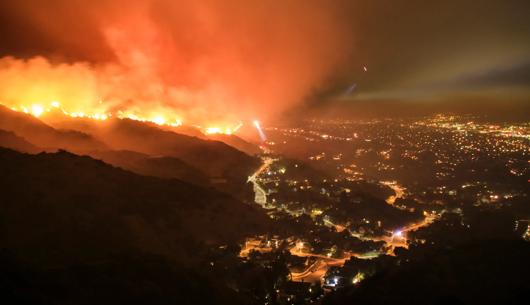
While these secondary events may individually be smaller in scale, their cumulative financial impact is substantial. The Los Angeles wildfires alone generated record-breaking insured losses of $40bn, and severe wildfire seasons across mainland Europe in 2025 underline that this is not an isolated trend but a structural shift in the risk landscape.
Pricing challenges and the protection gap
Secondary perils present a distinct pricing challenge. The catastrophe modelling technology used to assess these events is less mature than for primary perils, introducing greater uncertainty into the underwriting process. The result is pricing volatility that makes it harder for businesses to budget for insurance costs and harder for insurers to write the risk profitably.
When claims occur, there is a growing trend of an increasing protection gap, as policyholders are still consistently uninsured and / or where there is limited cover for specific perils in higher risk locations. Insurers covered nearly half of global economic losses in 2025, but this left a protection gap of 51% - the lowest on record and leaving communities and businesses exposed to significant financial pressure. In a quickly changing environmental landscape, it is hard for insurers and policyholders alike to keep up.
Key takeaways for insurers
- Reinsurance structures may need rebalancing: If secondary perils are now the primary driver of cumulative insured losses, reinsurance structures designed around peak zone tropical cyclone and earthquake exposure may leave insurers with insufficient protection where losses are actually occurring.
- Accumulation assumptions require stress-testing: Secondary perils aggregate differently; dispersed geographically and correlated across lines. Insurers should pressure-test their accumulation assumptions against secondary peril scenarios rather than relying on primary peril aggregation methodology alone.
- Pricing volatility is a retention risk: Unpredictable premium movements in high-risk locations can drive policyholders to reduce or drop cover, widening the protection gap further.
- Claims preparedness must account for secondary peril characteristics: High-frequency, geographically dispersed losses from wildfires and convective storms demand different capacity and supply chain arrangements than peak zone catastrophe events.
- The protection gap is a regulatory conversation waiting to happen: Insurers should expect increased scrutiny of coverage adequacy and exclusion practices in high-risk locations, and are better placed engaging proactively than reactively.
Contents
- Insurance insights: Perils, August 2026
- UK property insurance in 2026: Five trends reshaping risk, pricing and coverage
- Nord Stream v Lloyd's: War risk exclusions, indirect causation and the limits of pipeline cover
- Under the weather: How COVID-19 satisfactorily defeated CP Holdings’ €160m insurance claim
- Fire risks for UK insurers: Solar panels, lithium-ion batteries and hash oil explosions
- Willis’ parametric trigger cracks the flood cover gap


Rachael Murphy
Principal Associate
rachael.murphy@brownejacobson.com
+44 (0)115 976 6219
You may be interested in

War risk insurance: why ancient clauses are failing modern conflict

Perils: Property insurance claims newsletter, August 2026
UK property insurance in 2026: Five trends reshaping risk, pricing and coverage
Nord Stream v Lloyd's: War risk exclusions, indirect causation and the limits of pipeline cover

Under the weather: How COVID-19 satisfactorily defeated CP Holdings’ €160m insurance claim

Fire risks for UK insurers: Solar panels, lithium-ion batteries and hash oil explosions
Willis’ parametric trigger cracks the flood cover gap
Secondary perils, record losses and a widening protection gap: What the data means for insurers in 2026

Venezuela’s twin earthquakes: What it means for insurers

TFA in UK rivers: Potential implications of trifluoroacetic acid contamination for insurers

Browne Jacobson doubles down on international capability with hire of specialist insurance arbitration partner

Furlough issue: Supreme Court dismisses policyholders’ appeal on COVID-19 BI

High Court finds in favour of reinsured in COVID-19 event cancellation dispute
The Baltimore bridge collapse: Billion-dollar settlements, a looming trial, and the insurance implications for marine market participants

The £800m indemnity that isn't really insurance: What the Bayeux Tapestry loan tells underwriters

Middle East conflict could become costliest political violence loss on record
Data centres and the insurance gap: What it means for insurers

Bath Racecourse & Others v Liberty Mutual: Supreme Court hearing on furlough

Middle East conflict 2026: Insurance impacts across marine, aviation, travel and beyond

Business interruption insurance: Aggregation
London market and speciality
Climate, technology and the protection gap: Top trends reshaping property damage insurance in 2025

When does dust, odour and noise become 'nuisance'? Insights from Andrews v Krononspan

Vivid Housing v Allianz: Interpreting imminent threat in warranty insurance claims

Bellhouse v Zurich: Testing the limits of insurer assumptions under CIDRA

Perils: Property insurance claims newsletter, February 2026

UK audit reform retreat: Weak response and implications for insurers
The rising tide of civil unrest: Critical implications for insurers

COVID-19 business interruption claims: Supreme Court appeal on furlough deductions

UK data centre expansion creates insurance challenges

Cyber attacks: Could brokers be in the firing line?

“New low” for ransomware cybercriminals an opportunity for cyber insurers?

When does time start running? The limitation quirk in insurance coverage claims

The meaning of "property damage": Lessons from Insurance Australia v Capral

Flooded with doubt: Court assesses fraud allegations in Malhotra Leisure

Representations, warranties and conditions precedent: Lonham Group v Scotbeef

Martyn’s Law: When remembrance meets the market

Covid-19 BI claims update: Are furlough payments a BI loss?

When frozen pipes crack legal certainty: Land Energy Girvan v Aspen Insurance