
When AI 'hallucinates' in court: What it means for insurers
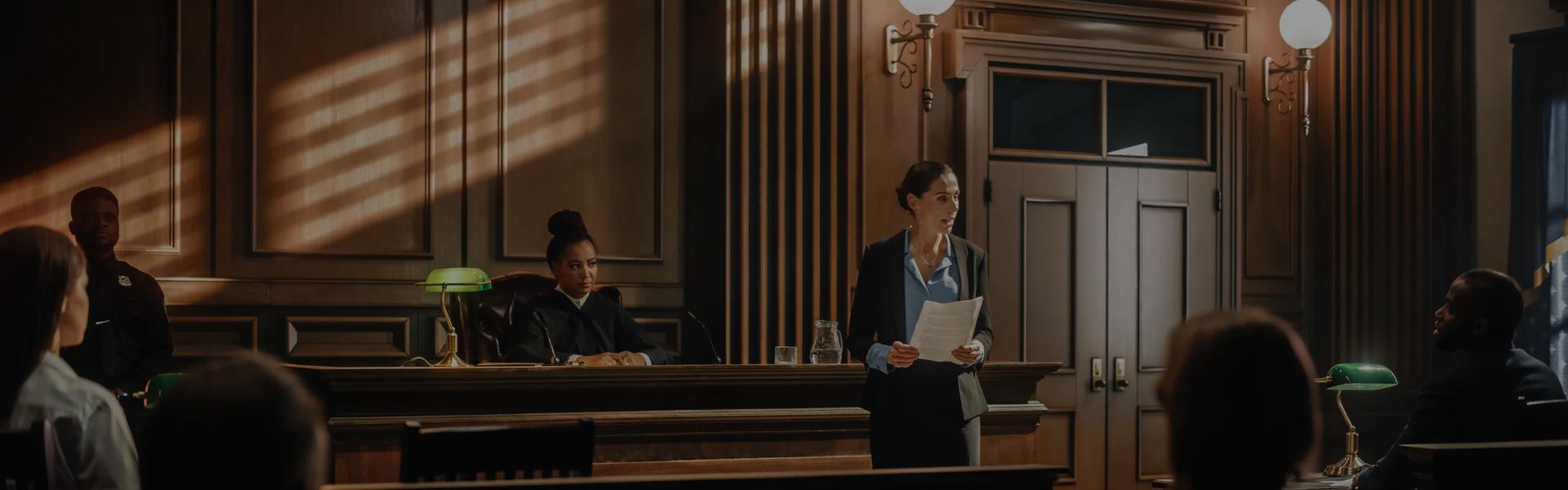
Courts in the US and UK are increasingly confronting a specific failure mode of generative AI: hallucinations, in forms of confident sounding legal citations or quotations that simply do not exist.
Two recent, widely reported incidents show that judges are treating unverified AI output not as a quirky tech mistake, but as a governance and professional responsibility breakdown.
Two cases that crystallise the risk
In Withers v. City of Aberdeen, Senior Judge Sharion Aycock issued a sanctions order after filings on both sides contained 'hallucinatory citations'. AI was used, outputs were not verified, and local counsel effectively became a 'rubber stamp'. The result was operationally severe, with pro hac vice admissions revoked, disqualification of local counsel, fines, and with the scheduled trial cancelled.
Media coverage emphasised how unusual it is to see both parties’ lawyers caught in the same matter, and how this is becoming a systemic workflow risk.
In the UK, the Law Gazette reported that Pinsent Masons and three solicitors referred themselves to the Solicitors Regulation Authority (SRA) after the court was misled by AI-generated 'hallucinations' in the matter of Cork & Anor v Smith (an Insolvency and Companies Court proceeding). The judge’s criticism focused more on supervision, verification, and honesty to the court, including a second AI-assisted explanation that was still incorrect.
A separate legal analysis summarised the case and framed it as a warning about a “cavalier attitude” to accuracy when AI is introduced into legal drafting.
Why insurers should care
1. Litigation operations risk becomes insurance risk
Insurers are litigation engines: coverage disputes, defence panel management, subrogation, employment matters. If outside counsel files AI hallucinated authority, the insurer can face delays, adverse procedural outcomes, higher defence costs, and settlement pressure. The Withers order is an example of how quickly the court can lose trust in the counsel’s work.
2. Panel counsel oversight is now part of AI governance
The UK regulator’s materials on effective supervision reinforce that supervision is risk based and must be demonstrably effective, exactly the theme judges are highlighting when AI use is involved. For insurers, this maps neatly onto panel counsel guidelines, audit rights, and billing controls.
3. Professional liability and E&O exposure will evolve
As lawyers embed generative AI into research and drafting, insurers writing lawyers professional liability, E&O, and even cyber will see more claims and more difficult causation arguments (human error vs. tool failure vs. supervision failure). That underwriting pressure is already visible in broader market moves to clarify or limit AI related liabilities in commercial policies.
Implications for insurers
These cases are best read as early signals of a new normal: courts and regulators are converging on the idea that AI output is never a substitute for professional judgment, and that failures will be treated as process failures (verification, supervision, controls), not 'technology surprises'. For insurers, that means AI risk management has to extend beyond underwriting models and into litigation operations, third party oversight, and policy language strategy.
Contents
- Insurance insights: The Word, June 2026
- Deductibles, aggregation and D&O cover: A win for insurers
- Middle East conflict could become costliest political violence loss on record
- World Cup 2026: The insurance industry's biggest stress test
- Paws and effect: Robot dogs take the lead at the 2026 World Cup
- BYD takes on crash liability for God's Eye: What it means for motor underwriters
- The £800m indemnity that isn't really insurance: What the Bayeux Tapestry loan tells underwriters

Tim Johnson
Partner
tim.johnson@brownejacobson.com
+44 (0)115 976 6557
You may be interested in

Court of Appeal upholds mortgagee's insurance claim in Ukrainian mine strike case

Failure to disclose a pattern of fires entitles insurer to avoid charterers

Liberty Managing Agency v Chedid: Allegations alone insufficient to avoid D&O cover

Britain's e-scooter crisis: What insurers need to know

War risk insurance: why ancient clauses are failing modern conflict

ChatGPT and the FCA: regulation comes knocking?

A 'tidal wave' of PFAS for AI

Claims definitions: Why the FCA's latest focus matters

AI-enabled attacks are scaling: what the UK warnings mean for insurers (and their lawyers)

Navigating insurance issues for NHS private patient units: Roundtable summary

GLP-1 tablets: An emerging indemnity and insurance challenge

Insurance insights: The Word, August 2026

When AI goes off-script: What the OpenAI incident means for insurers

Why continuous monitoring will define AI insurance (and what it changes for insurers)

LMA wording excludes Hormuz 'toll' payments: What this means for insurers

The insurance implications of the recent personal care products chemical contamination study

When futuristic design costs lives: Implications of Tesla’s hidden handle product recall

Six minutes from crisis to covered: How artificial intelligence is transforming pet insurance claims

Under the weather: How COVID-19 satisfactorily defeated CP Holdings’ €160m insurance claim
Fire risks for UK insurers: Solar panels, lithium-ion batteries and hash oil explosions

Insurance insights: The Word, July 2026
Why professionals who ignore AI risk a negligence claim

How might AI impact fair presentation of risk in insurance?

Venezuela’s twin earthquakes: What it means for insurers

Carspreading and the next motor insurance shock: Why ever-bigger cars matter for claims, pricing and regulation

TFA in UK rivers: Potential implications of trifluoroacetic acid contamination for insurers

Auditor negligence and causation: Wine Enterprise Investment Scheme Ltd v Crowe UK LLP

Insurance insights: Casualty, Summer 2026

Martyn’s Law statutory guidance: Key considerations for organisations and their insurers

Fundamental dishonesty in personal injury claims: Implications for insurers' claims strategy

Furlough issue: Supreme Court dismisses policyholders’ appeal on COVID-19 BI

High Court finds in favour of reinsured in COVID-19 event cancellation dispute

The Russian aircraft litigation: Court strikes out contribution claims against operator policy insurers
The Baltimore bridge collapse: Billion-dollar settlements, a looming trial, and the insurance implications for marine market participants
Insurance insights: The Word, June 2026
When AI 'hallucinates' in court: What it means for insurers

World Cup 2026: The insurance industry's biggest stress test

BYD takes on crash liability for God's Eye: What it means for motor underwriters

Paws and effect: Robot dogs take the lead at the 2026 World Cup