Britain's e-scooter crisis: What insurers need to know
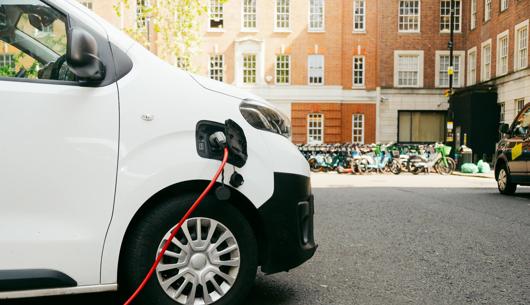
Approximately one million privately owned e-scooters are now in circulation across the UK. Their normal, intended use, riding on public roads, cycle lanes and pavements, remains a criminal offence under the Road Traffic Act 1988. No mainstream insurance product exists to cover them. After six years of regulatory inaction, the financial consequences are falling squarely on the insurance industry and Britain's insured motorists.
The legal position
A privately owned e-scooter cannot lawfully be ridden on a UK public road, cycle lane or pavement regardless of how carefully it is used. As of 2026, no legislation has been passed to change this. The only lawful public use remains participation in a government-approved rental scheme, where the operator provides insurance directly. Government-backed rental trials launched in 2020 have now been extended to May 2028, with a wider legislative framework for micromobility vehicles still to be tabled.
The insurance gap
Because private e-scooters are illegal to ride on public roads, no mainstream motor insurance product has been developed for them. When an uninsured rider causes serious injury to a third party, the Motor Insurers' Bureau (MIB), funded through a levy on motor insurers, steps in to compensate the victim. That cost is ultimately spread across the premiums of every insured motorist in Britain.
The figures are now significant. The MIB paid out almost £47 million on micromobility claims in 2025 alone, with cumulative compensation costs exceeding £100 million over the period of regulatory uncertainty. A study published in August found that e-scooter riders sustain proportionately more head and internal injuries than cyclists or motorcyclists, meaning claims are not only more frequent, but more severe and costly.
A compounding data problem
The Department for Transport has acknowledged that its road casualty statistics cannot separately identify e-scooter deaths and injuries, a significant obstacle to informed underwriting and reserving. Approximately 15,000 units are sold each year, yet the risk remains effectively invisible in official data. Fire risk adds a further dimension: the London Fire Brigade attended a record number of e-scooter and e-bike fires in 2025, resulting in two fatalities, with implications for property insurers writing urban risks.
Tentative signs of reform
The government has recently committed to creating a new low-speed zero emission vehicles category and has indicated that a consultation on private e-scooter regulations is being considered. Ministers have publicly acknowledged that the present position is unsustainable. However, commitment to a consultation is not enacted legislation, and until a mandatory insurance framework exists, the structural gap remains open.
The bottom line for insurers
The industry should be reviewing motor and property policy wordings for e-scooter exposure, monitoring MIB levy trends, and engaging with the forthcoming consultation on what a workable insurance regime must look like. Britain has allowed a market of one million uninsurable vehicles to develop on its roads. The cost of that failure is accelerating and without legislative intervention, it will continue to be borne by insured motorists.
Contents: The Word, September 2026
- Insurance insights: The Word, September 2026
- War risk insurance: why ancient clauses are failing modern conflict
- AI-enabled attacks are scaling: what the UK warnings mean for insurers (and their lawyers)
- ChatGPT and the FCA: regulation comes knocking?
- Claims definitions: Why the FCA's latest focus matters
- A 'tidal wave' of PFAS for AI


Tim Johnson
Partner
tim.johnson@brownejacobson.com
+44 (0)115 976 6557
You may be interested in

Liberty Managing Agency v Chedid: Allegations alone insufficient to avoid D&O cover
Britain's e-scooter crisis: What insurers need to know

War risk insurance: why ancient clauses are failing modern conflict

ChatGPT and the FCA: regulation comes knocking?

A 'tidal wave' of PFAS for AI

Claims definitions: Why the FCA's latest focus matters

AI-enabled attacks are scaling: what the UK warnings mean for insurers (and their lawyers)

Insurance insights: The Word, August 2026

When AI goes off-script: What the OpenAI incident means for insurers

Why continuous monitoring will define AI insurance (and what it changes for insurers)

LMA wording excludes Hormuz 'toll' payments: What this means for insurers

The insurance implications of the recent personal care products chemical contamination study
When futuristic design costs lives: Implications of Tesla’s hidden handle product recall

Six minutes from crisis to covered: How artificial intelligence is transforming pet insurance claims
Fire risks for UK insurers: Solar panels, lithium-ion batteries and hash oil explosions

Insurance insights: The Word, July 2026
Why professionals who ignore AI risk a negligence claim

How might AI impact fair presentation of risk in insurance?

Venezuela’s twin earthquakes: What it means for insurers
Carspreading and the next motor insurance shock: Why ever-bigger cars matter for claims, pricing and regulation

TFA in UK rivers: Potential implications of trifluoroacetic acid contamination for insurers

Martyn’s Law statutory guidance: Key considerations for organisations and their insurers

Fundamental dishonesty in personal injury claims: Implications for insurers' claims strategy

Furlough issue: Supreme Court dismisses policyholders’ appeal on COVID-19 BI

High Court finds in favour of reinsured in COVID-19 event cancellation dispute
The Russian aircraft litigation: Court strikes out contribution claims against operator policy insurers
The Baltimore bridge collapse: Billion-dollar settlements, a looming trial, and the insurance implications for marine market participants
Insurance insights: The Word, June 2026

When AI 'hallucinates' in court: What it means for insurers

World Cup 2026: The insurance industry's biggest stress test

BYD takes on crash liability for God's Eye: What it means for motor underwriters

Paws and effect: Robot dogs take the lead at the 2026 World Cup

The £800m indemnity that isn't really insurance: What the Bayeux Tapestry loan tells underwriters
Middle East conflict could become costliest political violence loss on record

Deductibles, aggregation and D&O cover: A win for insurers

Is "war" still war? Lloyds proposes to rewrite the rules on war risk
Trade wars, tariffs and conflict: The impact on the insurance market

Hantavirus on the MV Hondius: What it means for insurers

Stephen Fry’s stage-fall lawsuit: What it signals for event liability insurers