

Implications for professional indemnity insurers following Coady v Coady
The COVID-19 pandemic prompted a surge in homemade 'lockdown wills' due to social distancing restrictions. A recent High Court case has shown that if strict legal rules for signing and witnessing a will are not followed, it can be declared invalid.
This is important for professional indemnity insurers, as solicitors and will-writing professionals could face claims if wills they helped prepare are found to be invalid.
Background: The strict formalities of will execution
Section 9 of the Wills Act 1837 mandates that a will must be:
- in writing
- signed by the testator (or by some other person in the testator's presence and by their direction)
- made or acknowledged by the testator in the presence of two or more witnesses present at the same time; and
- attested and signed by those witnesses in the presence of the testator.
In practice, “presence” means the parties must be in each other’s line of sight during the signing process.
During the COVID-19 lockdowns, it was hard for people to follow the usual rules for signing and witnessing wills. To help, the government allowed wills to be witnessed remotely using video calls or similar technology for wills signed between 31 January 2020 and 31 January 2024. However, everyone involved still had to see each other sign in real time and confirm what was happening, following strict procedures.
The temporary change was made under the Wills Act 1837 (Electronic Communications) (Amendment) (Coronavirus) Order 2020, which set out the requirements for remote witnessing and emphasised the need for all parties to visually witness and acknowledge the signing at the same time.
Following the expiry of this temporary legislation in February 2024, traditional in-person witnessing requirements apply in full. Any deviation from these formal signing rules, whether due to distancing or misunderstanding of the law, puts a will’s validity at serious risk.
The case: Coady v Coady (2025)
The recent High Court case of Coady v Coady (2025) highlights the risks associated with improperly executed wills during the COVID-19 lockdown.
In this case, the court examined a will signed by an elderly woman, Mrs Coady, in April 2020. The signing took place at her home, with two neighbours acting as witnesses from a distance in the garden. Evidence showed that:
- the witnesses were positioned 8-12 feet away and did not have a clear view of Mrs Coady actually signing her name; and
- Mrs Coady could not clearly see the witnesses when they signed the document themselves.
As a result, Mrs Coady’s signature was neither made nor acknowledged in the presence of both witnesses at the same time, and the witnesses did not sign in her presence. This failed to meet the formal requirements set out in Section 9 of the Wills Act 1837.
The court found that the essential line of sight requirement had been broken. Consequently, the 2020 will was declared invalid due to improper execution. Mrs Coady’s previous will from 2017, signed before the pandemic, remained her last valid will, significantly changing how her estate would be distributed.
This decision demonstrates that even a minor procedural error in the will signing process can completely overturn the testator’s final wishes.
A wave of contested lockdown wills
Legal professionals anticipate a significant increase in challenges to wills made during the COVID 19 lockdown period. Many people signing wills in 2020-2021 resorted to unconventional methods: exchanges on doorsteps and through windows and socially distanced garden signings.
Whilst such wills may be valid when formalities were carefully observed, the margin for error was exceptionally slim. In other words, any deviation from the required formalities could result in the will being invalidated, regardless of the testator’s intentions.
Coady exemplifies how any ambiguity or procedural slip can invalidate an entire will. Disappointed beneficiaries who feel they were unfairly excluded from a family member’s “'lockdown will' may now be emboldened to challenge such documents. If there is reason to suspect that a pandemic-era will was not executed properly, those wills are vulnerable to being contested in court.
For beneficiaries and estates, this could mean protracted litigation and the risk that an earlier will (or the intestacy rules) will supersede the contested document.
What this means for insurers
Professional indemnity policies covering solicitors and will-writing professionals will cover claims arising from negligent preparation and execution of will. During the pandemic period, there was a significant surge in homemade 'lockdown wills', with many professionals adapting their practices to offer remote or socially distanced execution services under challenging conditions.
The Coady v Coady decision demonstrates that even minor procedural irregularities in will execution can render the document entirely invalid, exposing professionals to substantial claims from disappointed beneficiaries. Where a lockdown will is successfully challenged, the quantum of loss could represent the entire value of bequests under the invalid will, with multiple beneficiaries potentially bringing separate claims.
The forthcoming wave of challenges to lockdown wills may result in increased scrutiny over the practices adopted by professionals during the pandemic, which is likely to lead to an increase in professional indemnity claims.
Insurers are advised to carefully consider their underwriting around firms where there may be elevated exposure to such claims, particularly those that provided high volumes of remote witnessing services or socially distanced will executions.
Contents
- Insurance Insights: The Word, January 2026
- Climate risks outpacing insurers’ projections
- FCA acts on home and travel insurance super-complaint
- FCA focus on clarifying insurance policy wordings for understanding
- UK audit reform retreat: Weak response and implications for insurers
- Could AI bias increase underinsurance?
Contact

Kathryn Balogun
Trainee Solicitor
kathryn.balogun@brownejacobson.com
+44 (0)330 045 2763

Tim Johnson
Partner
tim.johnson@brownejacobson.com
+44 (0)115 976 6557
Related expertise
You may be interested in...

Your construction team uses AI. Does your contract mention this?

AI-assisted neurosurgery: Balancing innovation and risk

Auditor negligence and causation: Wine Enterprise Investment Scheme Ltd v Crowe UK LLP
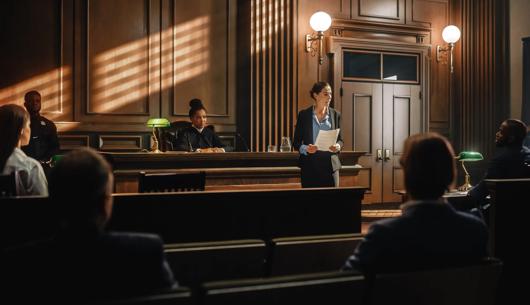
When AI 'hallucinates' in court: What it means for insurers

The £800m indemnity that isn't really insurance: What the Bayeux Tapestry loan tells underwriters

Reinsurance: Lessons for the Market from a £3.76 million dispute

The Mazur appeal judgment: Implications for professional indemnity insurers

Digital dementia and the insurance implications of social media addiction

Professional liability

London market and speciality

Questions professional indemnity insurers should be asking about their clients' AI usage

Implications for professional indemnity insurers following Coady v Coady

AI and emerging legal challenges in construction
Update on the Audit Reform and Corporate Governance Bill

A reminder to accountants and tax advisers: Know your policy terms

Considerations for professionals when using artificial intelligence

Professional and management matters: October 2025

Mazur v Charles Russell Speechlys: Implications for solicitors' professional indemnity insurers

AI adoption without safeguards: A growing risk for insurers

Sports medicine: Navigating the legal and insurance landscape

Silent AI threat to insurers: Don’t leave it to chance

Scrapping of no-fault evictions: What it means for Insurers

ICAEW: Changes to PII requirements

Browne Jacobson survey finds 38% of insurers considering pulling out of the solicitors PII market

Court of Appeal upholds decision on professional indemnity policy exclusions in insurer's appeal

Welsh Government inks new regulations for Acupuncture, Body piercing, Electrolysis and Tattooing

Court of Appeal decision again demonstrates the need for reform of the Solicitors Minimum Terms

Insurance considerations following use of RAAC concrete

Browne Jacobson advise on sale of professional indemnity MGA One Commercial Specialty Limited

Insolvency practitioners and trustee immunity

Claims against solicitors and the 'no-negligence world'

The Solicitors Regulation Authority has approval to take over from the Solicitors Indemnity Fund

‘You get what you pay for’ – the meaning of ‘professional services’ in D&C policies

A new approach to PI insurance for Germany lawyers
“Original cause” – Aggregation clauses in insurance contracts – Spire Healthcare v Royal & Sun Alliance [2022] EWCA Civ 17
A recent Court of Appeal judgment has provided some useful and much-needed clarity on the interpretation and application of aggregation clauses in insurance contracts.
SRA Standards and Regulations November 2019
On Monday 25 November the 2011 SRA Handbook is replaced by the 2019 SRA Standards and Regulations (often referred to as STARS).This is the 26th version of the Code of Conduct for Solicitors.
Contingent loss in negligence claims
Contingent loss is relevant to limitation; specifically, the date at which a claimant’s cause of action accrues for the purposes of a claim in the tort of negligence (as many claims against professional advisers are framed).
Freelance Solicitors not subject to Minimum Terms
As part of the SRA’s ‘Looking to the Future’ programme, from November 2019 solicitors who provide reserved legal activities who wish to practise on their own have the option to go freelance. Freelance solicitors will be a new class of solicitor.
W&I insurance and sell-side due diligence
The purpose of this note is to highlight the difficulties with vendor due diligence in the context of W&I insurance.
Various Claimants v Giambrone and Law and Others Defendants and AIG Europe Limited 2019
On 11 January 2019 Mr Justice Foskett provided his judgment in respect of an application for non-party costs pursuant to section 51 of the Senior Courts Act 1981 against AIG.