

Climate risks outpacing insurers’ projections
Climate change is accelerating faster than anticipated by insurers’ risk models, actuaries warn, raising red flags for the insurance industry.
A new analysis by the UK Institute and Faculty of Actuaries (IFoA) with the University of Exeter finds that climate risks are building up more quickly than governments, financial institutions, and insurance markets have prepared for.
Current climate models underestimate the pace of global warming and its financial fallout, the report argues, due to factors like the loss of aerosol-induced cooling (a 'hidden sunshade' from pollution that has so far masked about 0.5°C of warming) and evidence that the Earth’s atmosphere is more sensitive to greenhouse gases than previously thought.
Together, these factors suggest that global temperatures could reach the critical 2°C increase well before 2050. This would bring forward the timeline for severe physical climate impacts that drive insurance claims, potentially straining reinsurance capacity.
Implications for insurance availability and affordability
Such faster-than-expected warming has serious implications for insurers. The report warns that an uptick in the frequency and severity of extreme events – from hurricanes and wildfires to floods and heatwaves – will put increased pressure on insurance claims and premiums. In other words, disasters that insurers once expected to occur rarely are happening more often, causing larger losses.
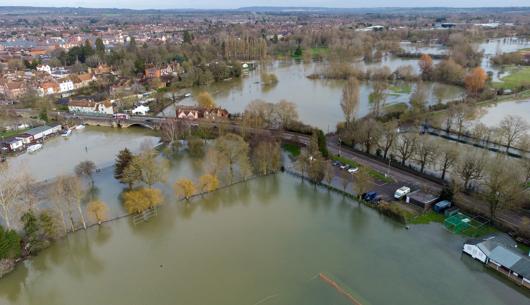
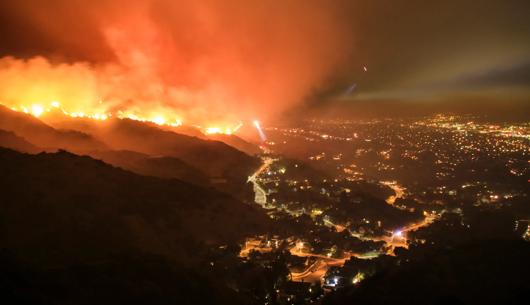
A consequence is that insurance cover could become unavailable or unaffordable in high-risk regions sooner than anticipated. If certain areas face continual catastrophes (for example, repeated wildfires or floods), insurers may retreat due to unsustainable losses. This trend is already evident: in California, for instance, several major insurers stopped offering home insurance in wildfire-prone areas. State regulators eventually intervened with new rules to maintain coverage in these high-risk zones. Such dynamics foreshadow a growing 'protection gap' where climate-exposed communities struggle to obtain affordable insurance.
Rising catastrophe losses
Escalating climate losses also threaten insurers’ financial stability and business models. Over the past decade, insured losses from natural catastrophes have trended sharply upward. According to Swiss Re, global insured catastrophe losses exceeded $100bn annually for six consecutive years, a historically unprecedented run of high losses. Such repeated heavy payouts raise concerns as to whether insurers have set aside enough capital and priced risks adequately. In response, many insurers have raised premiums and tightened coverage terms in disaster-prone markets.
However, actuarial experts caution that simply charging higher premiums may not be a sustainable solution if losses continue to outpace predictions – exorbitant rates can drive customers away or make insurance impractical. The report describes a worst-case scenario dubbed “Planetary Insolvency,” where compounding climate shocks erode global economic activity and overwhelm financial safety nets like insurance.
Conclusion: Adapting to the new climate reality
To avoid these dire outcomes, insurers must adapt swiftly and integrate climate foresight into their strategies.
Actuaries and climate scientists are urging the industry to update its catastrophe models and stress-testing to reflect emerging climate data. Insurers may need to build larger buffers and recalibrate underwriting for a future where, for example, “once-in-a-century” storms happen far more frequently.
Some insurers and reinsurers have begun advocating for risk prevention measures – Swiss Re’s chief economist emphasises “strengthening prevention, protection and preparedness” as essential to protect lives and property in the face of rising losses. By encouraging risk-reducing practices (and even helping fund them), insurers can lower future claims while fulfilling their role as societal “shock absorbers.”
Contents
- Insurance Insights: The Word, January 2026
- FCA acts on home and travel insurance super-complaint
- FCA focus on clarifying insurance policy wordings for understanding
- UK audit reform retreat: Weak response and implications for insurers
- Could AI bias increase underinsurance?
- Implications for professional indemnity insurers following Coady v Coady


Tim Johnson
Partner
tim.johnson@brownejacobson.com
+44 (0)115 976 6557
Related expertise
You may be interested in

Liberty Managing Agency v Chedid: Allegations alone insufficient to avoid D&O cover

Britain's e-scooter crisis: What insurers need to know

War risk insurance: why ancient clauses are failing modern conflict

ChatGPT and the FCA: regulation comes knocking?

A 'tidal wave' of PFAS for AI

Claims definitions: Why the FCA's latest focus matters

AI-enabled attacks are scaling: what the UK warnings mean for insurers (and their lawyers)

Insurance insights: The Word, August 2026

When AI goes off-script: What the OpenAI incident means for insurers

Why continuous monitoring will define AI insurance (and what it changes for insurers)

LMA wording excludes Hormuz 'toll' payments: What this means for insurers

The insurance implications of the recent personal care products chemical contamination study

When futuristic design costs lives: Implications of Tesla’s hidden handle product recall

Six minutes from crisis to covered: How artificial intelligence is transforming pet insurance claims

Perils: Property insurance claims newsletter, August 2026
UK property insurance in 2026: Five trends reshaping risk, pricing and coverage
Nord Stream v Lloyd's: War risk exclusions, indirect causation and the limits of pipeline cover

Under the weather: How COVID-19 satisfactorily defeated CP Holdings’ €160m insurance claim

Fire risks for UK insurers: Solar panels, lithium-ion batteries and hash oil explosions
Willis’ parametric trigger cracks the flood cover gap
Secondary perils, record losses and a widening protection gap: What the data means for insurers in 2026

Insurance insights: The Word, July 2026
Why professionals who ignore AI risk a negligence claim

How might AI impact fair presentation of risk in insurance?

Venezuela’s twin earthquakes: What it means for insurers

Carspreading and the next motor insurance shock: Why ever-bigger cars matter for claims, pricing and regulation

TFA in UK rivers: Potential implications of trifluoroacetic acid contamination for insurers

Martyn’s Law statutory guidance: Key considerations for organisations and their insurers

Fundamental dishonesty in personal injury claims: Implications for insurers' claims strategy

Browne Jacobson doubles down on international capability with hire of specialist insurance arbitration partner

Furlough issue: Supreme Court dismisses policyholders’ appeal on COVID-19 BI

High Court finds in favour of reinsured in COVID-19 event cancellation dispute

The Russian aircraft litigation: Court strikes out contribution claims against operator policy insurers
The Baltimore bridge collapse: Billion-dollar settlements, a looming trial, and the insurance implications for marine market participants
Insurance insights: The Word, June 2026

When AI 'hallucinates' in court: What it means for insurers

World Cup 2026: The insurance industry's biggest stress test

BYD takes on crash liability for God's Eye: What it means for motor underwriters

Paws and effect: Robot dogs take the lead at the 2026 World Cup