Happy Aras: 'Incompetent master' defeats a US$1.27m general average demand - what it changes for insurers
The English Admiralty Court's January 2026 decision in Unity Ship Group S.A. v Euroins Insurance JSC (The Happy Aras) is a significant reminder that general average (GA) demands are not beyond challenge. The court refused a US$1.27 million GA contribution after finding the master incompetent and the shipowner unable to demonstrate due diligence.
This article explains what the decision means for insurers handling GA security and demands.
Unity Ship Group S.A. v Euroins Insurance JSC (The Happy Aras) [2026] EWHC 7 (Admlty)
On 12 January 2026, the English Admiralty Court refused a shipowner’s attempt to recover $1,271,095.89 in general average from a cargo interests’ insurer, after finding the vessel was unseaworthy due to the master’s incompetence and the owner’s inability to establish due diligence in selecting and supervising him.
The HAPPY ARAS – a 1990-built bulk carrier – grounded off Turkey’s Datça Peninsula on 20 March 2023, triggering a long salvage and transhipment operation that ran until 13 June 2023. Owners declared GA, and the final adjustment allocated a cargo contribution of US$1,271,095.89.
Two specific details are especially relevant to this case:
- First, the vessel’s tonnage (2,659 GT) meant there was no requirement for a voyage data recorder (VDR), so the reconstruction depended heavily on AIS, logbooks, charts, and limited crew material.
- Second, the court noted that the owner called no crew evidence, including from the master.
Those gaps increased the importance of objective third party data (especially AIS) and undermined the owner’s ability to explain away bridge-team failures.
The cargo insurer, Euroins Insurance JSC, refused to make any payment under an average guarantee, arguing that the vessel was unseaworthy due to:
- an incompetent master; and
- deficient passage planning.
Although the court rejected the insurer’s case in relation to deficient planning, it upheld the insurer’s entitlement to deny coverage on the grounds of the master’s incompetence.
The legal hinge: GA rules don’t erase 'actionable fault' defences
This matters for insurers because GA is often treated as quasi-automatic: a casualty happens, GA is declared, securities are posted, and contributions are pursued. However, York-Antwerp Rule D does preserve defences in certain situations.
Here, cargo interests relied on 'actionable fault' tied to the carrier’s seaworthiness obligations under the Hague Rules (which were incorporated into the contract of carriage). Once unseaworthiness was established, the burden shifted to owners to prove they exercised due diligence, which they were unable to establish in this case. Notably, the judge remarked that the owners called no crew evidence, and the owner’s due-diligence proof (certificates and an asserted reference) was thin and largely untested.
Implications for insurers
For insurers, the Happy Aras outcome is a practical reminder that GA demands should be handled in the same way as contested liability claims rather than treated as routine invoices. In this case, the court’s decision relied on a forensic analysis of evidence such as AIS track reconstruction and close scrutiny of contemporaneous documents (including log integrity and watchkeeping practice).
For legal and wordings teams, this case highlights how the wording of any average guarantee/GA security can shape the whole dispute: insurers want security language and issuance protocols that keep defences alive and avoid drifting into an 'as adjusted, pay regardless' position by custom or convenience.
For reinsurance and portfolio managers, the case is a reminder that GA disputes can change loss emergence and tail (and can flip a seemingly straightforward contribution into a defended matter with material costs), so reserves, reporting, and large-loss governance should anticipate litigation risk and expense – not just the face value of the GA demand.
Finally, the case carries a clear underwriting message: the shipowner’s inability to evidence robust crew vetting and supervision became outcome-determinative, so insurers can treat 'documentable due diligence' (references, appraisals, SMS compliance evidence, audit trails) as a real risk signal - because in these disputes, it functions as litigation-grade protection, not mere administration.
Contents
- Insurance Insights: The Word, February 2026
- Chemicals in headphones: An emerging risk signal for insurers
- Soaring gold prices are pushing vault insurance to its limits and forcing insurers to rethink accu
- AI-powered insurance comparison: Insurify's ChatGPT app signals shift in distribution models
- Proposal forms and question sets: Questions PI insurers should be asking about clients' AI usage
- Dark kitchens: Understanding the insurance implications of the delivery-only food revolution


Tim Johnson
Partner
tim.johnson@brownejacobson.com
+44 (0)115 976 6557
You may be interested in

Liberty Managing Agency v Chedid: Allegations alone insufficient to avoid D&O cover

Britain's e-scooter crisis: What insurers need to know

War risk insurance: why ancient clauses are failing modern conflict

ChatGPT and the FCA: regulation comes knocking?

A 'tidal wave' of PFAS for AI

Claims definitions: Why the FCA's latest focus matters

AI-enabled attacks are scaling: what the UK warnings mean for insurers (and their lawyers)

Insurance insights: The Word, August 2026

When AI goes off-script: What the OpenAI incident means for insurers

Why continuous monitoring will define AI insurance (and what it changes for insurers)

LMA wording excludes Hormuz 'toll' payments: What this means for insurers

The insurance implications of the recent personal care products chemical contamination study

When futuristic design costs lives: Implications of Tesla’s hidden handle product recall

Six minutes from crisis to covered: How artificial intelligence is transforming pet insurance claims

Perils: Property insurance claims newsletter, August 2026
UK property insurance in 2026: Five trends reshaping risk, pricing and coverage

Nord Stream v Lloyd's: War risk exclusions, indirect causation and the limits of pipeline cover

Under the weather: How COVID-19 satisfactorily defeated CP Holdings’ €160m insurance claim

Fire risks for UK insurers: Solar panels, lithium-ion batteries and hash oil explosions
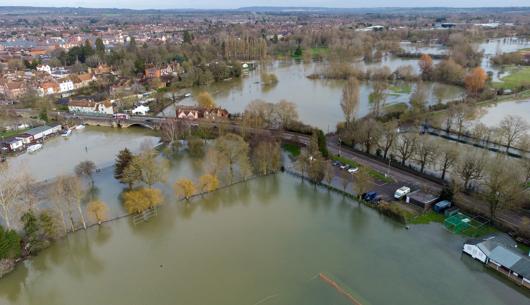
Willis’ parametric trigger cracks the flood cover gap

Secondary perils, record losses and a widening protection gap: What the data means for insurers in 2026

Insurance insights: The Word, July 2026
Why professionals who ignore AI risk a negligence claim

How might AI impact fair presentation of risk in insurance?

Venezuela’s twin earthquakes: What it means for insurers

Carspreading and the next motor insurance shock: Why ever-bigger cars matter for claims, pricing and regulation

TFA in UK rivers: Potential implications of trifluoroacetic acid contamination for insurers

Martyn’s Law statutory guidance: Key considerations for organisations and their insurers

Fundamental dishonesty in personal injury claims: Implications for insurers' claims strategy

Browne Jacobson doubles down on international capability with hire of specialist insurance arbitration partner

Furlough issue: Supreme Court dismisses policyholders’ appeal on COVID-19 BI

High Court finds in favour of reinsured in COVID-19 event cancellation dispute

The Russian aircraft litigation: Court strikes out contribution claims against operator policy insurers
The Baltimore bridge collapse: Billion-dollar settlements, a looming trial, and the insurance implications for marine market participants
Insurance insights: The Word, June 2026

When AI 'hallucinates' in court: What it means for insurers

World Cup 2026: The insurance industry's biggest stress test

BYD takes on crash liability for God's Eye: What it means for motor underwriters

Paws and effect: Robot dogs take the lead at the 2026 World Cup