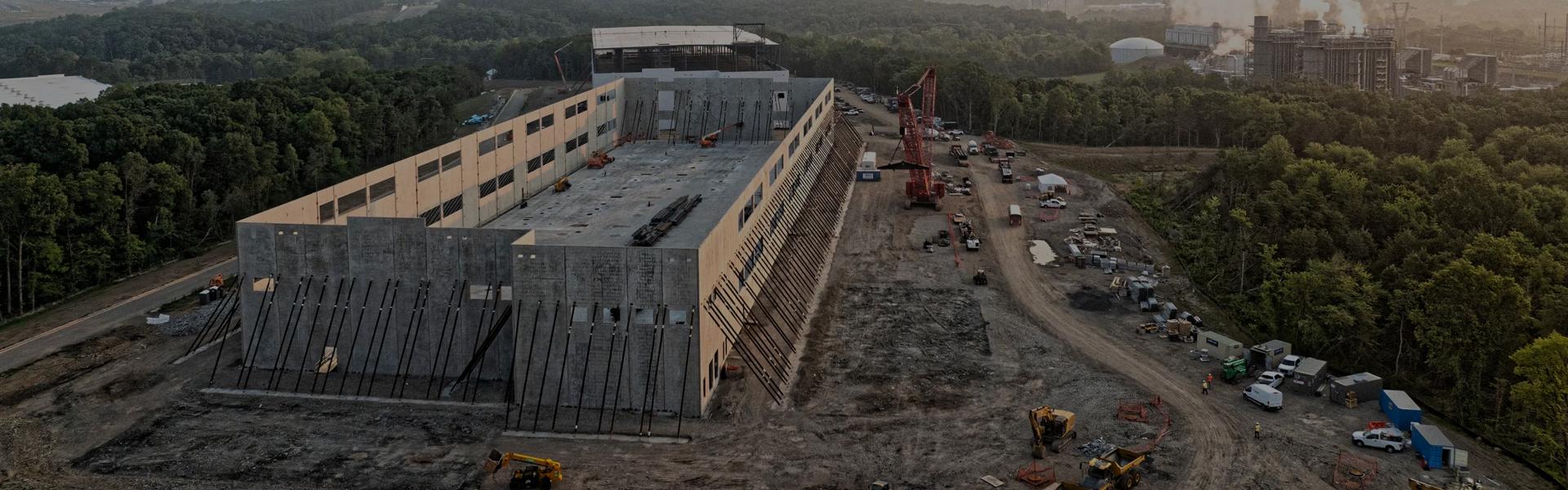
Data centres: Legal challenges and trends in 2026
As we predicted in our horizon scanning for 2025, demand for data centres continues to rise rapidly and the UK government’s National Data Strategy predicts data usage will double by 2026.
Growth is driven in large part by the rise in artificial intelligence (something all industries, including the legal sector, are having to adapt to and embrace) and cloud based computing. Planning applications for data centres in the UK continue to increase, and the UK remains one of the top data centre markets in the world (surpassed in number by only the USA and, by a handful of datacentres only, Germany).
Whilst favourable changes to the National Planning Policy Framework and the designation of data centres as nationally significant infrastructure should help ease the planning process, the data centre development boom is not without its legal challenges.
Disputes and technological resilience
Data centres are complex construction projects, and huge sums of money are at stake not just in the construction of them but also throughout their operation. Even minor delays or periods of downtime can result in cost overruns into the millions.
There are typically multiple parties and stakeholders involved in the construction of data centres and the related supply chains, and the greater the complexity and the more parties involved the higher the risk of disputes arising. Further, rapid changes in the technology used in data centres means obsolescence is a real issue facing the industry where older facilities become old and outdated before their time, and sometimes during the period of the construction work itself.
This can lead to employers instructing scope changes during the course of a project, or seeking to omit works, suspend them or even terminate the engagement of contractors where project demands and requirements have shifted during the construction phase. With changes in scope and poor contract administration being some of the leading causes of construction disputes, parties should ensure their contracts are clear on the consequences of scope changes (in particular omissions) as well as the grounds for termination and suspension.
Going forward, it may be more common for employers to structure the construction of data centres across multiple contracts to divide up and separately procure the construction of the shell and fitting out in phases.
Supply chain availability
The components, plant and equipment required for the construction of data centres is highly specialised, limiting the choice of suppliers and leading to supply chain bottlenecks where demand far outstrips supply. As well as causing delays, this also creates imbalances in the negotiating positions for contractors and clients: suppliers know there are limited alternatives for their clients and can leverage this for untypically favourable positions on risk allocation.
Due to the limited supply options, contractors are more exposed to the risk of supply chain insolvency, particularly where employers are removing any choice in the supply chain selection by procuring equipment early and requiring contractors to assume responsibility for long lead equipment. Contractors and employers must carefully negotiate who will bear the risk of a supplier insolvency as the more accepted position of sub-contractor insolvency being a contractor risk becomes a ‘harder sell’.
Competence and experience
New emerging technologies pose challenges for contractors in trying to ensure they stay within the scope of their professional indemnity cover, and clients may need to share in more of the risk where the potential losses outstrip the available insurance cover. A typical contractor’s bottom line simply cannot take the assumption of such large-scale risks on multiple projects without limitations on liability which are more reflective of standard commercial developments, leading to the reviewing of procurement models and a departure from the typical ‘single point responsibility’ approach to commercial developments.
Contractors need to carefully consider the standards of care they are agreeing to sign up to and the experience and competence they are warranting when undertaking projects which involve the development and use of emerging technology to come up with unique design solutions.
Whilst it seems unlikely that the data centre development boom will end with a total bust, alternative phased procurement structures are likely to emerge along with a recalibration of the risk allocation between contractors and clients, where the more traditional market positions which are adopted on typical commercial developments are not manageable by contractors on such a scale.
Contents
- 2026: Horizon scanning in construction
- AI and emerging legal challenges
- CRU issues decision on private wire connections for Irish data centres
- England's Gateway regime: Delays and solutions
- Building safety in Wales
- Fire safety claims: What we know and what’s next?
- Gearing up for PFI contract expiry
- Reinforced Autoclaved Aerated Concrete (RAAC)
Contact

Michael Sadler
Partner
michael.sadler@brownejacobson.com
+44 (0)115 976 6599
You may be interested in
Browne Jacobson appointed by Pagabo to £26bn national development framework

How public-private partnerships could renew school estates

Exeter Development Club, November 2026
Google-Constellation nuclear uprate deal: What this means for the UK’s data centre power strategy

Browne Jacobson launches free digital tool to help individuals and organisations navigate the Building Safety Act

Browne Jacobson supporting Bedford Borough Council on Universal United Kingdom Resort

Browne Jacobson advises WhiteSpider on deal to strengthen digital resilience across UK critical national infrastructure

Your construction team uses AI. Does your contract mention this?

The UK Cyber Security and Resilience Bill: What you need to know

Widescale clean energy is within reach – but the legal groundwork needs to happen now
Ofgem's proposed data centre connection reforms: A significant cost to play and stay
BCAR one year on: Practical implications for Irish developers

Local government reorganisation and construction contracts

Recent developments and social public works clauses for Welsh construction contracts over £2m
‘A New Nuclear Future’ report launch: Legal comment

Browne Jacobson advises Tendra Technical Services as built environment group accelerates national growth

Browne Jacobson advises BGF on multi-million-pound investment into Black Cat Building Consultancy

Browne Jacobson supports Specialist Passenger Solutions in securing bus service contract for Sizewell C workers

Data centres in a heatwave: An industry confronting its own contradiction
Heat as the ‘second connection’: Why UK data centres need a heat strategy
Navigating adjudication in construction disputes

Major UK-GCC free trade agreement and what it means for business
Future Homes Standard and plug-in solar panels: Legal comment

Browne Jacobson and CBI to launch report on future of PPPs in financing infrastructure at UKREiiF

Browne Jacobson advises Phenna Group on international deal marking seventh acquisition of 2026
Data centres and on-site energy generation

Data centres and business rates: A tax on megawatts?

Data centres and quantum AI: Location, location, millikelvin
Construction

Navigating UK and Ireland data centre development in 2026: Guidance for investors and operators
Beyond the uptime guarantee: Key points for UK data centre SLAs

The impact of agentic AI on English contract law

Reinforced Autoclaved Aerated Concrete (RAAC)

Gearing up for PFI contract expiry

Building safety in Wales

England's Gateway regime: Delays and solutions
Data centres: Legal challenges and trends in 2026

AI and emerging legal challenges in construction

2026: Horizon scanning in construction