

Data centres and business rates: A tax on megawatts?
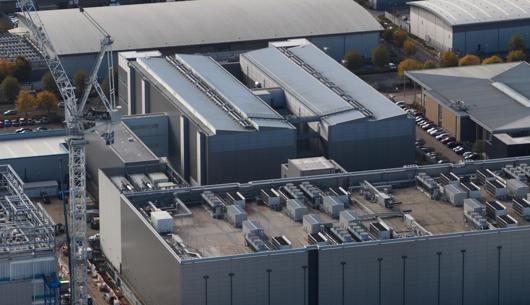
Data centres have, in a relatively short period, shifted from being a niche operational real estate class to becoming a mainstream institutional theme, a trajectory reinforced in the UK by their designation as part of the country's critical national infrastructure.
Yet, despite the sophistication with which investors and developers now approach power procurement, grid delivery risk and planning strategy, business rates is still too often treated as a secondary operating line until it asserts itself as a determinative variable in the model.
Business rates is a tax on nondomestic property, calculated by reference to rateable value and a multiplier, and it is commonly borne by the occupier, or in some circumstances the owner, but its conceptual foundations sit uneasily with an asset class whose economic value is heavily concentrated in electrical and mechanical capability rather than conventional floorspace.
How data centres are valued for rating purposes
The Valuation Office Agency guidance for computer centres reflects that mismatch. It proceeds on the basis that these assets contain significant plant and machinery, including both rateable and non-rateable items, and it contemplates valuation approaches in which rental evidence is supplemented by cost-based assessment (with rateable plant and machinery valued on the contractors basis) and the resulting addition often being significant.
The implication, which investors sometimes appreciate only after the fact, is that two facilities that look broadly comparable as buildings may sit in very different places once the plant schedule and the rating treatment of infrastructure is properly understood.
The white space problem: Cyxtera and beneficial occupation
A further source of consideration is the treatment of capacity that is operationally ready but not yet configured for a particular customer. The decision of the Upper Tribunal (Lands Chamber) in Ricketts (VO) v Cyxtera Technology UK Ltd [2021] UKUT 0265 (LC) was an appeal by the Valuation Office Agency from a decision of the Valuation Tribunal for England on proposals to alter the 2010 Rating List in respect of Cyxtera's Slough data centre, and the principal issue was whether ‘white space’ in a data hall, not yet adapted for the use of customers, formed part of the hereditament because it was capable of beneficial occupation for the purpose for which the hereditament was intended.
The Tribunal's description of white space is industry grounded as it refers to data hall space fitted out with raised floor and suspended ceiling, PDUs and CRAHs, fully functioning lighting, security and fire protection systems, together with a node or meet me room and the machine room housing uninterrupted power supply equipment.
Cyxtera argued that white space was incapable of beneficial occupation as a data centre because it was not ready for customers. The Tribunal rejected that argument, holding that the extent to which white space was ready for customers was "a red herring", and that Cyxtera's own beneficial occupation of the white space was what mattered. It emphasised that it was not focusing on Cyxtera's particular retail colocation model and that the answer would have been the same if the site were run on a wholesale model or used entirely for the operator's own IT equipment, because a data hall is a special environment whose power supply, air conditioning, security, lighting and fire protection require active operation even in the absence of any customer IT equipment.
The Tribunal also addressed the practical consequence of customer churn, confirming that the white space remains capable of beneficial occupation when it is created afresh after a customer's departure, rather than dropping out of assessment.
Key references in the Upper Tribunal decision: UT [9], UT [60]–[61], UT [64].
The 2026 revaluation and the multiplier shift
These issues are sharpening as the rating cycle turns. In England and Wales, the 2026 revaluation takes effect on 1 April 2026 and is based on rental values as at 1 April 2024 (the AVD), and England is also introducing new multipliers from April 2026, including a higher multiplier for higher value properties. For large data centres, where liability is already sensitive to measurement, area categorisation and plant treatment, relatively small shifts in approach can therefore translate into material recurring impacts on net operating income.
Business rates as a first-order underwriting workstream
For investors and developers, the consequence is that business rates belongs alongside power and planning as a first-order underwriting workstream, requiring early attention to what sits behind the headline assessment and a realistic view of how liability behaves through commissioning, phased fit-out, voids, operational reconfiguration and later infrastructure upgrades.
The Cyxtera decision is a reminder that in this asset class the question is not simply how much space is occupied today, but how the operator's control and active operation of infrastructure can support a finding of beneficial occupation even where capacity is being held for the next customer, with the rates position following accordingly.

Discover more
You may be interested in

Google-Constellation nuclear uprate deal: What this means for the UK’s data centre power strategy

Browne Jacobson advises WhiteSpider on deal to strengthen digital resilience across UK critical national infrastructure

The UK Cyber Security and Resilience Bill: What you need to know

Widescale clean energy is within reach – but the legal groundwork needs to happen now

Ofgem's proposed data centre connection reforms: A significant cost to play and stay

Data centres in a heatwave: An industry confronting its own contradiction
Heat as the ‘second connection’: Why UK data centres need a heat strategy

Browne Jacobson and CBI to launch report on future of PPPs in financing infrastructure at UKREiiF
Data centres and on-site energy generation

Data centres and business rates: A tax on megawatts?

Data centres and quantum AI: Location, location, millikelvin

Construction

Navigating UK and Ireland data centre development in 2026: Guidance for investors and operators
Beyond the uptime guarantee: Key points for UK data centre SLAs

The impact of agentic AI on English contract law
Data centres: Legal challenges and trends in 2026

AI and emerging legal challenges in construction

CRU issues decision on private wire connections for Irish data centres

Securing data centre power: Strategic steps to navigate the UK's new grid connection regime

UK data centre expansion creates insurance challenges

Cookie compliance crackdown: SHEIN fined €150 million by CNIL

English Devolution Bill: Is it the end of upwards-only rent reviews?

“Silent AI”: The risk of unintended consequences

Inward investment in the UK and Ireland in 2025: Sector focus

Spending Review: Setting the stage for UK investment

Outsourcing contracts in the age of AI

Data centres in Ireland: The Commission for Regulation of Utilities (CRU) Proposed Decision

Browne Jacobson advises the shareholders of Termate Limited on sale to N Industries Group Limited