


New year, new me: Food and drink legal insights in 2026
06 January 2026
The start of a new year has long been synonymous with personal transformation, with millions of consumers committing to healthier lifestyles each January. Browne Jacobson thinks you’re perfect, just as you are, but for manufacturers, retailers and hospitality businesses, these choices extend far beyond individual resolutions.
In this New Year, New Me insights series, we reflect on how to balance growth opportunities in emerging categories with product innovation and evolving regulatory frameworks.
What’s driving change in 2026?
The high-protein boom
As we enter 2026, the market for high-protein products is surging, driving significant M&A activity as established brands acquire innovative startups and investors seek the next breakthrough.
Weight loss medications and market disruption
The availability of GLP-1 injections for weight loss is fundamentally changing consumer eating patterns and associated product demand. However, food and drink businesses seeking to reformulate products or market them in this new environment need to understand the regulatory implications of doing so.
Transparency
Consumers are increasingly likely to ask questions about unfamiliar ingredients, demanding to know what is in their food. Protecting your brand and safeguarding consumer trust requires robust regulatory compliance, including careful adherence to labelling requirements and a considered approach to product claims.
Sustainability and ESG commitments
From regenerative agriculture to carbon-neutral supply chains, sustainability is no longer optional. Food and drink businesses must navigate the evolving regulatory landscape and make credible commitments to avoid greenwashing pitfalls.
Navigating complexity: The questions facing businesses
The convergence of these trends creates a challenging environment for food and drink businesses, with a multitude of questions facing manufacturers, distributors and retailers:
- How do you structure your supply chain to secure your high-demand product pipeline?
- What intellectual property protections do you need when launching a reformulated product?
- How do you innovate and expand your product portfolio without alienating loyal customers?
- What health claims can you legitimately make in an era of heightened regulatory scrutiny?
Seizing competitive advantage
Beyond compliance, understanding how to navigate advertising regulations and knowing the boundaries of permissible claims can make your product stand out in a crowded market. Equally, making changes to your supply chain can accelerate your entry into high-growth segments whilst protecting against integration risks.
In this New Year, New Me insights series, we explore various legal dimensions of the trends reshaping the food and drink sector.
Our full-service food and drink lawyers have a range of specialist sector knowledge from their experience of advising a range of multinational clients from field to fork, including listed food and drink manufacturers and distributors, national retailers, bars and restaurant chains.
If you would like to discuss any of the matters below, do not hesitate to contact our food and drink team.
Contents
- Rise and shine: The European breakfast directive’s new year transformation
- Food and drink M&A trends: High-protein products
- Investing in wellness: Deal activity in the UK's health-conscious market
- The gut health revolution: Navigating the regulatory landscape for fibre and functional foods
- Weight loss injections: Key lessons for food advertisers
- M&A trends in the beverage industry: A tough shot to take?
- The “Brain Food” boom: What businesses need to know in 2026
- Protein powder and bars: Regulating the claims
Contributors

Rachel Lyne
Partner

Darragh Killeen
Partner

Daniel Knowles
Senior Associate

Lydia Mills
Associate

Chiara Howfield
Principal Associate

Shannon Fahy
Senior Associate

Amba Griffin-Booth
Principal Associate

Ali Murad
Trainee Solicitor

Matthew Hopkins
Associate

Discover more
Food and drink
Related expertise
You may be interested in

09 September 2026
Legal Update
Unboxing the new EU Packaging Regulation

14 August 2026
Legal Update - ASA monthly insights
ASA monthly insights July 2026: Rulings you need to know about

07 August 2026
Legal Update
CMA v Emma Matrazen case update: Reference pricing key takeaways for retailers

05 August 2026
Legal Update - Food and drink regulatory update
Food for thought: Food and drink regulatory update, Summer 2026
05 August 2026
Legal Update
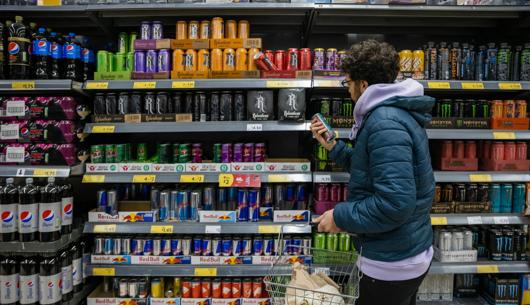
England to ban energy drink sales to under-16s: What businesses need to know

05 August 2026
Legal Update
From doughnuts to delivery apps: The ASA's less healthy food ad rulings so far

05 August 2026
Legal Update
New global standard for 'may contain' allergen labels: What food businesses need to know
05 August 2026
Legal Update
Alternative proteins: The regulatory horizon is shifting - are you ready?

05 August 2026
Legal Update
VAT on package deals: What the KFC meal deal case means for your business
05 August 2026
Legal Update
Sanitary and phytosanitary (SPS) agreement: Updates to guidance

16 July 2026
Legal Update
DUAA 2025 on UK manufacturing, industrial and automotive sectors
16 July 2026
Legal Update
The EU Data Act on manufacturing, industrial and automotive sectors

30 June 2026
Legal Update - ASA monthly insights
ASA monthly insights June 2026: Rulings you need to know about
17 June 2026
Legal Update
Statutory rights and a contractual option to renew: Caterpillar Property Limited & Anor v Park Cakes Limited

04 June 2026
Legal Update
Major UK-GCC free trade agreement and what it means for business

02 June 2026
Legal Update
Wales on a plate: What lies ahead for the food and drink industry

29 May 2026
Legal Update - ASA monthly insights
ASA monthly insights May 2026: Rulings you need to know about

29 April 2026
Legal Update - Retail law roundup
Retail law roundup: April 2026

29 April 2026
Legal Update
‘Subscription traps’ and the DMCC Act: Brand impact
31 March 2026
Legal Update - ASA monthly insights
ASA monthly insights March 2026: Rulings you need to know about

31 March 2026
Legal Update - Food and drink regulatory update
Food for Thought: Food and drink regulatory update: Spring 2026

31 March 2026
Legal Update
The UK-EU SPS Agreement: It is not just about animals and plants

31 March 2026
Legal Update
From local to national: How the FSA plans to reshape food regulation for large retailers

31 March 2026
Legal Update
A taste of the CMA’s green claims supply chain guidance
31 March 2026
Guide
Waste operations and audits: Guidance on Simpler Recycling and digital waste tracking
31 March 2026
Legal Update
Growing forward by looking back: How utilising historic grains could improve soil health and aid climate targets

31 March 2026
Legal Update
Beyond consumer confusion: Statutory bars on dairy terminology
24 March 2026
Press Release
Huel bought by Danone: Comment from M&A lawyer
12 February 2026
Press Release
Supreme Court decision on Oatly using 'milk': Legal comment

04 February 2026
Legal Update
The Modern Slavery Act 2015

28 January 2026
Legal Update
Protein powder and bars: Regulating the claims

27 January 2026
Legal Update
The “Brain Food” boom: What businesses need to know in 2026

15 January 2026
Legal Update
M&A trends in the beverage industry: A tough shot to take?

06 January 2026
Legal Update
Weight loss injections: Key lessons for food advertisers
06 January 2026
Legal Update
The gut health revolution: Navigating the regulatory landscape for fibre and functional foods

06 January 2026
Legal Update
Investing in wellness: Deal activity in the UK's health-conscious market
06 January 2026
Legal Update
Food and drink M&A trends: High-protein products

06 January 2026
Legal Update
Rise and shine: The European breakfast directive’s new year transformation
06 January 2026
Legal Update
New year, new me: Food and drink legal insights in 2026

28 November 2025
Legal Update - ASA monthly insights