Supreme Court decision on Oatly using 'milk': Legal comment
Following a decision by the Supreme Court, the drinks manufacturer Oatly has been banned from using the word "milk" to market its plant-based products.
Commenting on the ruling, advertising lawyer Katharine Mason said: “Although this is a trade mark case, the key points rest on the correct interpretation of food law and it’s the first time these points have been assessed in the UK courts. Specifically, the food law that defines specific “designations” which can only be used for food and drink which meets the criteria. The case is all about whether the trade mark “POST MILK GENERATION” was using “milk” as a designation for a non-milk product.
“In essence, milk is defined as “normal mammary secretion” which is of course not how oat-drinks are sourced. The Supreme Court rejected Oatly’s narrow interpretation of “designation” as only applying to the product name and did not consider an exemption applied.
“The ruling has confirmed that if it's not from an animal, you can't call it milk. The word 'milk' in Oatly's trademark term is a protected food term under the law and their oat drinks don't meet the legal definition. As it stands, companies launching plant-based products will need be aware of protected designations, but the future might bring a new generation of designations.”
Contact

Felicity Spencer-Smith
PR & Communications Manager
felicity.spencer-smith@brownejacobson.com
+44 (0)3300451376
You may be interested in...

Alternative proteins: The regulatory horizon is shifting - are you ready?

SHORTSTV v Google: Descriptive marks claim, given short shrift by Court of Appeal

UK and Irish trade mark and advertising law: Some surprising developments since INTA 2025

IP insights: March 2026

Beyond consumer confusion: Statutory bars on dairy terminology

Browne Jacobson IP team ranked among the world’s leading trademark advisers
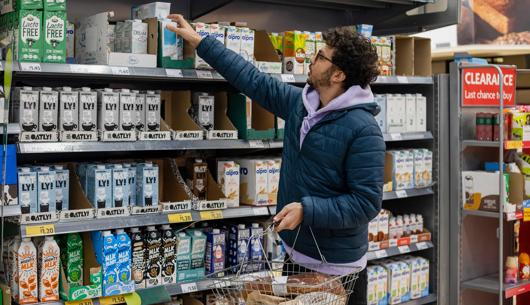
Supreme Court decision on Oatly using 'milk': Legal comment

IP insights: January 2026

Kohler Mira v Norcros: Key lessons in purposive construction for patent drafters

Protecting your brand from 'genericide': Lessons from Dryrobe v D-Robe

Court of Appeal says ‘no’ to co-branding but dismisses copyright claim in AGA conversion case
Rise and shine: The European breakfast directive’s new year transformation

IP insights: November 2025

Getty Images’ copyright not infringed by Stability AI making its Stable Diffusion model available to users in the UK

IP insights: September 2025

IP insights: July 2025

Trade mark dispute risks: AI in legal document drafting

Browne Jacobson a ‘discerning choice’ for clients with ‘IP-rich deals and complex litigation’ - as team ranks for both IAM Patent 1000 and IP Stars 2025

IP insights: May 2025

Trade mark strategy in a global market

Advertising trends: Influencers, intellectual property and image rights

Metro’s Runs Afowl of Morley’s Marks in the Court of Appeal

IP insights: April 2025

What’s in a shape? The impact of 3D registered trade marks on glucose monitoring kits

One to watch: Oatly appeals to the UK Supreme Court in continued fight for its trade mark

Intellectual property (IP) predictions for 2025

Alcohol charity on the “Naughty List” for attempts to trade mark “DRY JANUARY”

EasyGroup proceedings defeated by jurisdictional challenge

Veganism and manufacturing: IP protection