

Protein powder and bars: Regulating the claims
The recent documentary "Killer Bar" has pushed ultra-processed protein products such as protein bars and powders into the spotlight, highlighting that the claims made about these products may not always be in line with their nutritional composition.
Claims for foods have always been scrutinised but the documentary shows that you don’t have to wait for a consumer to complain or a regulator challenge for issues to arise which can impact marketing approach.
Marketing strategies
Protein products have evolved from niche supplements traditionally targeted towards bodybuilders to being presented as mainstream wellness essentials. Across social media and product marketing, these items are increasingly presented as part of an idealised healthy lifestyle, with claims about "natural ingredients", "clean protein", "superfood" and "guilt-free nutrition". This is also reflected at point of sales with shelves now stocked with an array of products in every flavour imaginable, covered with "high protein" labels marketing the quick and convenient appeal of a protein-rich meal on the go ready to meet this demand.
This is amplified by influencers, websites, and wellness culture emphasising the importance of daily protein intake, driving consumers to purchase these products. However, as regulatory focus intensifies, brands should ensure their marketing messaging accurately reflects product composition and the restrictions on claims in this area. It is important to remember that online advertising (unlike broadcast TV and radio ads) is not pre-cleared, so the fact a claim is being made, doesn’t mean it’s authorised.
Ultra-processed is not a term which is defined in law but has already been ruled on by the Advertising Standards Authority (ASA). In May 2025, the ASA banned an advertisement claiming a product was "not ultra-processed", ruling it misleading. Even though there is no universally accepted definition of ultra-processed food, the ASA considered that consumers would understand ingredients to have gone through minimal processing. The inulin had been sliced, steeped, purified (using carbonated water as well as evaporation), subject to partial enzymatic hydrolysis (adding of enzymes) and filtration. Taken in combination the ASA ruled this amounted to more than minimal processing.
In July 2025, the ASA upheld an industry complaints against "No Junk" and "pure" claims on the basis that the advertiser was unable to substantiate the claims. By referring to other products as being “ultra-processed” in a negative way, the implication was that the advertiser’s own products were not ultra processed but it didn’t provide evidence to that effect. These rulings demonstrate the regulatory scrutiny that vague health-related terminology can attract.
The legal and regulatory landscape: Key risk areas
The ASA applies The UK Code of Non-broadcast Advertising and Direct & Promotional Marketing (CAP Code), and The UK Code of Broadcast Advertising (BCAP Code). The Codes are not themselves law, but reflect it. We summarise the key risk areas below.
Health claims
Health claims must be authorised and listed on the GB Nutrition and Health Claims (NHC) Register. Under Assimilated Law Regulation (EC) No 1924/2006, a 'health claim' is defined as "any claim that states, suggests or implies that a relationship exists between a food category, a food or one of its constituents and health". General health claims (“healthy”, “great for you”) can only be made if accompanied by a specific authorised claim.
Nutrition claims
Only authorised nutrition claims (listed in Regulation (EC) No 1924/2006’s Annex or on the GB Nutrition and Health Claims Register) may be used. For example, a “high in protein” claim is allowed only if protein provides at least 20% of the food’s energy content.
Not making misleading claims generally
The Codes also reflect the Digital Markets, Competition and Consumers Act 2024 (DMCC Act) which is enforced by the Competition and Markets Authority (CMA).
Whilst the term "natural" is defined in the context of flavourings, and is referenced in Regulation (EC) No 1924/2006, there isn’t a cross-category definition. Vague uses of terms like "clean", "pure" or "natural" can attract scrutiny when applied to ultra-processed products, particularly where products contain certain synthetic additives and preservatives. As noted previously, the ASA has recently taken enforcement action against such ambiguous terminology where it risks misleading consumers.
Use of influencers
Under the CAP Code, ads need to be “obviously identifiable”. Influencer marketing requires a clear label when content creators have been paid, incentivised or rewarded to promote products. The DMCC Act prohibits using editorial content to promote products without making clear the promotion has been paid for.
Caution required
If an advertiser fails to comply with an ASA ruling, the primary sanction is bad publicity from the published ruling. If prosecuted by Trading Standards, businesses who are convicted of making unauthorised health claims could be liable to a fine.
Under the DMCC Act, the CMA has the power to impose substantive monetary penalties directly, without needing to go to court.
Navigating compliance
Brands must carefully consider regulatory requirements when developing marketing strategies. Success requires understanding how regulators interpret ambiguous terms, assess evidence, and evaluate influencer disclosures in practice, to ensure compliance with the regulatory frameworks.
Proactively seeking legal input can help businesses develop commercially effective strategies whilst meeting regulatory standards. We have extensive experience advising major food and drink manufacturers, national retailers and suppliers on regulatory compliance.
Contents
- New year, new me: Food and drink legal insights in 2026
- Rise and shine: The European breakfast directive’s new year transformation
- Food and drink M&A trends: High-protein products
- Investing in wellness: Deal activity in the UK's health-conscious market
- The gut health revolution: Navigating the regulatory landscape for fibre and functional foods
- Weight loss injections: Key lessons for food advertisers
- M&A trends in the beverage industry: A tough shot to take?
- The “Brain Food” boom: What businesses need to know in 2026

Related expertise
You may be interested in

Unboxing the new EU Packaging Regulation

ASA monthly insights July 2026: Rulings you need to know about

CMA v Emma Matrazen case update: Reference pricing key takeaways for retailers

Food for thought: Food and drink regulatory update, Summer 2026
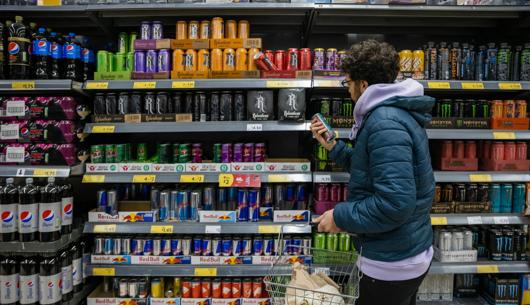
England to ban energy drink sales to under-16s: What businesses need to know

From doughnuts to delivery apps: The ASA's less healthy food ad rulings so far

New global standard for 'may contain' allergen labels: What food businesses need to know

Alternative proteins: The regulatory horizon is shifting - are you ready?

VAT on package deals: What the KFC meal deal case means for your business

Sanitary and phytosanitary (SPS) agreement: Updates to guidance

DUAA 2025 on UK manufacturing, industrial and automotive sectors
The EU Data Act on manufacturing, industrial and automotive sectors

ASA monthly insights June 2026: Rulings you need to know about
Statutory rights and a contractual option to renew: Caterpillar Property Limited & Anor v Park Cakes Limited

Major UK-GCC free trade agreement and what it means for business

Wales on a plate: What lies ahead for the food and drink industry

ASA monthly insights May 2026: Rulings you need to know about

Retail law roundup: April 2026

‘Subscription traps’ and the DMCC Act: Brand impact
ASA monthly insights March 2026: Rulings you need to know about

Food for Thought: Food and drink regulatory update: Spring 2026

The UK-EU SPS Agreement: It is not just about animals and plants

From local to national: How the FSA plans to reshape food regulation for large retailers

A taste of the CMA’s green claims supply chain guidance
Waste operations and audits: Guidance on Simpler Recycling and digital waste tracking

Growing forward by looking back: How utilising historic grains could improve soil health and aid climate targets

Beyond consumer confusion: Statutory bars on dairy terminology
Huel bought by Danone: Comment from M&A lawyer

Supreme Court decision on Oatly using 'milk': Legal comment

The Modern Slavery Act 2015

Protein powder and bars: Regulating the claims

The “Brain Food” boom: What businesses need to know in 2026

M&A trends in the beverage industry: A tough shot to take?

Weight loss injections: Key lessons for food advertisers
The gut health revolution: Navigating the regulatory landscape for fibre and functional foods

Investing in wellness: Deal activity in the UK's health-conscious market
Food and drink M&A trends: High-protein products

Rise and shine: The European breakfast directive’s new year transformation
New year, new me: Food and drink legal insights in 2026
