

Martyn's Law: Determining principal use of premises
The Terrorism (Protection of Premises) Act 2025 (Martyn's Law) received Royal Assent on 3 April 2025. As we discussed in our earlier article, the Act places legal responsibility on the ‘responsible person’ (those in control of venues, events and public spaces) to have appropriate public protection procedures and measures in place to help keep people safe in the event of a terrorist attack.
There is no legal requirement to comply until the Act comes into force, which is not expected until spring 2027, but organisations may wish to consider what they need to do in advance.
A question that will arise for many organisations, and for the insurers who underwrite them, is: where premises are used for more than one purpose described in Schedule 1 of the Act, who is the responsible person? The answer depends on identifying the 'principal use' of those premises. The Terrorism (Protection of Premises) (Principal Use of Premises) Regulations 2026 and new guidance published by the government, address this.
Determining the principal use is important not only to identify who the responsible person is, but also because it affects which compliance tier applies and therefore the full scope of obligations.
How is the principal use determined?
The guidance sets out a two-stage approach.
Stage 1: Purpose and nature of the premises
If individual premises have more than one Schedule 1 use, you should first determine which use relates most closely to the purpose and nature of the premises, taking into account the following factors:
- Whether the premises were built or have been modified to be used for a particular Schedule 1 use;
- Whether the premises continue to be used for the same Schedule 1 use;
- The physical characteristics of the premises (for example, the layout, size and specific features); and
- Whether the premises are treated by a local authority (in the area in which the premises are situated) as having a particular Schedule 1 use - for example, by reference to planning permission, premises licences, alcohol licences, or entertainment licences.
In many cases, this first stage will be sufficient to resolve the question. The guidance gives several illustrative examples where consideration of purpose and nature alone is determinative: a sports stadium built and still used for sport, with its pitch and spectator stands, will have its principal use identified as a sports ground; a hotel built and continuing to be used primarily to provide accommodation will have its principal use identified as a hotel; and a village hall built and still used as such will retain that as its principal use, even where it also hosts food and drink services and entertainment events.
Stage 2: All relevant circumstances
Where it is not possible to identify the principal use by considering the purpose and nature of the premises, the determination must be made on a case-by-case basis, taking account of all relevant circumstances. At this stage, the following additional factors must be considered:
- Whether the whole of the premises, or only part of the premises, is occupied for each Schedule 1 use;
- How much of the premises are occupied for each Schedule 1 use;
- The amount of time that the premises are occupied for each Schedule 1 use during any period which is relevant in the circumstances of the premises; and
- Whether one Schedule 1 use takes place to support another Schedule 1 use.
This assessment could take into account information such as plans of the premises, licences, leases, operating hours, ticketing, staffing levels, capacity, floor area, and trading activity. "Amount of time" can refer to opening hours, days of operation, and seasonal activity, based on the individual circumstances of the premises. The principal use assessment should be reviewed if circumstances change, such as following refurbishment, a change to a licence, a change in how the premises is used or the activity that takes place there.
What should organisations do?
For organisations operating mixed-use premises, the following practical steps are worth taking now:
- Map your Schedule 1 uses: Review your premises against the Schedule 1 categories (see Annex A to the guidance for the full list) and identify whether more than one applies. This exercise should be carried out for each site individually.
- Work through the two-stage test: Consider first whether the purpose and nature of the premises - including how they were built, how they are currently used, their physical characteristics, and how the local authority treats them - points clearly to a principal use. If not, gather the information needed for a full case-by-case assessment, including floor plans, licences, leases, operating hours, staffing levels and capacity data.
- Identify the responsible person: Once the principal use is established, identify who holds control of the premises in connection with that use. Where premises are shared or partly operated by third parties under contractual arrangements, consider what co-ordination obligations arise and how those should be addressed in contracts, licences and operational arrangements.
- Keep a written record: Once a determination has been made, it is advisable to keep a record of the determination and the reasoning for it. This will be important both for regulatory purposes and for evidencing a systematic and considered approach should questions arise later.
- Review when circumstances change: The principal use assessment should be reviewed if circumstances change, such as following refurbishment, a change to a licence, a change in how the premises is used or the activity that takes place there.
We have specialist lawyers at Browne Jacobson who can assist your organisation in working through the principal use determination for your premises, identifying the responsible person, and preparing for the Act coming into force. We also advise insurers on the implications of Martyn's Law for underwriting strategy, policy wordings, and claims handling.
This article is for general information purposes only and does not constitute legal advice. If you require advice specific to your circumstances, please contact us.
Contact

Lydia French
Senior Professional Development Lawyer
lydia.french@brownejacobson.com
+44 (0)121 296 0670
Related expertise
You may be interested in
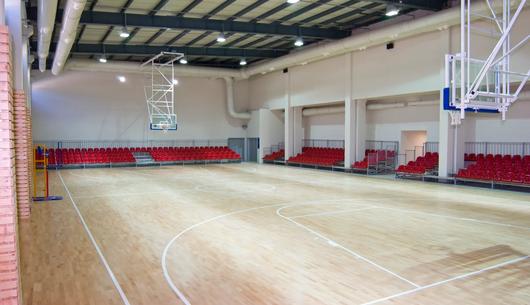
Martyn's Law: Determining principal use of premises

Law Commission: Proposed overhaul of product liability law for the digital age

AI worms: Implications for cyber policies in the face of next-generation AI adaptive malware models

Lessons in readability from the prison education system: Implications for insurance

AI assisted workplace grievances and the implications for EPL risks
Insurance insights: The Word, October 2026

IUA model clauses on lethal injection drug supply released

Liberty Managing Agency v Chedid: Allegations alone insufficient to avoid D&O cover

Britain's e-scooter crisis: What insurers need to know

War risk insurance: why ancient clauses are failing modern conflict
ChatGPT and the FCA: regulation comes knocking?

A 'tidal wave' of PFAS for AI

Claims definitions: Why the FCA's latest focus matters

AI-enabled attacks are scaling: what the UK warnings mean for insurers (and their lawyers)

Insurance insights: The Word, August 2026

When AI goes off-script: What the OpenAI incident means for insurers

Why continuous monitoring will define AI insurance (and what it changes for insurers)

LMA wording excludes Hormuz 'toll' payments: What this means for insurers

The insurance implications of the recent personal care products chemical contamination study

When futuristic design costs lives: Implications of Tesla’s hidden handle product recall

Six minutes from crisis to covered: How artificial intelligence is transforming pet insurance claims
Fire risks for UK insurers: Solar panels, lithium-ion batteries and hash oil explosions

Insurance insights: The Word, July 2026
Why professionals who ignore AI risk a negligence claim

How might AI impact fair presentation of risk in insurance?

Venezuela’s twin earthquakes: What it means for insurers

Carspreading and the next motor insurance shock: Why ever-bigger cars matter for claims, pricing and regulation

TFA in UK rivers: Potential implications of trifluoroacetic acid contamination for insurers

Martyn’s Law statutory guidance: Key considerations for organisations and their insurers

Fundamental dishonesty in personal injury claims: Implications for insurers' claims strategy

Furlough issue: Supreme Court dismisses policyholders’ appeal on COVID-19 BI

High Court finds in favour of reinsured in COVID-19 event cancellation dispute

The Russian aircraft litigation: Court strikes out contribution claims against operator policy insurers
The Baltimore bridge collapse: Billion-dollar settlements, a looming trial, and the insurance implications for marine market participants
Insurance insights: The Word, June 2026

When AI 'hallucinates' in court: What it means for insurers

World Cup 2026: The insurance industry's biggest stress test

BYD takes on crash liability for God's Eye: What it means for motor underwriters

Paws and effect: Robot dogs take the lead at the 2026 World Cup