

Historical abuse litigation: Strategic choices for institutional defendants in a changing landscape
Joinder, contribution and the end of limitation protection
The Crime and Policing Bill will likely fundamentally transform historical child sexual abuse litigation, and not always in a way that makes it simpler for any stakeholder.
For institutional defendants, frequently local authorities, healthcare providers, schools, sports clubs and faith organisations, the proposed removal of limitation periods potentially demands urgent strategic reassessment of how to manage claims and, more importantly, alleged perpetrators.
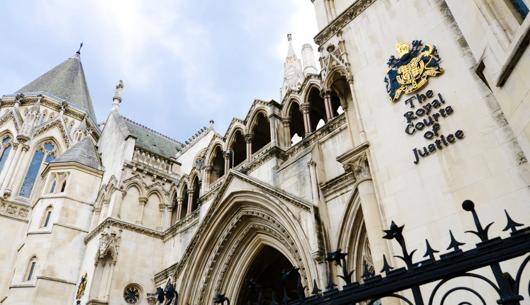
A judgment today in the High Court, in which Browne Jacobson was instructed on behalf of the defendant, illustrates that where there is no conviction and alleged abusers are not available to answer allegations against them, the court is likely to find that historical child abuse cases are statute barred.
This case, however, was heard under the current legislation. Institutional defendants, in fact any organisation that has worked with children in the last 40 years, should take a beat to revisit their likely approach to these types of cases where there are living alleged perpetrators when the Crime and Policing Bill becomes law.
Looking at AB v Leicestershire County Council through the lens of the Crime and Policing Bill
Proposed section 11ZA of the Bill removes time limits entirely for child sexual abuse claims.
Claims will proceed unless defendants prove under section 11ZB that a fair hearing is impossible. The “substantial prejudice” clause originally set out in 11ZB(3) has this month been removed from the Bill.
Today’s judgment in AB v Leicestershire County Council, where all three claims were dismissed on limitation grounds, illustrates how the current law is applied at least against institutional defendants.
Both alleged perpetrators in the three cases (Frank Beck and former Leicester West MP Greville Janner) were deceased.
The court found that their absence, combined with the lack of contemporaneous complaint records and faded memories, weighed heavily against the claimants. The judge concluded, having carefully considered all the voluminous documentation that the parties had referred him to and the parties’ written and oral submissions, that it would not be equitable for any of the claims to proceed.
Although the court did not expressly consider the position in the alternative, under the Bill, this outcome would likely be the same – the impossibility of hearing from deceased perpetrators would probably support dismissal under section 11ZB(2).
However, cases with living alleged perpetrators will be very different, particularly if the principle of vicarious liability is established. Where alleged perpetrators can give evidence, establishing that a fair hearing is impossible becomes significantly harder.
Institutional defendants must therefore confront a critical strategic choice: should they join or ask the claimant to name living alleged perpetrators as defendants?
The Joinder dilemma
Having alleged perpetrators as parties to litigation offers clear advantages. They should provide direct evidence of what did and did not occur, assist in correlating allegations with contemporaneous records, and be cross-examined.
Part 20 proceedings enable contribution claims and potential indemnity without the need for separate contribution proceedings after the event. Tactically, joinder may encourage settlement or clarify the evidential landscape early.
However, Qualified One-Way Costs Shifting (QOCS) creates significant risk. If a contribution claim fails, the Part 20 Claimant face adverse costs liability. The perpetrator may admit wrongdoing whilst blaming institutional failures, strengthening the claimant's case. Managing three-party litigation is complex and expensive, especially if one party is unrepresented.
We always suggest that defendants consider:
- Whether the alleged perpetrator has means,
- If their evidence will likely undermine the claimant's case, and
- Whether there are strong indemnity grounds.
Institutional defendants should exercise caution where alleged perpetrators are impecunious but may secure legal aid or some sort of insurance, are likely to admit fault, or where the primary defence rests on procedural grounds rather than substantive denial.
Alternatives include calling alleged perpetrators as witnesses under summons (avoiding Part 20 costs risk), serving hearsay notices for previous denials, or seeking costs capping orders at case management.
The contribution alternative
In cases where the issues are clearer, defendants may choose to settle without joining the alleged perpetrator. They can then issue contribution proceedings under the Civil Liability (Contribution) Act 1978.
They must act within two years of settlement. The alleged perpetrator cannot rely on limitation as a complete defence. Sections 1(2) and 1(3) of the 1978 Act permit contribution recovery even where the alleged perpetrator's liability to the claimant would be statute-barred, provided they were likely liable when the damage occurred.
Post-settlement contribution claims avoid QOCS complications in the original proceedings and provide fuller information for assessing claims, particularly if sharing of relevant information is agreed with the claimant in the course of settlement discussions.
However, defendants face costs exposure if unsuccessful, must prove the alleged perpetrator’s liability, and encounter potential arguments that the initial claim settled unnecessarily, potentially affecting the alleged abuser’s human rights.
All this doesn’t take away from the fact that the threat of contribution proceedings may prove more valuable than actual pursuit.
Preparing for change
Under the new regime, robust record-keeping, systematic evidence preservation and early alleged perpetrator investigation become essential.
Strategic decisions about Joinder or post-settlement contribution should be made early, and reviewed regularly, informed by detailed assessment of the alleged perpetrator’s means, credibility and the quality of any additional they may have.
The changes to the law on limitation aren’t just affecting institutions, and all stakeholders must adapt accordingly.
Contact

Caroline Sumnall
Chief Marketing Officer
onlineteaminbox@brownejacobson.com
+44 (0)370 270 6000
Discover more
You may be interested in...
EGZ: Lessons learned from a CSE trial, London | November 2026

Learnings for local government from the Thirlwall Inquiry

First court decision regarding new law of time limitation for abuse claims: Legal comment

Crime and Policing Act 2026: Scope of new limitation regime confined to sexual abuse claims
EGZ v Hertfordshire County Council and others: The challenges of tackling CSE on the frontline and through litigation
Child sexual abuse claims: The end of the limitation period and what it means for local authorities and insurers

Browne Jacobson social care lawyer appointed as Costs Judge
Grooming Gang Inquiry: What public bodies need to know

What the care leaver deaths review means for local authorities and what to do now

Expansion of regional care co-operatives: Legal comment

Historical abuse litigation: Strategic choices for institutional defendants in a changing landscape

Shared Insights: Domestic violence and safeguarding

The importance of empathetic language in historical abuse claims

New limitation legislation for child sexual abuse claims: What insurance brokers need to know

June 2025: A busy month for kinship care

Investigations and inquiries into child sexual exploitation and grooming

Safeguarding children: Effective strategies for prevention and response

Navigating the complexities of deprivation of liberty for children under 16

The age assessment process for local authorities

LGBTQ+ inclusion in adult social care: Addressing inequalities and driving change

Limitation in claims for Child Sexual abuse (CSA)

New reforms affecting child sexual abuse claims: Legal comment

Limitation reform in sexual abuse claims: How this affects sports clubs

The latest take on vicarious liability for kinship / connected person foster care

Kinship care: DJ v Barnsley Metropolitan Borough Council and SG

Vicarious liability for kinship foster carer abuse: Implications for local authority insurers

Court of Appeal extends local authority liability for kinship foster carers

Redress and reparation schemes: Where the complexity is not about quantum

Shared Insights: Giving evidence before the Family Court - a practical session

HXA and YXA : Guidance from the Supreme Court on negligence in failure to remove cases

Parental alienation a tool for domestic abuse?

Work experience placements – commendable: have them, and be alive to the risk

Advising on alternative treatments for patients – what is the legal test to be applied?

Legal professionals: Duty, scope, and limits to both – context is key

Vicarious liability – don’t overlook the importance of close connection

HXA and YXA failure to remove cases: Key considerations in anticipation of the Supreme Court judgment

Public liability register – is it (finally) on the way?
A brief summary of the Court of Appeal decision in HXA v Surrey County Council and YXA v Wolverhampton City Council
On 31 August 2022, the Court of Appeal handed down the Judgment in respect of the appeal case of HXA v Surrey County Council and YXA v Wolverhampton City Council [2022].

Limitation under the Human Rights Act
'Barry Bennell case' webinar
This webinar looks at the three key themes in the decision, and is aimed at sports & social clubs (including safeguarding officers).