

EGZ v Hertfordshire County Council and others: The challenges of tackling CSE on the frontline and through litigation
After hearing 14 days of evidence, including over three days of evidence from the Claimant, over eight days of evidence from social care and police witnesses for the Defendants and two days of evidence from the Claimant’s liability expert, the case of EGZ v Hertfordshire County Council, Essex County Council, London Borough of Hackney and the Commissioner of the Police of the Metropolis ended suddenly, with the Claimant discontinuing her claim. This came after cross examination of the Claimant’s liability expert, Mr Mark Webb, made clear that there was not “sufficient evidential foundation for the allegations of negligence to proceed to judgment”.
Browne Jacobson LLP were instructed to act on behalf of Hertfordshire County Council with Laura Broadhead (Principal Associate) leading from a pre-action stage in 2019 through to trial in March 2026. Steven Ford KC, of 7BR, was instructed by Browne Jacobson to represent the interests of Hertfordshire County Council.
Background
Over the course of her childhood and early adulthood, EGZ was subject to abuse and abandonment. Having grown up in Enfield with her mother, where she was subject to sexual abuse by her stepfather and a serious sexual assault by her peers, EGZ left the care of her mother. Attempts for her to be cared for by her wider family failed and ultimately, she entered the care of each of the three local authority Defendants for a period, on a voluntary basis, under s20 Children Act 1989.
The Claimant initially issued proceedings against five defendants, discontinuing against the First Defendant, London Borough of Enfield, in 2024. The claim continued to trial against the remaining four defendants, each of which denied liability.
Hertfordshire County Council (Second Defendant)
EGZ was in Hertfordshire’s care under s20 for a period of around five months, after attempts to live with an extended family member failed. She turned 15 during this time in foster care.
It was alleged that by this time, Hertfordshire should have been aware of the risk of Child Sexual Exploitation (CSE) and Child Criminal Exploitation (CCE). It was alleged that there had been failings in assessment of the Claimant, in her care planning, in applying for and securing either an Interim Care Order or a Secure Accommodation Order (although the latter had been conceded by the time of trial) and in the manner in which her relationship with Hertfordshire came to an end.
The Claimant’s claim against Hertfordshire was brought in negligence and/or as a breach of her Article 3 rights.
Essex County Council (Third Defendant)
The Claimant was in the care of Essex County Council under s20 for a period of just under three months after another attempt for her to live within her wider family broke down. It was alleged that during this time, her risk of both CSE and CCE persisted and escalated. The allegations of failings included a failure in planning, a failure to commence care proceedings for a Care Order and a failure to apply for a Secure Accommodation Order.
The Claimant’s claim against Essex was brought in negligence and/or as a breach of her Article 3 and/or Article 4 rights.
London Borough of Hackney (Fourth Defendant)
After absconding from her foster placement in Essex, the Claimant moved to Hackney where social workers from the London Borough of Hackney and police officers from the Metropolitan Police assisted in making checks on the Claimant. She came into the care of Hackney when she was aged 15 and 11 months and she remained a child in their care until she was 18.
It was alleged that during this time Hackney should have been aware that EGZ continued to be exploited both sexually and criminally by gangs and that she was subject to physical violence from them. It was claimed that Hackney had failed to hold professionals meetings in respect of the Claimant to assess her needs and to develop a care plan, that they failed to identify that she required a structured therapeutic unit, that there was a failure to seek an Interim Care Order and/or a Secure Accommodation Order and a failure to refer the Claimant to the National Referral Mechanism.
The Claimant’s claim against Hackney was brought in negligence and/or as a breach of her Article 3 and/or Article 4 rights.
Commissioner of the Police of the Metropolis (Fifth Defendant)
The Claimant’s claim against the Fifth Defendant was made on the basis of an alleged breach of her Article 3 and/or Article 4 rights only.
It was claimed that, for a period of around 12 months when the Claimant was aged 15 to 16, the Metropolitan Police should have been aware of the risk to the Claimant from associating with certain individuals. It was alleged that there were failures to undertake appropriate checks on individuals, that there was a failure to make reports and referrals and a failure to identify and share information with partnership agencies.
The trial
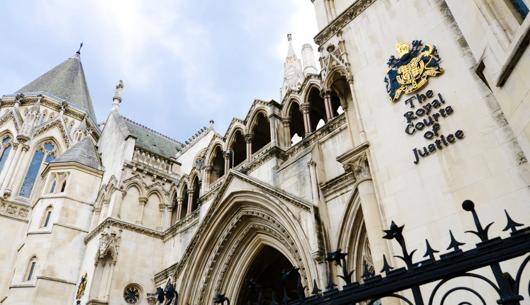
The trial was listed at the Royal Courts of Justice before Bourne J for 20 days. After two days reading and an opening from the Claimant’s Counsel, EGZ began her witness evidence and over the course of almost four days bravely told the Court and the parties of her recollections of her childhood.
This was followed by witness evidence for the Defendants, during which eight social workers and five police officers, many of whom are still working in front line roles, attended to give evidence.
The Claimant’s liability expert, Mr Mark Webb, commenced his oral evidence on day 13 of the trial, concluding on day 14. Over the course of cross examination by Counsel for the Second, Third and Fourth Defendants, Mr Webb conceded that there were errors in his expert report and that his assessment of failings in respect of those Defendants had been incorrect.
After hours, on the evening of day 14, the Claimant’s claim was discontinued against all four Defendants with the Court noting in the recital to the Order recording the discontinuance that it appeared there was “not sufficient evidential foundation for the allegations of negligence to proceed to judgment”.
Following discontinuance of the Claimant’s claim, Bourne J stated that “this case and the way it has ended is profoundly troubling”. He went on to note that serious professional allegations had been made against named individuals but that the parties had arrived at a point where there was no case to answer on the pleaded allegations of negligence.
In light of such comments from Bourne J, claimants and defendants alike must think carefully about the lessons to be learned from this case moving forward.
Lessons learned
1. Handling of sensitive allegations and vulnerable witnesses
There was no doubt in this case that, over the course of her childhood and into her early adulthood, the Claimant had been exposed to serious abuse. Over the years since her allegations, she has found the strength to be able to speak about those events and to escape those who subjected her to that abuse. The question was never whether abuse occurred or not, but rather when it happened, what knowledge the Defendants had, or ought to have had, based on what was known at the time and whether they acted appropriately.
Over the course of her cross examination by Senior Counsel for the Second Defendant, EGZ was not questioned about her experiences but rather her involvement with professionals. She accepted that the accounts that she gave to professionals contemporaneously were not always true, often because she was frightened of the unknown and that she did not give professionals the full picture at the time. EGZ accepted that although she left “hints” to the truth of her experiences, she did not make contemporaneous disclosures of what was going on in her life or in her past.
In claims such as this, involving sensitive issues of historical abuse and CSE, it is important that defendants and their insurers make early decisions on what matters can be agreed or accepted, and what needs to be in dispute. In this case the legal issues between the parties were not focused on the happening of the abuse, but rather her engagement with professionals during the relevant period. This allowed questioning of the Claimant at trial to be limited to those issues rather than forcing EGZ to discuss the details of the abuse suffered.
2. The importance of properly choosing and testing expert evidence
In April 2024, the Claimant’s solicitors made an application seeking to substitute their initial social care expert, Dr Craig Barlow for Mr Mark Webb. In support of that position it was stated that it had become apparent that Dr Barlow had “insufficient professional experience in the field of child protection social work to offer an authoritative Bolam opinion in this matter”. It was stated that Mr Webb instead had an appropriate range of professional expertise.
Mr Webb was cross examined on his experience by Steven Ford KC for Hertfordshire. Mr Webb accepted that both legislation and practice can change over time, sometimes quite quickly. The expert also accepted that although he has experience as a Guardian, and is instructed on project work as an independent social worker, he had not been working “on the frontline” in a Children’s Services department for some time. His experience in that role was limited to a period of around 6 years, some 15 years before the Claimant was taken into the care of the Second Defendant.
More crucially, when Mr Ford KC questioned Mr Webb on the Bolam test, the expert confirmed that rather than consider what had (or had not) been done by the social workers and consider whether a responsible body of social workers at the time would have taken the same steps, he had instead considered what he would have done in the same circumstances and then asked himself if a responsible body of social workers would have taken the steps he suggested. It was put to Mr Webb that this was to turn the Bolam test on its head.
Upon questioning by Andrew Warnock KC for the Third Defendant, Mr Webb agreed on the importance of experts to have a balanced view of the facts of a case before agreeing that he had included information in his report from documentation which had not been available to the Third Defendant contemporaneously. Mr Webb was taken to positive social care practice which had not been identified in his report. He accepted with hindsight it would perhaps have been balanced to set out when social workers also acted appropriately and not only to focus on risk.
When questioned by Adam Weitzman KC for the Fourth Defendant, Mr Webb was asked about the provenance of information in his report, in response to which Mr Webb suggested that some information in his factual chronology may have come from his instructing solicitors, not from the records. Mr Webb accepted that this could be misleading.
All three Counsel directed Mr Webb to mistakes or errors in his report. Upon questioning by Mr Weitzman KC, Mr Webb conceded that, in the chronology at least, the preparation of his own report had been negligent.
Quite aside from the issues above, over the course of his evidence Mr Webb rescinded his allegations of negligence against all three local authority Defendants. The discontinuance of the Claimant’s claim followed shortly thereafter and before any re-examination of Mr Webb by the Claimant’s Counsel.
The importance for parties to proceedings to instruct appropriate experts and to properly test that evidence before trial is clearly highlighted in the following:
- Mr Webb was the Claimant’s second expert in this matter and the Court and Defendants were told that he had more relevant experience than the original expert instructed. Nevertheless, upon cross examination, it was apparent that Mr Webb did not have the relevant “frontline” experience of making decisions on complex CSE claims at the relevant time. This was apparent on the face of the expert’s CV.
- The Bolam test had been correctly set out in Mr Webb’s report. It was accepted by Mr Webb that this description had likely come from his instructing solicitor. Nevertheless, it was quickly apparent that the Bolam test had been misapplied by Mr Webb in his analysis.
- The errors in Mr Webb’s chronology were apparent upon a full examination of his report against the records held.
- Upon questioning on the appropriate Bolam test at trial, Mr Webb conceded the position on any alleged negligence by the three local authority Defendants.
The unravelling of Mr Webb’s evidence at trial upon cross-examination brought into sharp relief the importance of selecting an expert with appropriate and relevant expertise; ensuring that the expert is thoroughly and clearly instructed and has a good understanding of the relevant legal tests to be considered; and thorough and careful consideration of an expert’s opinion by cross-referring to the contemporaneous records and, where necessary, challenging and exploring any issues or inconsistencies.
A consideration of any or all of the above points in this case prior to trial would have exposed the lack of evidential basis for the Claimant’s claim in negligence which instead came out at trial. Doing so prior to trial would have saved EGZ the difficult task of recounting her history to the Court as well as the time and stress on 13 professionals alleged not to have carried out their roles appropriately, and a significant sum of costs on all sides.
3. The challenges of CSE claims
This case also highlighted some of the challenges faced by social workers and the police in tackling issues of CSE including, but not limited to:
- Consent under s20 Children Act 1989
- Engagement with young people
- Preparation for independence
- Availability of placements
- Specialist therapeutic placements
- Secure accommodation
Conclusions
The Defendants did not enter this litigation lightly. Defence of this claim came at significant emotional and financial toll. Parties dealing with such claims should take heed of this decision to avoid similar circumstances.
The comments of Bourne J at the close of proceedings should not be overlooked. Serious allegations were made against named professionals over the course of seven years of litigation. The emotional toll on those individuals (and the significant costs incurred on all sides) underlines why rigorous pre-trial preparation is not optional.
For local authorities and their insurers facing similar claims, we would highlight the following practical steps:
- Act early on expert selection: The circumstances of this case demonstrate that instructing an expert with the right frontline experience, at the right time, is not a procedural formality. It is fundamental to the integrity of the claim. Parties should scrutinise expert evidence at the earliest opportunity, including the expert's CV, their understanding of the applicable legal tests, and whether their methodology reflects a genuinely balanced assessment of the contemporaneous records.
- Define the real issues early: In sensitive cases involving historical abuse and CSE, early case management decisions about what is and is not in dispute can make a material difference to the experience of vulnerable witnesses at trial. Narrowing the issues to what is genuinely contested (rather than the fact of abuse itself) allows proceedings to focus where they should, and reduces unnecessary distress.
- Understand the systemic challenges: This case also brought into focus the practical and systemic difficulties facing frontline social workers and police in CSE cases – including the limits of voluntary s20 arrangements, challenges in engaging young people, availability of appropriate placements and access to secure accommodation. These are not just litigation issues; they are operational ones that local authorities and their insurers should keep under active review.
Overall, the importance of robust expert evidence and early case assessment cannot be overstated. For any further information on this claim, or any other claims involving issues of CSE, CCE or historical abuse, please do not hesitate to contact Laura Broadhead.
Contact

Laura Broadhead
Principal Associate
laura.broadhead@brownejacobson.com
+44 (0)115 908 4818
You may be interested in...
EGZ: Lessons learned from a CSE trial, London | November 2026

Learnings for local government from the Thirlwall Inquiry

First court decision regarding new law of time limitation for abuse claims: Legal comment

Crime and Policing Act 2026: Scope of new limitation regime confined to sexual abuse claims
EGZ v Hertfordshire County Council and others: The challenges of tackling CSE on the frontline and through litigation
Child sexual abuse claims: The end of the limitation period and what it means for local authorities and insurers

Browne Jacobson social care lawyer appointed as Costs Judge
Grooming Gang Inquiry: What public bodies need to know

What the care leaver deaths review means for local authorities and what to do now

Expansion of regional care co-operatives: Legal comment

Historical abuse litigation: Strategic choices for institutional defendants in a changing landscape

Shared Insights: Domestic violence and safeguarding

The importance of empathetic language in historical abuse claims

New limitation legislation for child sexual abuse claims: What insurance brokers need to know

June 2025: A busy month for kinship care

Investigations and inquiries into child sexual exploitation and grooming

Safeguarding children: Effective strategies for prevention and response

Navigating the complexities of deprivation of liberty for children under 16

The age assessment process for local authorities

LGBTQ+ inclusion in adult social care: Addressing inequalities and driving change

Limitation in claims for Child Sexual abuse (CSA)

New reforms affecting child sexual abuse claims: Legal comment

Limitation reform in sexual abuse claims: How this affects sports clubs

The latest take on vicarious liability for kinship / connected person foster care

Kinship care: DJ v Barnsley Metropolitan Borough Council and SG

Vicarious liability for kinship foster carer abuse: Implications for local authority insurers

Court of Appeal extends local authority liability for kinship foster carers

Redress and reparation schemes: Where the complexity is not about quantum

Shared Insights: Giving evidence before the Family Court - a practical session

HXA and YXA : Guidance from the Supreme Court on negligence in failure to remove cases

Parental alienation a tool for domestic abuse?

Work experience placements – commendable: have them, and be alive to the risk

Advising on alternative treatments for patients – what is the legal test to be applied?

Legal professionals: Duty, scope, and limits to both – context is key

Vicarious liability – don’t overlook the importance of close connection

HXA and YXA failure to remove cases: Key considerations in anticipation of the Supreme Court judgment

Public liability register – is it (finally) on the way?
A brief summary of the Court of Appeal decision in HXA v Surrey County Council and YXA v Wolverhampton City Council
On 31 August 2022, the Court of Appeal handed down the Judgment in respect of the appeal case of HXA v Surrey County Council and YXA v Wolverhampton City Council [2022].

Limitation under the Human Rights Act
'Barry Bennell case' webinar
This webinar looks at the three key themes in the decision, and is aimed at sports & social clubs (including safeguarding officers).