AI-assisted neurosurgery: Balancing innovation and risk
The first reported use of live AI assistance during brain surgery highlights both the opportunities and challenges AI presents for NHS and private medical organisations.
The reported success of the world's first patient to undergo live AI-assisted brain surgery is an important milestone in the development of artificial intelligence (AI) in healthcare.
The procedure involved AI analysing live surgical footage and assisting the neurosurgical team in identifying important anatomical structures during the removal of a brain tumour. The surgeon remained responsible for the procedure, with the technology providing additional information in real time.
The outcome provides an encouraging illustration of how AI may augment clinical expertise and potentially improve patient safety. However, due caution is required to ensure that innovation is accompanied by appropriate clinical governance and risk management.
An opportunity for patient safety
AI has the potential to make a significant contribution to patient care.
It is already being explored and used in areas including diagnostics, imaging, clinical documentation, monitoring and decision support. As the technology develops, its role is likely to extend further into treatment planning and, as the recent neurosurgical procedure demonstrates, real-time assistance during procedures.
Used appropriately, this could support better decision-making and reduce some of the risks associated with human error. The potential patient-safety benefits are substantial. However, these benefits should not lead to an assumption that AI is inherently safer than human decision-making. AI is an additional clinical tool; it does not remove the need for appropriate professional judgment and oversight.
The importance of human oversight
One of the key considerations for NHS organisations will be establishing an appropriate relationship between the clinician and the technology.
AI systems have limitations. Their performance can vary depending upon the data upon which they have been developed, the clinical environment in which they are deployed and the circumstances of the individual patient.
There is also a risk of automation bias, where too much reliance is placed on an automated recommendation because it appears authoritative or sophisticated.
Training should therefore cover how an AI system operates and its limitations, and outputs must always remain grounded in clinical judgment.
The role of insurers and indemnifiers
AI is also relevant to NHS insurers and indemnifiers.
As adoption increases, insurers will need to understand how AI is being used within the organisations they support, particularly where it has a direct role in clinical decision-making.
AI may ultimately reduce risk and improve patient safety, and insurers are well placed to support organisations in understanding both the benefits and emerging risks.
Claims and incident data may, over time, provide valuable insight into whether particular applications of AI are achieving their intended safety benefits.
There is also value in ensuring that contractual and insurance arrangements remain appropriate as technology develops.
Clear allocation of responsibilities between healthcare providers, technology suppliers and other organisations involved in implementation can help reduce uncertainty and support effective risk management.
Looking ahead
The first reported live AI-assisted brain surgery is a significant step and clearly demonstrates the potential for technology to augment, rather than replace, clinical expertise. Similar developments are likely to become increasingly common in clinical practice.
For NHS Trusts, the focus will be on ensuring an environment in which innovation and patient safety are mutually supportive.
For insurers and indemnifiers, understanding how AI is being deployed will be increasingly important in the identification of emerging risks, in recognising where technology may reduce existing sources of clinical harm and in respect of liability and indemnity issues.
AI is clearly a clinical tool with considerable potential, and its successful adoption will depend on the quality of the governance around it, it will therefore be important to ensure that governance keeps pace with innovation.
How we can help
Healthcare organisations and clinicians navigating the use of AI in clinical practice should contact Louise Jeffers or Kate Westley of our specialist adult neurological injuries team should they wish to discuss any of the matters raised in this article further.


You may be interested in...

A research-able development: EU and UK updates to scientific research data

MHRA 2030 Strategy: Health and life sciences lawyer comments

Browne Jacobson appoints David Hill as new health and life sciences partner with UK and international experience

National Commission into the Regulation of AI in Healthcare recommendations to be implemented: Legal comment

Aligning UK-UAE cross-border regulation for collaboration in health and life sciences
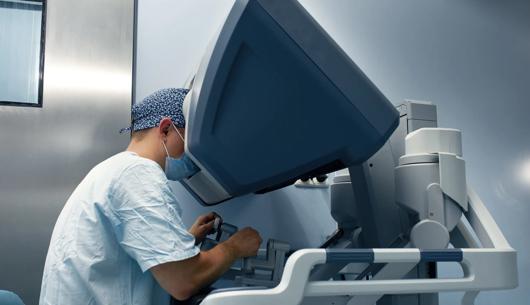
AI-assisted neurosurgery: Balancing innovation and risk

AI in healthcare: What the National Commission has found and why the picture is getting clearer

Browne Jacobson strengthens All-Island life sciences platform with appointment of leading Galway MedTech lawyer

Life Sciences Sector Plan ‘one year on’ update: Legal comment

Tracking pixels: Emerging privacy risks for health and life science providers

From pilotitis to progress: Scaling innovation at NHS ConfedExpo

Data governance and innovation in life sciences: Key issues arising in regulatory compliance, cybersecurity and AI agents

MHRA AI sandbox launch: Comments from a life sciences lawyer

Femtech founder roundtable: Funding the future of women’s health
Browne Jacobson supports Cambridge Heartwear in launching wearable tech for rapid heart disease diagnosis

Clinical trials reform: Comment from life sciences lawyer

AI liability in healthcare: Important updates from the UK jurisdiction taskforce

EU AI Act application for high-risk AI medical devices delayed: Legal comment
EMA and FDA guiding principles for AI in drug development: A review

Life sciences in Wales: Why 2026 could be a breakthrough year

Shared Insights: Avoiding pitfalls when implementing AI in the health and care sector

MHRA consultation on indefinite recognition of CE-marked medical devices: Legal comment

Maximising commercial revenue for the NHS: Post-event summary

Damned if they do, damned if they don’t: Understanding and mitigating the risk of AI tools in healthcare practice

The UK as a global life sciences hub: Legal infrastructure and innovation policy

Browne Jacobson corporate health partner recognised as ‘one to watch’ at national industry awards

Cross-border collaboration in Life Sciences: How to make it work

Browne Jacobson contributes to white paper exploring UK-UAE collaboration in healthcare AI adoption

How MHRA’s international reliance is shaping UK medicine regulation

Technology-enabled care in the UK: Legal and technical developments to watch

The importance of AI in the development life sciences

Arbitrating innovation: Resolving IP disputes in the life sciences sector

Who owns the algorithm? IP litigation heats up over AI-discovered molecules

Strategic forecast: M&A activity set to surge amid looming patent cliffs

AI in the healthcare sphere: Public and private considerations

Early access service to launch for innovative medical devices

Embracing AI: Revolutionising maternity care and patient safety in the NHS

Browne Jacobson advises US life sciences firm on international expansion deal

Using AI for recruitment: The data issues