Willis’ parametric trigger cracks the flood cover gap
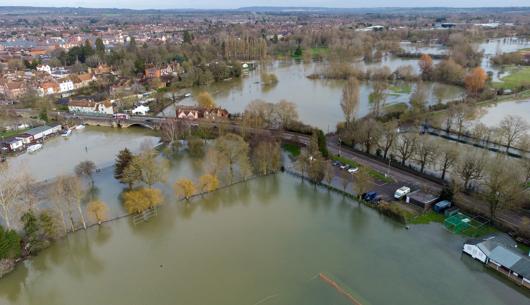
Willis has launched a sensor-based parametric insurance solution for UK racecourses that responds to localised flooding. Royal Windsor Racecourse, one of 16 venues operated by Arena Racing Company (ARC), is the first site to adopt the policy, having previously been considered uninsurable for flood risk because of its position directly on the River Thames.
The solution involves installing a flood sensor at a location on the insured property. When the sensor detects water levels reaching the selected trigger depth, ARC automatically receives a payout that scales according to the maximum water depth, up to the agreed policy limit.
How the Willis solution will address the UK's flood risk landscape
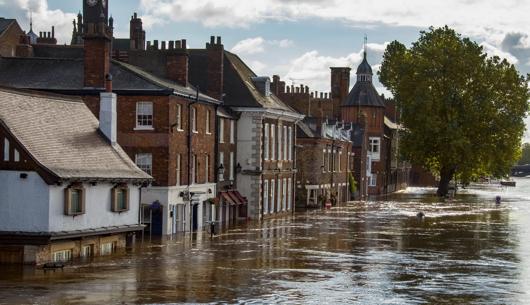
Flood risk is rising across the UK. Often located on low-lying floodplains, racecourses are especially vulnerable to flood-related property damage, requiring costly clean-up, repairs and refurbishment, as well as financial losses from business interruption. Traditional indemnity insurance has largely failed this sector as conventional cover often falls short in high-risk areas, producing steep premiums, large excesses, or outright exclusions.
With this new solution removing uncertainty, cost, and time from the claims process, claims are paid quickly with no protracted loss adjustment process. The continuous monitoring of water levels also provides early warning of potential flooding, enabling policyholders to implement flood risk management protocols, including moving sensitive equipment to higher ground.
Legal and regulatory considerations
Parametric insurance has brought with it a new set of legal and regulatory considerations that must be navigated to ensure compliance and protect all parties involved.
To protect consumers, insurers must fully disclose how the contract works, including any limitations of coverage, and regulatory authorities must scrutinise the fairness of the contract terms and the adequacy of the insurer’s reserves to meet potential claims.
To avoid disputes, the definition of ‘trigger event(s)’ must be clear, objectively measurable and verifiable, and the data used to assess the trigger events should come from reliable and independent third parties.
Further, the payout structure must be clear and unambiguous. This includes ensuring that the payout table aligns with the likely level of loss, to ensure that the policy response matches the loss suffered.
The tax treatment of parametric insurance payouts should also be considered and professional advice sought, to ensure both insurers and policyholders understand the ramifications of any differences with the traditional regime.
Key takeaways for insurers
For insurers, the Willis solution demonstrates advantages, but with each opportunity there are risks that require management if disputes are to be avoided.
- Reaching previously uninsurable risks is a market opportunity, not a last resort: Where flood risk can be accurately modelled at site level, parametric triggers can be calibrated to price the risk sustainably. For brokers, this opens a conversation with clients who may have accepted uninsurability as a fixed constraint.
- Basis risk must be managed carefully: The core vulnerability of any parametric product is the possibility that a trigger is not activated despite a genuine loss occurring, or that a payout is made where damage is minimal. Site-specific sensor placement and clear policyholder communication about what the product does and does not cover are essential to minimise disputes.
- Speed of payment carries compliance implications: The automatic payout removes loss adjustment friction - but insurers should ensure the process is designed with Consumer Duty obligations in mind, particularly where smaller leisure businesses may not fully understand the limits of parametric cover at inception.
- Scalability depends on data quality: Replicating this model across football grounds, cricket clubs and hospitality venues will require consistent access to granular hydrological data. Investment in data infrastructure should not wait for demand to mature.
- Interaction with existing policies should be addressed explicitly: Where a policyholder holds both a parametric product and a conventional property policy, questions may arise over how a parametric payout is treated in any residual indemnity claim. This should be resolved clearly at placement.
Contents
- Insurance insights: Perils, August 2026
- UK property insurance in 2026: Five trends reshaping risk, pricing and coverage
- Nord Stream v Lloyd's: War risk exclusions, indirect causation and the limits of pipeline cover
- Under the weather: How COVID-19 satisfactorily defeated CP Holdings’ €160m insurance claim
- Fire risks for UK insurers: Solar panels, lithium-ion batteries and hash oil explosions
- Secondary perils, record losses and a widening protection gap: What the data means for insurers

Discover more
Related expertise
You may be interested in

War risk insurance: why ancient clauses are failing modern conflict

Perils: Property insurance claims newsletter, August 2026
UK property insurance in 2026: Five trends reshaping risk, pricing and coverage

Nord Stream v Lloyd's: War risk exclusions, indirect causation and the limits of pipeline cover

Under the weather: How COVID-19 satisfactorily defeated CP Holdings’ €160m insurance claim

Fire risks for UK insurers: Solar panels, lithium-ion batteries and hash oil explosions
Willis’ parametric trigger cracks the flood cover gap

Secondary perils, record losses and a widening protection gap: What the data means for insurers in 2026

Venezuela’s twin earthquakes: What it means for insurers

TFA in UK rivers: Potential implications of trifluoroacetic acid contamination for insurers

Browne Jacobson doubles down on international capability with hire of specialist insurance arbitration partner

Furlough issue: Supreme Court dismisses policyholders’ appeal on COVID-19 BI

High Court finds in favour of reinsured in COVID-19 event cancellation dispute
The Baltimore bridge collapse: Billion-dollar settlements, a looming trial, and the insurance implications for marine market participants

The £800m indemnity that isn't really insurance: What the Bayeux Tapestry loan tells underwriters

Middle East conflict could become costliest political violence loss on record
Data centres and the insurance gap: What it means for insurers

Bath Racecourse & Others v Liberty Mutual: Supreme Court hearing on furlough

Middle East conflict 2026: Insurance impacts across marine, aviation, travel and beyond

Business interruption insurance: Aggregation
London market and speciality
Climate, technology and the protection gap: Top trends reshaping property damage insurance in 2025

When does dust, odour and noise become 'nuisance'? Insights from Andrews v Krononspan

Vivid Housing v Allianz: Interpreting imminent threat in warranty insurance claims

Bellhouse v Zurich: Testing the limits of insurer assumptions under CIDRA

Perils: Property insurance claims newsletter, February 2026

UK audit reform retreat: Weak response and implications for insurers

The rising tide of civil unrest: Critical implications for insurers

COVID-19 business interruption claims: Supreme Court appeal on furlough deductions

UK data centre expansion creates insurance challenges

Cyber attacks: Could brokers be in the firing line?

“New low” for ransomware cybercriminals an opportunity for cyber insurers?

When does time start running? The limitation quirk in insurance coverage claims

The meaning of "property damage": Lessons from Insurance Australia v Capral

Flooded with doubt: Court assesses fraud allegations in Malhotra Leisure

Representations, warranties and conditions precedent: Lonham Group v Scotbeef

Martyn’s Law: When remembrance meets the market

Covid-19 BI claims update: Are furlough payments a BI loss?

When frozen pipes crack legal certainty: Land Energy Girvan v Aspen Insurance