

England to ban energy drink sales to under-16s: What businesses need to know
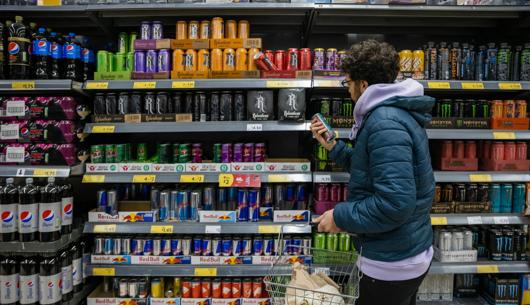
This summer saw the outcome of last year’s consultation on banning the sale of energy drinks to under 16s in England. The result is that any drink, other than tea or coffee, which contains over 150mg of caffeine per litre will be banned from being sold to under 16s in England.
Given the general direction of travel for health policy in England, this is probably the outcome that was expected, despite the fact that Scotland decided not to introduce a ban when it consulted on this issue three years ago. The outcome of the Welsh consultation has not been published, although the responses are available.
This legislative ban will replace the current voluntary action which had already been taken by many retailers, supermarkets and convenience stores to stop selling energy drinks to under 16s.
What’s in scope?
- Drinks which aren’t tea or coffee with 150mg/l of caffeine.
- Sales from all retailers that sell directly to consumers including shops, restaurants, cafes, newsagents etc.
- Online sellers.
- Sales from all vending machines, including those in places children are not permitted or unlikely to be present.
What’s not in scope?
- Tea and coffee.
- Other caffeinated products (such as caffeine pouches and gums).
- Business-to-business sales.
Who is enforcing the ban and what are the penalties?
Selling energy drinks to under 16s will become a criminal offence under the Food Safety Act 1990. In addition to being able to prosecute, it’s likely that local authorities (such as trading standards) will have powers to issue fixed monetary penalties. These would be £1,500 for businesses with under 50 employees and £2,500 for those with 50 or more employees. Fines paid within 28 days of receiving a notice of intent will be reduced by 50%.
Methods for assessing compliance will be similar to those for other age-restricted products and include mystery shoppers and the use of covert surveillance powers under the Regulation of Investigatory Powers Act 2000.
When does it start?
The ban is expected to start from April 2027, but this depends on Parliamentary approval so we will need to wait for the final legislation.
Contents
- Food for thought: Food and drink regulatory update, Summer 2026
- From doughnuts to delivery apps: The ASA's less healthy food ad rulings so far
- New global standard for 'may contain' allergen labels: What food businesses need to know
- Alternative proteins: The regulatory horizon is shifting - are you ready?
- VAT on package deals: What the KFC meal deal case means for your business
- Sanitary and phytosanitary (SPS) agreement: Updates to guidance
Contact

Katharine Mason
Principal Associate
katharine.mason@brownejacobson.com
+44 (0)330 045 1382
Discover more
Related expertise
You may be interested in
Unboxing the new EU Packaging Regulation

ASA monthly insights July 2026: Rulings you need to know about

CMA v Emma Matrazen case update: Reference pricing key takeaways for retailers

Food for thought: Food and drink regulatory update, Summer 2026
England to ban energy drink sales to under-16s: What businesses need to know
From doughnuts to delivery apps: The ASA's less healthy food ad rulings so far
New global standard for 'may contain' allergen labels: What food businesses need to know
Alternative proteins: The regulatory horizon is shifting - are you ready?

VAT on package deals: What the KFC meal deal case means for your business
Sanitary and phytosanitary (SPS) agreement: Updates to guidance

DUAA 2025 on UK manufacturing, industrial and automotive sectors
The EU Data Act on manufacturing, industrial and automotive sectors

ASA monthly insights June 2026: Rulings you need to know about
Statutory rights and a contractual option to renew: Caterpillar Property Limited & Anor v Park Cakes Limited

Major UK-GCC free trade agreement and what it means for business
Wales on a plate: What lies ahead for the food and drink industry

ASA monthly insights May 2026: Rulings you need to know about

Retail law roundup: April 2026

‘Subscription traps’ and the DMCC Act: Brand impact
ASA monthly insights March 2026: Rulings you need to know about

Food for Thought: Food and drink regulatory update: Spring 2026
The UK-EU SPS Agreement: It is not just about animals and plants

From local to national: How the FSA plans to reshape food regulation for large retailers

A taste of the CMA’s green claims supply chain guidance
Waste operations and audits: Guidance on Simpler Recycling and digital waste tracking
Growing forward by looking back: How utilising historic grains could improve soil health and aid climate targets
Beyond consumer confusion: Statutory bars on dairy terminology
Huel bought by Danone: Comment from M&A lawyer
Supreme Court decision on Oatly using 'milk': Legal comment
The Modern Slavery Act 2015

Protein powder and bars: Regulating the claims

The “Brain Food” boom: What businesses need to know in 2026
M&A trends in the beverage industry: A tough shot to take?
Weight loss injections: Key lessons for food advertisers
The gut health revolution: Navigating the regulatory landscape for fibre and functional foods

Investing in wellness: Deal activity in the UK's health-conscious market
Food and drink M&A trends: High-protein products
Rise and shine: The European breakfast directive’s new year transformation
New year, new me: Food and drink legal insights in 2026
