

Irish High Court issues Practice Direction on mediation and ADR compliance
The President of the High Court has issued a Practice Direction reminding practitioners and litigants of certain provisions of Mediation Act 2017, and other statutory provisions relating to Alternative dispute resolution (ADR).
On 20 May 2026, the President of the High Court issued a Practice Direction concerning the Mediation Act 2017 (the 2017 Act), and other statutory provisions relating to ADR.
Practice Direction HC141, which came into operation on 3 June 2026, is intended to draw practitioners’ and litigants’ attention to certain provisions of the 2017 Act and other relevant legislation, while emphasising the need for compliance and flagging the consequences of non-compliance.
Solicitors' obligations under Section 14 of the Mediation Act 2017
The Practice Direction reminds practitioners of their obligations under the 2017 Act including the obligation under Section 14 of the 2017 Act to provide advice and specific information to clients about mediation prior to issuing proceedings. Where proceedings are issued, the originating document must be accompanied by a statutory declaration evidencing that the solicitor has complied with their obligations under Section 14. In the absence of such a declaration, the Court must adjourn the proceedings to enable Section 14 to be complied with and the requisite mediation advice to be provided.
Consequences of non-compliance with Section 14: Key case law
The mandatory nature of the provisions of Section 14, and the obligation on the Court to adjourn proceedings in the absence of evidence of compliance with Section 14 was highlighted in the case of V Media Doo & First Click Marketing Operations Management Limited v Techads Media Limited [2025] IEHC 430. The Practice Direction refers to the V Media Doo decision, noting Mr Justice Twomey’s reminder that compliance with Section 14 is not just a "box-ticking” exercise. In reminding practitioners of the consequences of non-compliance with Section 14, the Practice Direction refers to the High Court’s decision in Byrne v Arnold [2024] IEHC 308, in which the Court reduced the costs recoverable by the successful party by 5% primarily due to non-compliance with Section 14.
The Court's power to order mediation and adverse costs risks
Practitioners are also reminded in the Practice Direction of the Court’s role in encouraging mediation, including under Section 16 of the 2017 Act which allows the Court to invite parties to consider mediation, and to adjourn proceedings to facilitate the mediation taking place. Unreasonable refusal to consider or engage in mediation is a factor to which the Court may have regard when awarding costs and may give rise to adverse costs consequences. This reminder is particularly timely, in light of the recent decision of the High Court in J Burke & Associates Limited v Patrick O’Connell [2026] IEHC 314, in which the High Court confirmed its inherent jurisdiction to order parties to mediate.
Key takeaways for litigation practitioners
Practice Direction HC141 is an important reminder of the obligations on practitioners under the 2017 Act and of the real consequences that follow from non-compliance and underscores the growing emphasis from the Courts on the importance of ADR in litigation. To learn more, please contact our specialist commercial dispute resolution lawyers.


Related expertise
You may be interested in...

Deprivation of assets and care home fees: Guide for local authorities

Failure to disclose a pattern of fires entitles insurer to avoid charterers

High Court confirms power to order mandatory mediation: Key considerations for litigants in Ireland
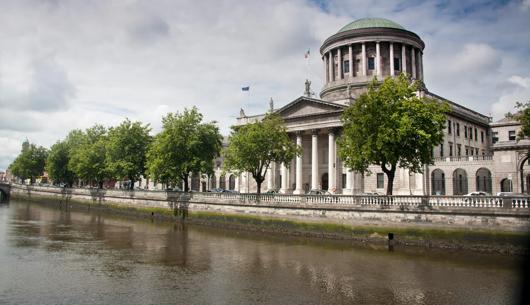
Irish High Court issues Practice Direction on mediation and ADR compliance

Impending reforms to civil litigation procedures in Ireland

Navigating PFI expiry and transition: Guide for organisations

No source for concern: IPEC draws a line on software copyright in Edozo v Valos

Court transparency pilot: New public access rules from 1 January 2026

Confidentiality in clinical trials: Arbitration as the preferred route for dispute resolution

Multi-academy trusts (MATs): Unveiling the hidden pitfalls in IT contracts

Ireland’s first Consumer Representative Action issued in the High Court

Browne Jacobson appoints Bernhard Maier as Head of Arbitration

Browne Jacobson expands international disputes offering with new Head of Commercial Dispute Resolution in London

What’s in a shape? The impact of 3D registered trade marks on glucose monitoring kits

The end of the Shareholder Rule: Aabar Holdings SARL v Glencore Plc

Know your dispute resolution clauses: Key take-aways from Kajima v Children’s Ark and Lancashire Schools v Lendlease

New hope for the manufacturing sector?

The Post Office Horizon IT Scandal: How should organisations react when IT systems go wrong?

Changes to the fixed recoverable costs regime

Browne Jacobson Ireland LLP rank across Dispute Resolution, Intellectual Property and Technology in the Legal 500 EMEA 2024

Churchill v Merthyr Tydfil Council: A game changing decision for local authorities

Are amendments to be expected for the Arbitration Act 1996?

How to manage retail sector supply contracts and avoid disputes

Mediation – remote or in person?

Product distribution – how to protect yourself from an early exit

Public matters - January 2023

The Future of Mediation
Covid Rent Arrears: Cinema operators’ appeals dismissed
The Court of Appeal has dismissed two cases regarding rent arrears accrued during the Covid lockdowns. The cases are London Trocadero (2015) LLP v Picturehouse Cinemas Ltd and Bank of New York Mellon (International) Ltd v Cine-UK Ltd.
Safeguarding the incorporation of onerous terms into a contract
Useful guidance on the incorporation of onerous terms and conditions into a contract has been provided by HHJ Davies’ judgment in the recent case of Blu-Sky Solutions Ltd v Be Caring Ltd [2021] EWHC 2619 (Comm).

Litigators beware! Recent changes to Part 36 Offers
Recent changes to HMRC's policy on VAT and contract termination payments
On 2 September HMRC announced a change in its policy on the VAT treatment of compensation and damages payments in the context of early contract termination.
A day in the life of a Commercial Disputes Resolution (CDR) trainee
Ruby O'Hara gives us an insight of her role in the Commercial Disputes Resolution team.
Neocleous and another v Rees [2019] EWHC 2462 (Ch)
Following a dispute over a right of way, the parties’ solicitors agreed in an exchange of emails (constituting a single email chain) to compromise the dispute by the defendant (R) transferring to the claimants (N) a small piece of land adjacent to Lake Windermere.
Stanning v Baldwin and another [2019] EWHC 1350 (Ch)
Issues about prescriptive rights of way and drainage arose on the redevelopment of dominant land.
![Regency Villas Title Ltd and others v Diamond Resorts (Europe) Ltd and others [2018] UKSC 57](/getattachment/536fcc78-0577-4e42-809e-7f8ca816d26b/fs-shutterstock_1919510069.jpg?variant=HeroImageTabletVariantDefinition)