Freeports: The UK's forgotten inward investment opportunity
When the first wave of UK Freeports opened their doors in 2021, they arrived amid considerable fanfare. Promises of levelling up, industrial renaissance and foreign direct investment filled the headlines.
Yet today, Freeports rarely lead the growth conversation. Lost beneath the noise of planning reform, devolution deals and the fiscal tightening that has consumed public discourse, they have quietly been doing something remarkable: delivering.
It's time to bring Freeports back into focus, not as a political novelty, but as one of the most potent and underutilised tools available to businesses, investors and local authorities seeking sustainable, place-based economic growth.
The evidence is hard to ignore
Whilst the debate about the UK's economic trajectory has dominated Westminster, the data from Freeport zones has been accumulating steadily. Across the 12 designated English, Scottish and Welsh Freeports, the picture is striking: billions in landed investment, thousands of hectares of brownfield land brought back into productive use, and a pipeline of clean energy, advanced manufacturing and logistics projects that would have seemed implausible a decade ago.
The government's extension of the tax relief window to 2031 in England, and to 2034 in Scotland and Wales, was not a political accident. It was an acknowledgement that the model works, and that the runway needed extending to allow projects of genuine scale and ambition to fully mature.
That extension deserves more attention than it has received. For investors doing long-term planning, certainty of incentives is often as important as the incentives themselves. The signal here is unambiguous: Freeports are not a temporary experiment. They are a sustained strategic commitment.
What makes Freeports genuinely different
The honest answer to why Freeports remain underappreciated is that their offer is genuinely complex, and complexity rarely generates headlines. The combination of customs simplification, enhanced capital allowances, stamp duty and business rates relief, and supportive planning environments is not easily reduced to a soundbite. But for businesses willing to engage with that complexity, the commercial upside is substantial.
Consider the customs offer alone. For manufacturers with international supply chains, the ability to import, process and re-export goods within a simplified customs environment, deferring or eliminating tariff costs, can materially reshape margins and supply chain strategy. For clean energy developers, enhanced capital allowances on qualifying plant and machinery can significantly accelerate the economics of major infrastructure.
And the planning dimension should not be underestimated. In an environment where planning reform is moving (however determinedly) through Parliament, the designated planning environments within Freeport tax sites already offer a degree of speed and certainty that the wider system is still striving towards.
The risks of continued neglect
There is a real risk that businesses and local authorities sleepwalk past the Freeport opportunity. The tax relief windows, whilst extended, are not infinite. Projects take time to structure, sites take time to develop, and professional advisers - legal, financial, planning - need to be engaged early. The businesses that will capture the greatest value from Freeports are those that begin that structuring work now, not those who respond to the deadline pressure in 2029.
There is also a softer risk: reputational and strategic. Sectors that are absent from Freeport clusters, from the professional services that support investors to the housing developers that need to provide accommodation for a growing workforce, may find themselves on the wrong side of where economic activity concentrates over the next decade.
What this means for our clients
For local authorities, Freeports represent a rare convergence of planning flexibility, capital investment and central government support that can anchor an entire regional growth strategy. The alignment between Freeport governance structures and emerging Local Growth Plans under the devolution framework creates an opportunity to hardwire Freeport ambition into long-term spatial and economic planning.
For corporate clients, the practical question is straightforward: is your business positioned to access the tax, customs and planning offer that Freeports provide? If not, the conversation with your advisers should start now.
What we see most often is that the businesses and authorities that capture the greatest value from Freeports are those that engage early. That means three things in practice:
- Structuring now, not later: The tax relief windows are finite. With the 2031 deadline for English Freeports approaching, projects that have not begun their legal and financial structuring in the next 12 to 18 months risk being unable to fully exploit the available reliefs. Waiting until deadline pressure mounts is not a strategy.
- Assembling the right advisory team: The Freeport offer spans customs law, real estate tax, planning, corporate structuring and employment – no single discipline covers it. Businesses that appoint fragmented or siloed advisers tend to miss the interaction effects between the different reliefs. Early, joined-up legal and financial advice is essential.
- Engaging with governance: For local authorities in particular, the alignment between Freeport governance structures and emerging Local Growth Plans is an opportunity that will not remain open indefinitely. The authorities that hardwire Freeport ambition into their spatial and economic planning now will be best placed to attract and anchor long-term investment.
Why UK Freeport tax reliefs deserve a place in your investment strategy
Freeports are not a silver bullet – no single policy instrument is. But in our experience advising businesses, investors and local authorities across the UK, they represent something genuinely rare: a framework that has been tested, iterated and demonstrably extended because the evidence supports it. In a policy landscape crowded with announcements and consultations, the quiet, evidence-based effectiveness of Freeports deserves far more recognition. If you are not already asking whether your business or organisation is positioned to access what Freeports offer, contact our specialist real estate tax team to discuss your circumstances further.

Related expertise
You may be interested in...

Browne Jacobson acts on major private equity investment into UK flexible workspace market

Browne Jacobson acts on Style Group sale to Dormakaba in cross-border commercial interiors deal

Tackling the temporary accommodation challenge: Notes for councils at UKREiiF
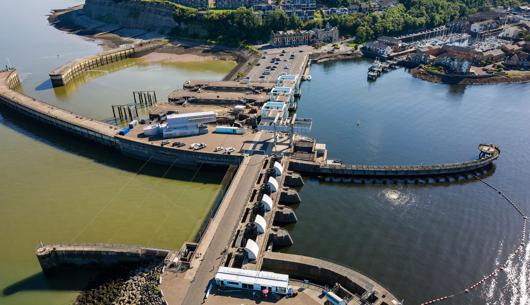
Investment zones and Freeports in Wales: Key insights from UKREiiF 2026
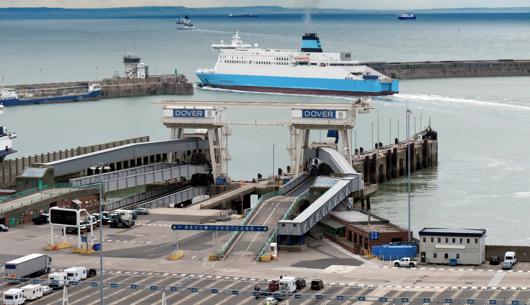
Freeports: The UK's forgotten inward investment opportunity
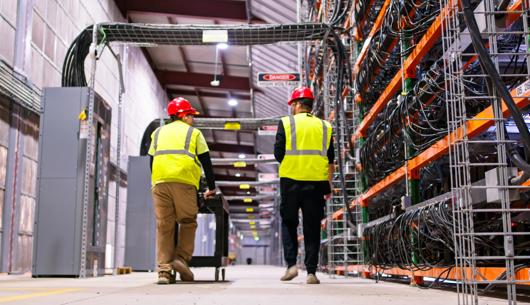
Data centres and business rates: A tax on megawatts?

Navigating VAT in corporate real estate: Key considerations for landlords and tenants

Browne Jacobson advises Oxford City Council on Barton Park affordable housing deal

The real estate podcast: How AI and tech is changing real estate

The importance of three magic words